
Related videos:
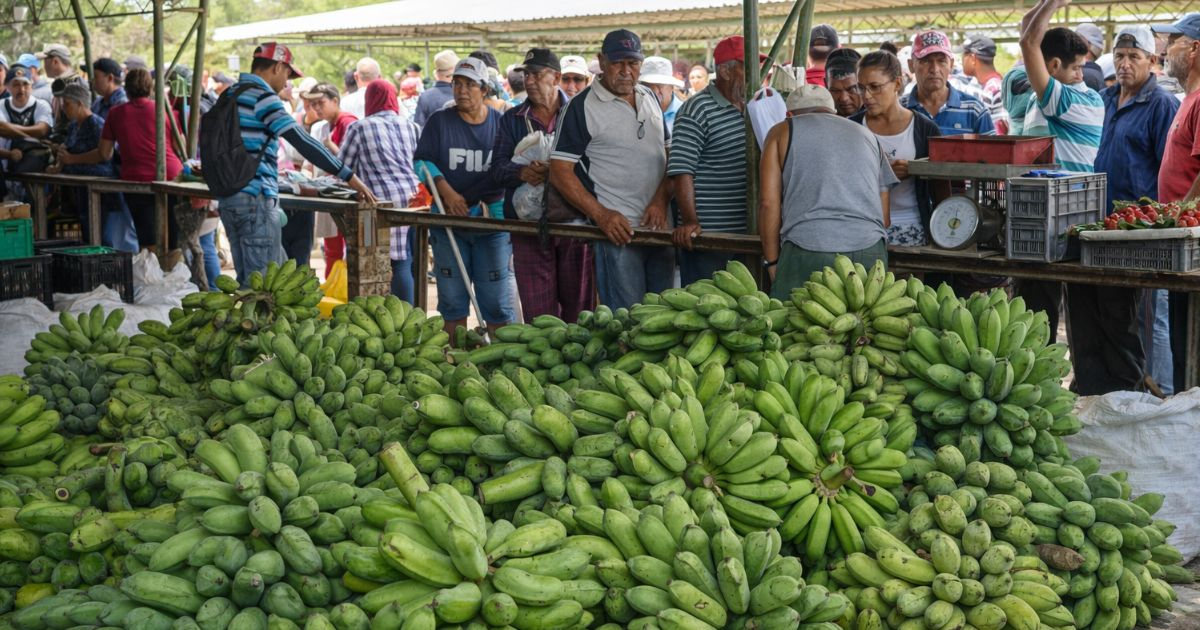
The Provincial Government of Las Tunas announced the sale of more than 500 quintals of bananas that were seized during a control operation, in a measure aimed at partially supplying the population and state institutions amid the shortage.
According to an official post on Facebook, the authorities reported that the product was delivered to the Collection Company for distribution in hospitals, educational centers, and other social services, as well as for regulated marketing in markets and small shops in the main municipality.
The sale began with a limit of up to 10 pounds per person and a price of 35 Cuban pesos per pound, at designated locations such as El Mambí, Leningrado, and El Tunero, among others.
Pregnant women and blood donors were also given priority as part of the sectors considered vulnerable.
The local government defended the measure as a way to ensure equitable access to basic foods, in a context marked by difficulties in the production and distribution of agricultural products.
However, the decision has sparked extensive debate among citizens.
"Why don't they authorize the commercialization instead of confiscating? Behind those products are people who work hard," questioned the user identified as Freedom, who criticized that these actions discourage production and exacerbate the shortage.
In the same vein, Yordanis Ricardo noted that "seizing all of that leads to shortages in the long term," while Ruben Martínez pointed out that the measure amounts to taking "the sweat, the sacrifice, and the work from someone" to then redistribute it.
Other users pointed to structural problems in the economy. Gabriel Domínguez De la Rosa stated that it is alarming that a news story is the distribution of "a few miserable bananas," while Dayanis Martínez Jiménez criticized the sale of a product that the state did not produce.
There were also concerns raised about the unequal distribution. Isabel Ramos Oliva pointed out that the municipalities are lagging behind the provincial capital, and Yadira Martínez Domínguez asked why areas like Puerto Padre do not receive these products.
Some comments, however, supported the measure. Víctor Manuel Fernández Tamayo described it as positive for addressing high prices, and Claribel Pacheco emphasized the control during sales in one of the markets.
The reactions reflect the growing discontent over the scarcity of food in Cuba and the limitations in accessing basic products, in a context where seizures and the centralization of distribution continue to be criticized by the population.
Filed under: