
Related videos:
In a context marked by the increasing confrontational tone of the regime and rising tensions with the United States, the Ministry of the Revolutionary Armed Forces (MINFAR) has once again promoted Active Military Service as an act of patriotic commitment. However, far from generating consensus, its messages have sparked a wave of concern among Cubans.
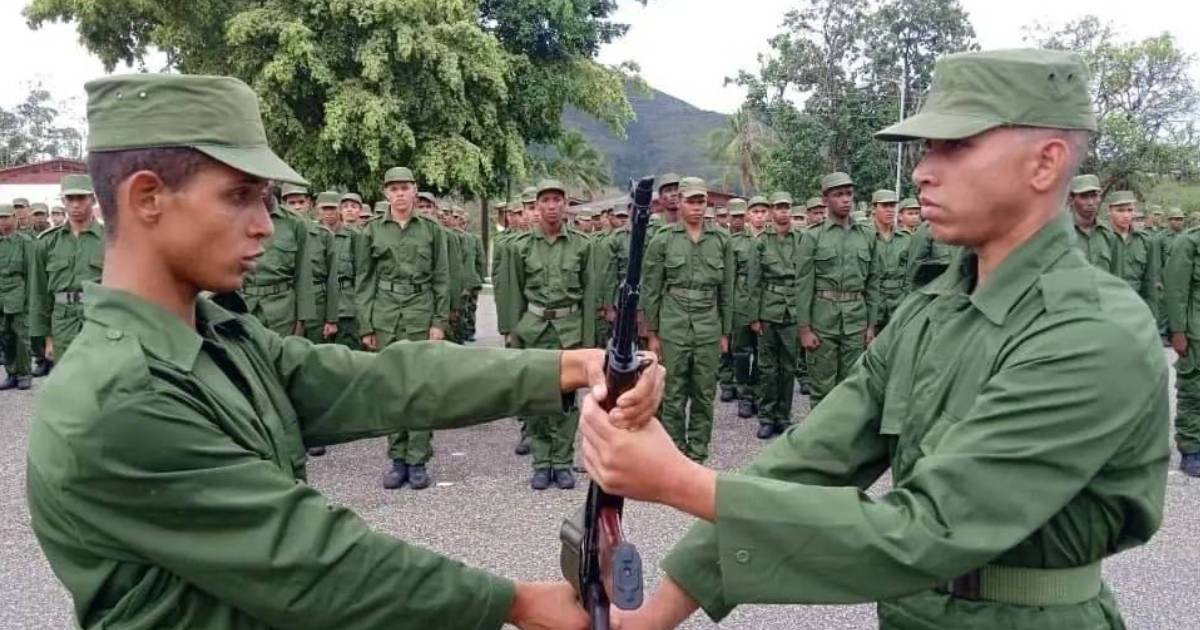
In recent publications, the institution praised the enlistment of young people into military units across various regions of the country, presenting them as a youth "ready to make a Revolution" and to "defend sovereignty." The discourse, aligned with the official narrative, emphasizes enthusiasm, discipline, and the continuity of Fidel Castro's legacy.
However, this call comes at a particularly sensitive moment. Just hours earlier, MINFAR itself had issued a message with an openly bellicose tone, warning that any enemy could "be blown up by a mine" or be annihilated in ambushes. This was followed by statements from the Deputy Minister of Foreign Affairs, Carlos Fernández de Cossío, who confirmed that the country is preparing for a possible military aggression from the United States.
The correlation between the hardening of the rhetoric and the promotion of military service has raised alarms among many citizens, who are concerned about the role that young people could play in a potential conflict scenario.
On social media, reactions came swiftly. Dozens of comments questioned the official narrative and denounced that military service does not reflect a voluntary decision.
"Those young people are there against their will," wrote a user. Another was more direct: "The word says it all, mandatory military service."
Fear is also linked to potential tragic consequences. "Then parents shouldn’t cry when they bring them back in a coffin," warned another comment, reflecting a concern that goes beyond politics and directly affects families.
Some users reported abuses within the military units. "They go there to be abused," wrote one person, while another stated, "Stop deceiving the world; they are coerced, threatened, and harassed."
There were also criticisms of the contrast between the official discourse and reality. “What enthusiasm are they talking about if it's mandatory?” questioned another comment, in an ironic tone.
The discomfort extends even to questions about who really assumes the risks. “Do the children of the leaders also go?” asked a user, reflecting a deeply rooted perception of inequality.
Among the most powerful messages, one encapsulated the feelings of many: “Don’t risk your life for those who oppress you… you are not saving the homeland.”
These reactions reveal an increasingly visible rift between the official narrative and the perception of a segment of the population. Amid a profound economic crisis, blackouts, shortages, and rising migration, the call to "make Revolution" from military ranks does not seem to resonate as it once did.
For many Cubans, the concern is not abstract: it is about their children, their siblings, their families. And in a context where the official discourse is once again turning towards war, anxiety is on the rise.
Filed under: