
Related videos:
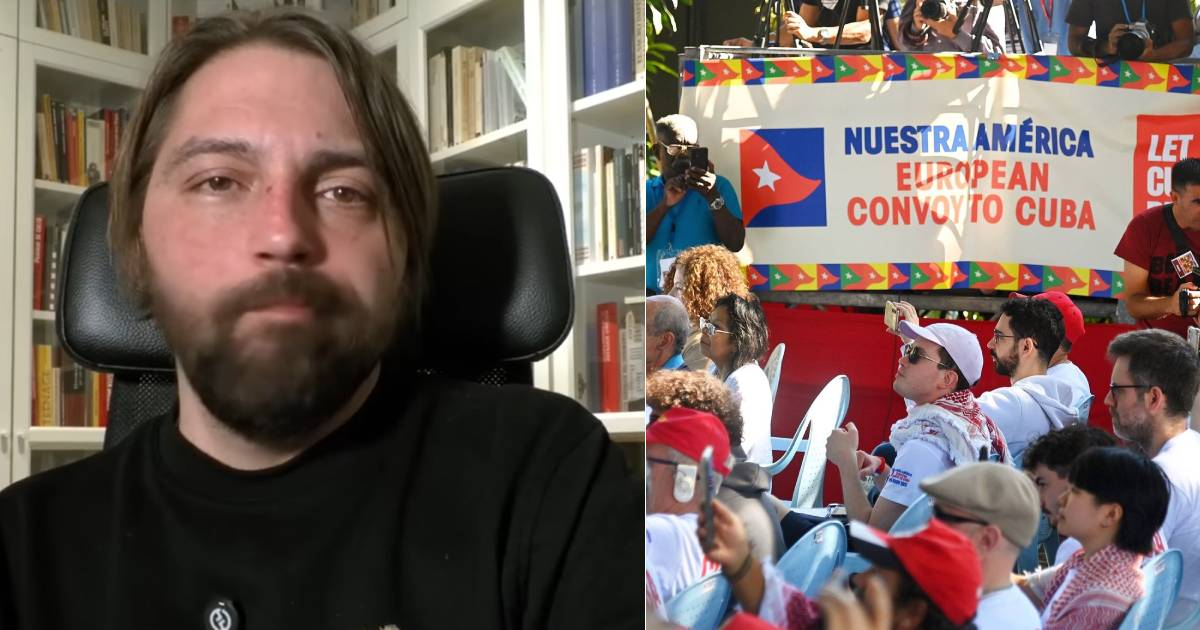
Spanish writer and columnist Juan Soto Ivars has made a strong entry into the debate surrounding the controversial flotilla "Nuestra América" with a message that has resonated widely after stating that what these activists are doing from Europe would be impossible in Cuba.
In a video posted on his YouTube channel, Soto Ivars openly questioned the purpose of the initiative promoted by figures from the international left, including Pablo Iglesias.
Its central argument points to a contradiction that it considers evident: in democratic countries, one can defend the Cuban system without consequences, but the reverse is not true on the island.
"You can walk around Spain wearing a Che t-shirt and claim that democracy doesn’t exist... but try doing the opposite in Cuba," he stated.
The writer went further and defined Cuba as a “spiritual resort” for certain sectors of the Western left, a place that they travel to—he claimed—drawn by a romantic narrative that overlooks the daily reality of Cubans.
“They are going to defend the government that oppresses the Cuban people, not the people,” he stated, in a direct critique of the flotilla and figures like Iglesias, whom he pointed out for participating on the island while announcing interviews with regime authorities.
In his account on X, Soto Ivars emphasized this idea with even harsher messages. "Cuba has been under a dictatorship for 67 years that impoverishes it and prevents choosing a path to prosperity," he wrote, asserting that those who travel to the island do so to "defend the dictatorship, its resort."
His statements come at a particularly sensitive moment, characterized by the deep energy and economic crisis facing Cuba, with prolonged blackouts, shortages of food and fuel, and growing social unrest.
The flotilla "Nuestra América," presented by its organizers as a gesture of international solidarity, has been supported by the government and accompanied by a narrative that exclusively blames external factors for the crisis. However, an increasing number of voices—even from historically left-leaning sectors—are beginning to challenge that version.
One such case is that of the Egyptian filmmaker Basel Ramsis Labib, who took part in similar initiatives towards Gaza and surprised many by labeling the convoy to Cuba as “ridiculous.” He stated that the operation has more to do with political spectacle than real aid, and suggested that resources could be better allocated directly to the population.
"Cuba is not Gaza," he emphasized, while criticizing the "egocentrism" of some participants.
Criticism has also come from the Cuban community itself. On social media, a young Cuban journalist residing in Spain, Náyare Menoyo, issued a direct challenge to Pablo Iglesias: to live for a month in her home in Havana without privileges.
"Don't bring euros or food; live off what they are going to give you there," he said, questioning the politician's ability to make judgments after meeting solely with officials from the Communist Party.
The contrast between these testimonies and the statements made by Iglesias —who has stated that the situation in Cuba “is difficult, but not as it is portrayed from the outside”— has fueled the controversy.
Meanwhile, Soto Ivars' words have resonated in a particularly sensitive area: the difference between the political discourse projected from the outside and the reality faced by millions of Cubans on the island.
His final message, laden with irony, encapsulates the heart of the debate: if defending a system is so easy from the outside, why not try doing it from within?
Filed under: