
Related videos:
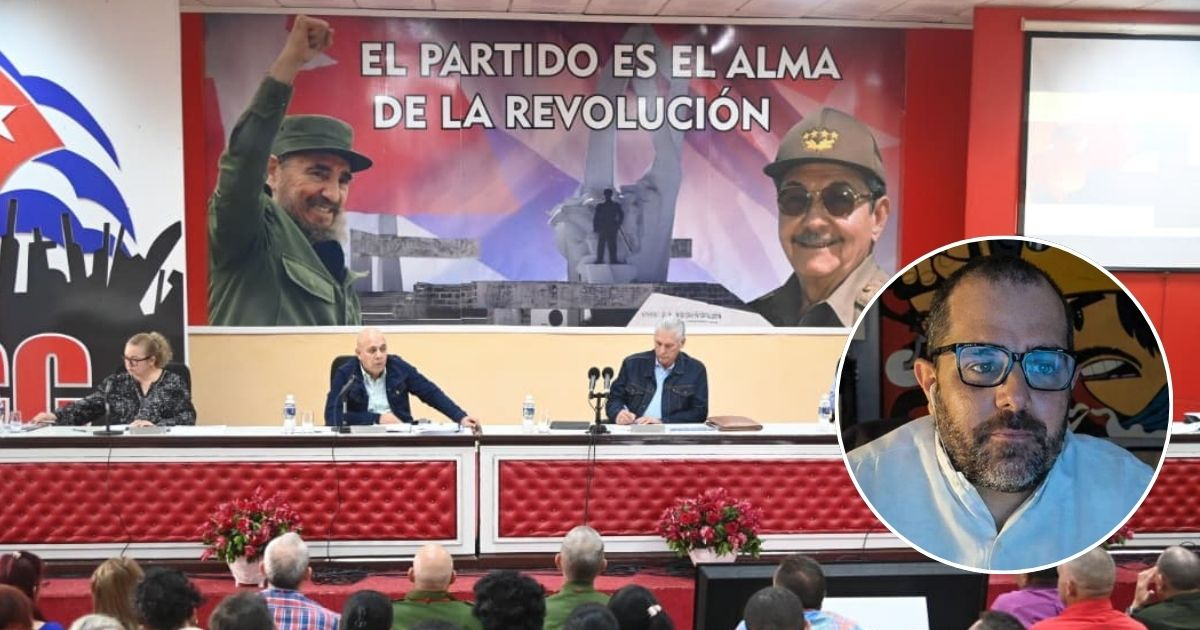
The Cuban filmmaker Ian Padrón has once again stirred the political debate on social media with a direct criticism of the single-party system on the island, asserting that a minority of members of the Communist Party of Cuba (PCC) decides the fate of the entire country.
In a recent post on Facebook, the director posed a direct question to those who defend the continuation of the current model and presented some figures: “If there are approximately 10 million Cubans and the PCC has only 700 thousand members; you represent only 7%.”
His reflection went beyond numbers. Padrón questioned why such a small group has political control over the country and denounced the lack of free elections and party plurality. "There are literally millions of different options for governance, beyond that obedient 7% that you represent," he wrote.
The filmmaker went further by pointing out that many Cubans have not had the real opportunity to choose their leaders. In his view, the current system prevents free political association and represses those who think differently. "Before accepting that all Cubans have the right to freely associate (...) and have plural and direct elections for everyone," he stated.
In his message, he also criticized the official narrative that stigmatizes dissidents, blaming them for the national crisis. For Padrón, the responsibility lies with those who have held power for decades. "The only traitors and the primary culprits of the disaster our nation faces today are those who, representing just 7%, have imposed a single doctrine," he stated.
These statements come amidst a growing public exposure of the filmmaker on political issues. In recent days, Padrón has been at the center of exchanges that have rekindled the debate among figures in Cuban culture regarding the causes of the crisis on the island.
Recently, invited actor Jorge Perugorría to a public debate following his statements at the Málaga Film Festival, where he held the United States government responsible for the worsening situation in Cuba. Padrón, on the other hand, argued that the crisis is “systemic” and is tied to the lack of freedoms and internal political control.
He also responded to those who labeled the criticisms against Perugorría as a “lynching”, stating that the real lynching is that which the power wields against those who dissent within the country, through imprisonment, censorship, or exile.
Padrón's stance reflects an increasingly visible fracture within the Cuban cultural sphere, where some artists are beginning to openly question the political model, while others defend it or choose to refrain from commenting.
In a context marked by economic crisis, blackouts, mass migration, and social disillusionment, his words resonate with a reality that many Cubans—both on the island and abroad—experience daily: the feeling of having no voice in the decisions that shape their future.
Filed under: