
Related videos:
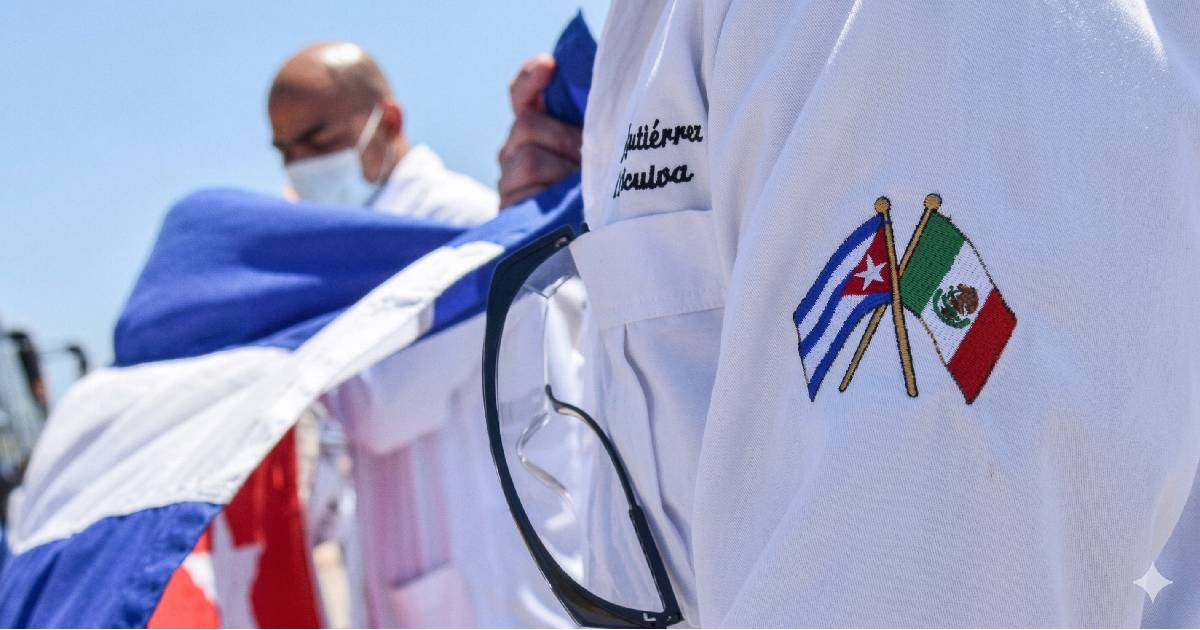
The Mexican Embassy in the United States rejected the accusations against the program for hiring Cuban doctors on Friday, stating that the country's healthcare cooperation respects labor rights and guarantees dignified conditions for foreign professionals.
In a message posted on social media platform X, the diplomatic representation stated that Mexico “rejects these accusations” and maintained that its partnerships in the health sector ensure direct compensation for doctors, as well as dignified working conditions.
According to the statement, foreign workers enjoy the same rights and conditions as Mexican professionals in accordance with the country's legislation.
The statement came shortly after Cuban-American Republican congressman Carlos Giménez accused the ruling National Regeneration Movement (Morena) party of being involved in what he described as a human trafficking scheme promoted by the Cuban regime.
In his post, the legislator denounced that the program is part of a "perverse network of human trafficking" and asserted that the use of medical labor under those conditions constitutes a flagrant violation of human rights.
The controversy occurs amid growing political pressure from Washington against the medical missions organized by the Cuban government.
The day before, Republican Congressman Mario Díaz-Balart directly accused Mexican President Claudia Sheinbaum of being “an accomplice in human trafficking” for maintaining the agreement to hire healthcare professionals from the island.
Díaz-Balart's statements were in response to a press conference in which the president defended the continuation of the program, describing it as a bilateral agreement that has expanded healthcare coverage in rural areas of Mexico where local specialists are scarce.
Sheinbaum assured that the doctors receive the salary that corresponds to their work, although documents revealed by the Mexican outlet Latinus indicate that the payments from the program are transferred directly to the Cuban government and not to the professionals individually.
Various reports about Cuban medical missions indicate that the island's regime retains between 70% and 90% of the salary paid by recipient countries, leaving doctors with only about $200 a month from an estimated cost of $5,125 per professional per month.
Additionally, deserting the program can result in a ban on returning to Cuba for up to eight years.
The program in Mexico currently involves about 3,800 healthcare professionals across 29 specialties, distributed in 23 states through the IMSS-Bienestar system.
The hiring began in 2020 under the government of Andrés Manuel López Obrador and was subsequently expanded by Sheinbaum's administration.
While several countries in Latin America, such as Honduras, Guatemala, Jamaica, and Guyana, canceled their agreements with Havana in the early months of 2026, Mexico remains one of the main partners in these medical missions, which generate between 5 billion and 8 billion dollars annually for the Cuban regime.
Filed under: