
Related videos:
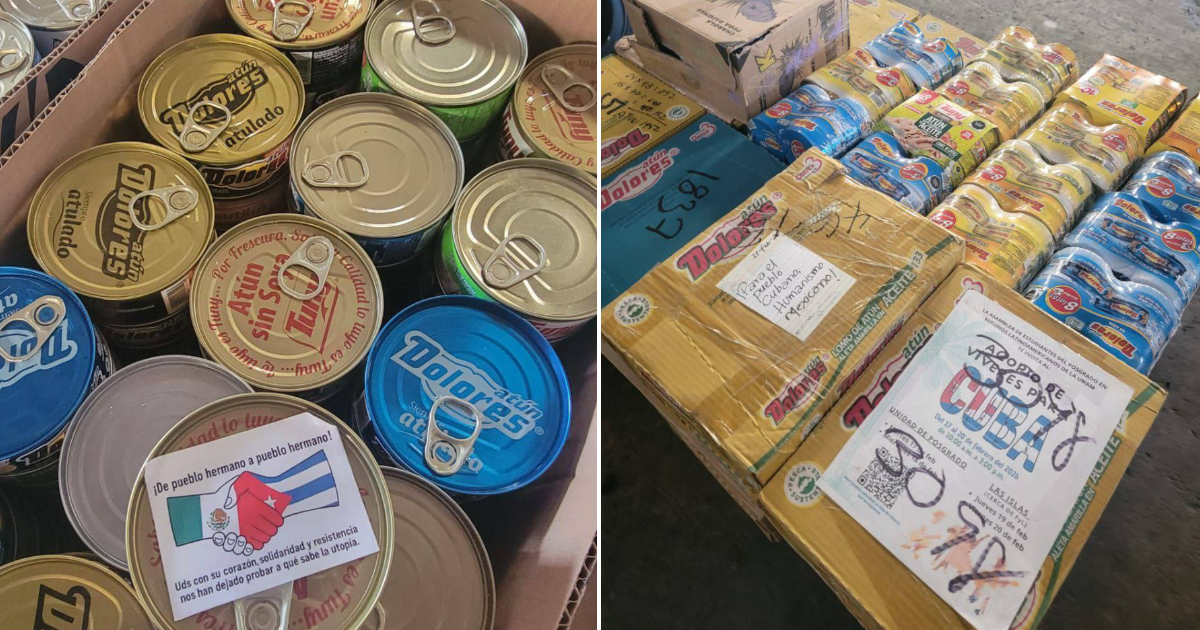
The distribution in Cienfuegos of a food donation sent by Mexico has sparked a wave of critical reactions on social media, where many Cubans are questioning both the quantity of products delivered and the criteria used to define the beneficiaries.
The Grupo Empresarial de Comercio Cienfuegos announced on Facebook that the entire donation has arrived in the area, aimed at “protecting our most vulnerable families.” According to the post, the delivery includes products such as rice, beans, oil, sardines, cookies, baby food, and canned goods, distributed in a differentiated manner among pregnant women, underweight children, elderly adults, health centers, and homes without family support.
The authorities detailed that the distribution prioritizes pregnant women, children, vulnerable groups, educational and health centers, as well as social institutions. Among the mentioned products are packages with limited quantities, often one or two units per beneficiary, depending on the assigned category.
However, beyond the official announcement, the post elicited a strong response from users, characterized by discontent and frustration over the country's economic situation.
One of the comments summed up the frustration with a straightforward phrase: “That’s just to say they gave something.” Others questioned the actual extent of the aid: “It’s embarrassing with all the propaganda and how insignificant it is (my God).”
Criticism regarding the selection criteria was also prevalent. “All communities in Cuba are vulnerable,” stated one user, while another pointed out: “Right now, the entire population of Cuba is vulnerable.”
Doubts about who really receives the products were recurring. "Which families are considered vulnerable?" asked one person, echoing other comments that questioned the lack of clarity in the classification.
Several messages highlighted groups that, according to users, have been left out or inadequately attended to. “For seniors? Just a can of vegetables?” wrote one internet user, while another complained, “And milk for the children.”
At the same time, some reactions combined criticism of the system with gratitude towards the donor country. "Thank you, Mexico. I would be very ungrateful if I didn't thank that government and that people," expressed one user.
Other comments reflected a more structural criticism regarding the dependence on external aid: “How long will this country continue to live like a beggar, relying on donations and assistance?”
Doubts about the distribution were also present: “I hope it reaches the social cases,” wrote one person, while another questioned, “Will that reach the people?”
The reactions observed in Cienfuegos are mirrored in other regions of the country, where the distribution of donations has sparked similar debates regarding the extent of vulnerability and the effectiveness of the distribution process.
In Minas de Matahambre, in Pinar del Río, the distribution of food modules donated by Mexico and the World Food Program also sparked criticism. Among the comments, phrases such as: “The whole population that needs food is vulnerable” and “Vulnerable families, but we are all vulnerable in this country” stood out.
Furthermore, the recent arrival of rice shipments donated by China has reignited discussions about food dependency, with users pointing out that "a country cannot survive solely through donations," amidst the distribution of these shipments on the island, as happened after the arrival of new shipments in Havana.
In another instance, the assistance given to a minor after one of the Mexican shipments was limited to "a package of María cookies and two cans of tuna," as reported following the distribution of donations on the island, which fueled the perception that the scale of the shipments does not match what the population ultimately receives, as evidenced in this documented case.
These episodes occur amid a prolonged economic and food crisis in Cuba, characterized by a shortage of basic goods, frequent blackouts, and a sustained deterioration of living conditions, leading an increasing number of citizens to identify as vulnerable.
Filed under: