
Related videos:
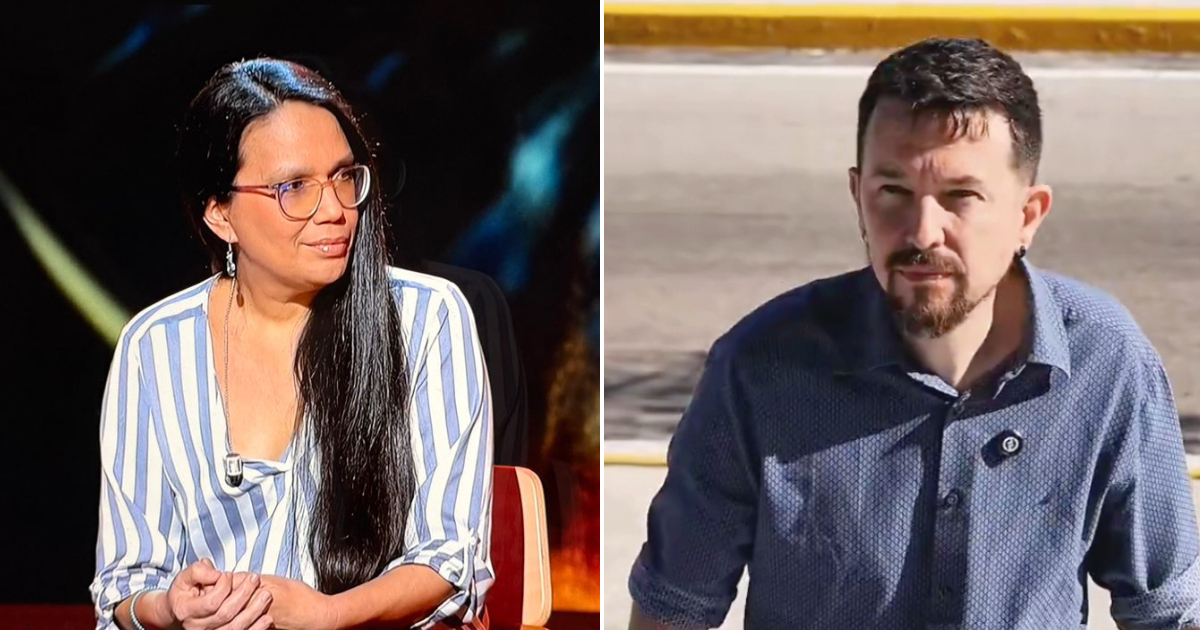
The exiled Cuban journalist Luz Escobar criticized the former leader of Podemos, Pablo Iglesias, on Spanish television for his stance on Cuba and denounced the repression on the island, accusing him of acting as “propaganda for the regime” following his recent visit.
Escobar participated as a guest in the program Horizonte on Cuatro channel, where the current situation of the country was discussed, along with the contrast between the reality faced by Cubans and the image projected by some international political actors.
During the exchange, the journalist was emphatic in her remarks about Iglesias: “He will not acknowledge the real Cuba because he went to promote the Castro regime, to align himself with Díaz-Canel and those who suit his narrative.”
According to Escobar, the Spanish politician deliberately avoids listening to those who suffer repression on the island. "It does not suit him to hear from the mothers of political prisoners, from the journalists who are being silenced, and even less to walk the streets and listen to the voice of the people," he stated.
The activist described her stance as "a great hypocrisy" and denounced that her actions serve as "a megaphone for those who are repressing Cubans."
Escobar's intervention comes amid a growing controversy regarding Iglesias's visit to Cuba, after he downplayed the severity of the crisis on the island following meetings with Communist Party officials.
His statements, made from Havana, sparked a wave of criticism among Cubans both inside and outside the country, who questioned the downplaying of the situation while the population faces blackouts, food shortages, and the collapse of basic services.
The rejection amplified on social media, where numerous users accused Podemos of supporting the official discourse of the regime, as reflected in the reactions of Cubans who publicly dismantled those positions.
There have also been confrontations on Spanish television. In a recent debate, a Cuban journalist directly questioned the spokesperson for Podemos, who was defending the official narrative, resulting in a tense exchange that highlighted the disconnect between that discourse and the experiences of Cubans.
In parallel, Cuban journalist Náyare Menoyo issued a direct challenge to Pablo Iglesias to experience daily life on the island without privileges, inviting him to spend a month in her home in Havana "without bringing euros or food," in response to his statements after meeting with authorities from the Communist Party, as shown by the invitation circulated on social networks and media.
Critics have also pointed out the contrast between the conditions in which international figures are accommodated and the reality of the average citizen, a difference highlighted after it was reported that the Spanish politician made his statements from a luxury hotel in Havana, which generated widespread backlash among users on social media.
After her appearance on Horizonte, the X user @jaliroller shared a clip from the program in which Luz Escobar criticizes Pablo Iglesias' stance on Cuba, allowing viewers to see part of her intervention outside the television space.
The journalist herself reacted shortly after and emphasized the importance of being able to discuss the Cuban reality on Spanish television, as she expressed in a post on her account @Luz_Cuba, where she also thanked for the platform.
In a later message, Escobar reiterated his criticisms of Iglesias and his visit to the island, questioning the portrayal of a vision that, in his opinion, overlooks the repression and the situation faced by Cubans within the country.
Luz Escobar is an independent journalist with a long history of denouncing the abuses of the Cuban regime. Before seeking asylum in Spain, she was subjected to constant surveillance, arbitrary arrests, and restrictions on her movement by State Security.
For years, he has documented the lack of freedoms in Cuba, the criminalization of the opposition, and the systematic harassment of independent journalists, in a context where practicing journalism outside state control entails ongoing personal risks.
In 2022, he received the International Journalism Award from El Mundo in the category of Press Freedom, in recognition of his work against repression and his defense of freedom of expression.
His appearance on Spanish television occurs in a context of growing controversy surrounding Pablo Iglesias's visit to Cuba and his statements about the situation on the island.
Filed under: