
Related videos:
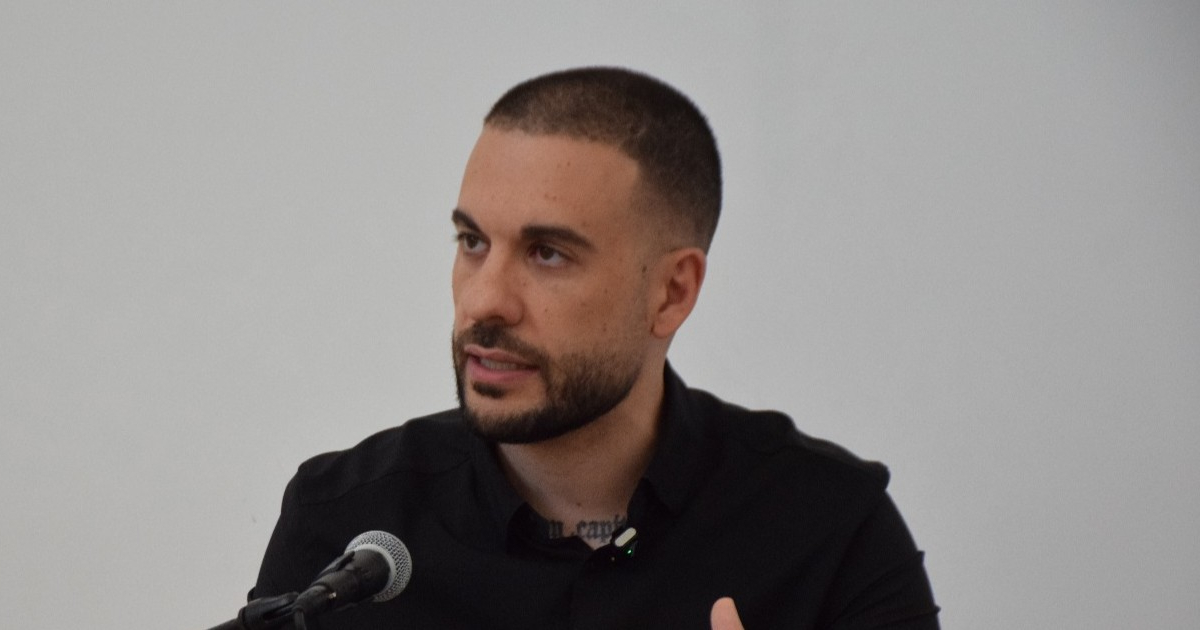
The Spanish Roberto Vaquero, historian, writer, and president of the political organization Frente Obrero (FO), recounted on his country's television how two trips to Cuba in 2005 and 2006 transformed him from a fervent defender of communism into an outspoken anti-Castro figure.
The testimony, broadcast last Wednesday on the "Horizonte" program of the channel Cuatro, gained particular significance amid the debate sparked in Spain by the recent visit to the Island by former Podemos leader Pablo Iglesias as part of the flotilla "Nuestra América".
Vaquero recounted that the first time he was a member of a solidarity brigade of the Spanish Communist Youth. Rather than sticking to the official circuit, he visited 19 CDRs in Havana, Pinar del Río, and Santa Clara to experience real Cuba.
What he found was far from the paradise he had hoped for. "I went there thinking it was the socialist paradise and I did not see the socialization of the means of production; I saw a bureaucratic, nationalist, and Martian party, repressive, that has nothing to do with socialism or with what I thought," he stated.
His second trip, in 2006, was to the cadre school of the Communist Party of Cuba, and the experience turned out to be even more disappointing.
"It was even worse. I knew the people in the Party, and it repulsed me even more," he stated. He described the leaders as "the most opportunistic, the ones who give you things under the table to take to Spain, the ones who then want to come here running."
Vaquero noted that in none of the CDRs he visited did he find true ideological conviction. "In fact, there was one CDR where the president himself offered me cheap cigars from the black market," he recalled.
"There is no popular power; what exists is a bureaucratic regime," he concluded.
The Spanish also revealed that he has been corresponding for over 20 years with Cuban party militants who admitted to being members solely for the material benefits it provided, not out of conviction.
Regarding the origin of the system, Vaquero was categorical: "Fidel Castro becomes a communist because he wants to depend on and be protected by the Soviet Union, and turns Cuba from being a colony of the United States... to what for me was a colony of the Soviets."
"If you do not industrialize the country, if you do not give people the freedom to choose sovereignly what they want to be and what they do not, what differentiates you from those who came before? Nothing," Vaquero emphasized, in a reflection that summarizes the disillusionment of someone who believed in the revolution until they witnessed it up close.
The impact of both visits was profound and definitive. "It has been the greatest identity crisis of my life. I was very pro-regime and very pro-Castro, and I became a fervent anti-Castro. And to this day," he summarized.
At the "Horizonte" table, the Cuban journalist and activist Luz Escobar, who has been exiled in Madrid since 2022, listened to the account and took the opportunity to criticize Pablo Iglesias for his recent visit to the Island.
I find it extremely hypocritical, said Escobar, referring to the attitude of the Spanish politician, who met with the dictator Miguel Díaz-Canel and downplayed the Cuban crisis from a five-star hotel.
Filed under: