
Related videos:
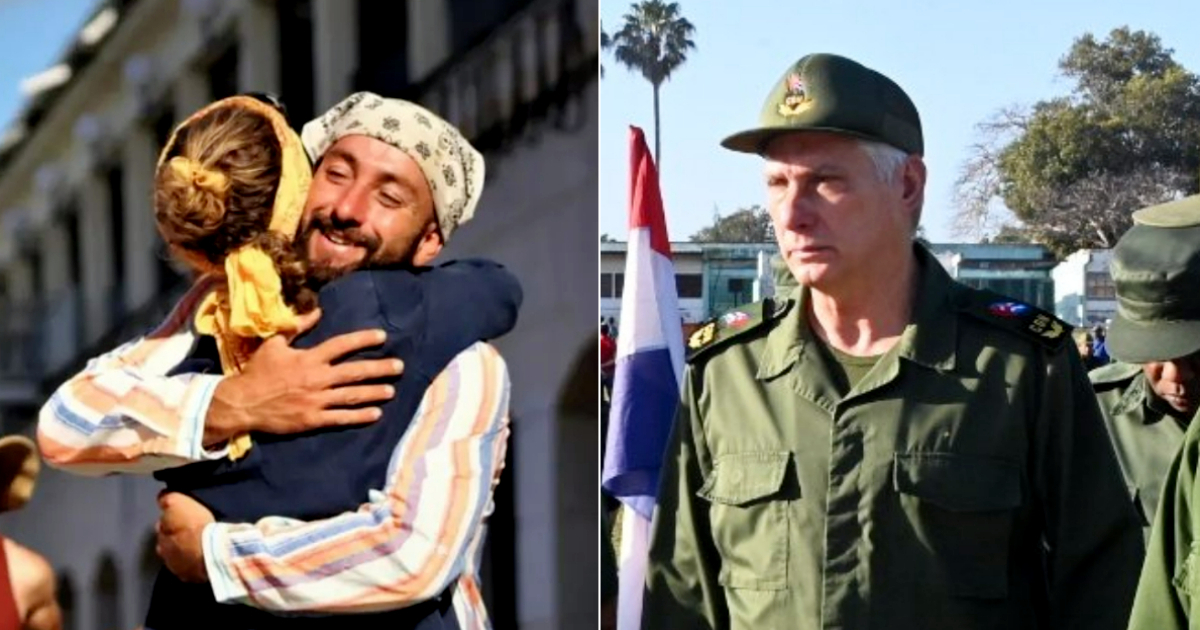
The arrival in Havana of the lost sailboats from the convoy “Nuestra América” has been described as a gesture of solidarity with significant symbolic value.
“Finally in Cuba […] with its solidarity load of necessary resources but, above all, with its load of love in defense of just causes,” wrote the ruler Miguel Díaz-Canel this Saturday on his social media.
He also emphasized that the " a three-year-old girl is the youngest crew member of this expedition", presenting her participation as a sign of international support and asserting that "Cuba is not alone".
However, beyond the epic narrative, the episode raises uncomfortable questions about its real utility, the risks undertaken and the considerable cost involved in its rescue at sea.
It is advisable to start with the basics: how much aid can two small catamarans actually carry? Although there has been talk of tons of supplies in the entire convoy, the individual capacity of these vessels is limited.
In practical terms, its impact on a structural crisis like the one Cuba is experiencing is, at best, marginal. What is evident, however, is the media value of the operation.
That symbolic component took on a very different tone when both vessels disappeared for several days in the Caribbean, prompting the activation of a search and rescue operation led by the Mexican Navy.
Aerial vehicles, ships, and international coordination were mobilized for at least 48 hours to locate the crew members. None of this is free.
It is worth asking who will bear the cost of this operation: Will the Mexican taxpayer pay to rescue a private initiative of questionable necessity?
Although there are no official figures, reasonable estimates place the cost of this type of operation in the tens or even hundreds of thousands of dollars, depending on the duration and resources deployed.
That is to say, a complex and costly intervention —possibly more expensive than the "aid" being transported itself— to support an initiative that, in essence, could have been organized in a much safer and more efficient manner.
Here arises a key question: Was it necessary? Humanitarian aid is by no means an insurmountable logistical problem. There are established channels—maritime, commercial, and even institutional—that allow for the transportation of large volumes of resources without putting human lives at risk or triggering emergency operations.
In this case, however, a formula with high visual and political impact was chosen, but also high risk. The loss of communication for several days not only endangered the crew, but also highlighted the fragility of the operation.
Especially concerning is the presence of a three-year-old on board.
Its inclusion in a journey of this kind, which ultimately required international rescue, raises serious doubts about the seriousness and responsibility of the organizers. This is not a minor detail nor an anecdotal element: it is a line that should never have been crossed.
In the end, what occurred gives the impression that the "Nuestra América" convoy was as much —if not more— a political staging than an effective response to the Cuban crisis.
A lot of symbolism, a lot of visibility… and too many risks for such little real impact.
Filed under: