
Related videos:
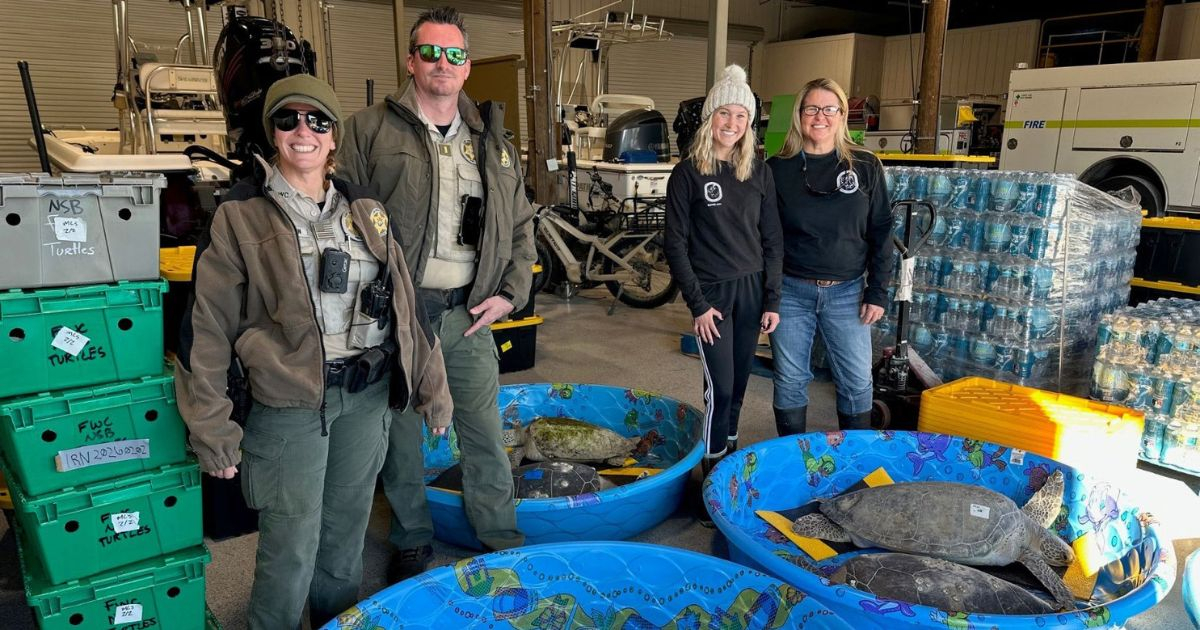
The extreme cold front that hit Florida in recent days caused hundreds of sea turtles to become immobilized due to the low temperatures.
According to the Florida Fish and Wildlife Conservation Commission (FWC), in their X profile, teams from the Fish and Wildlife Research Institute, along with the Law Enforcement and Species and Habitat Conservation divisions, immediately acted to rescue the affected animals in several counties across the state.
The turtles were collected and taken to specialized centers, where they remain under observation until the water conditions stabilize and they can be released back into the ocean.
The phenomenon, known as "cold-stunning," occurs when water temperature drops suddenly, causing turtles—cold-blooded reptiles—to lose mobility and end up stranded or drifting adrift.
The FWC highlighted the coordinated efforts between volunteers, local and federal authorities, and assured that these actions "are an example of the commitment to protect wildlife and ensure the survival of vulnerable species."
A few days ago, in a true race against time, teams from the FWC managed to rescue a young male manatee in Bear Creek, Florida, that was showing signs of cold stress.
The rescue operation took place on January 27 with the participation of trained teams from the FWC and specialists from the Mote Marine Laboratory, the Tampa Zoo, the Bishop Museum of Science and Nature, the Clearwater Marine Aquarium, and the search and rescue team from Eckerd College.
Filed under: