
Related videos:
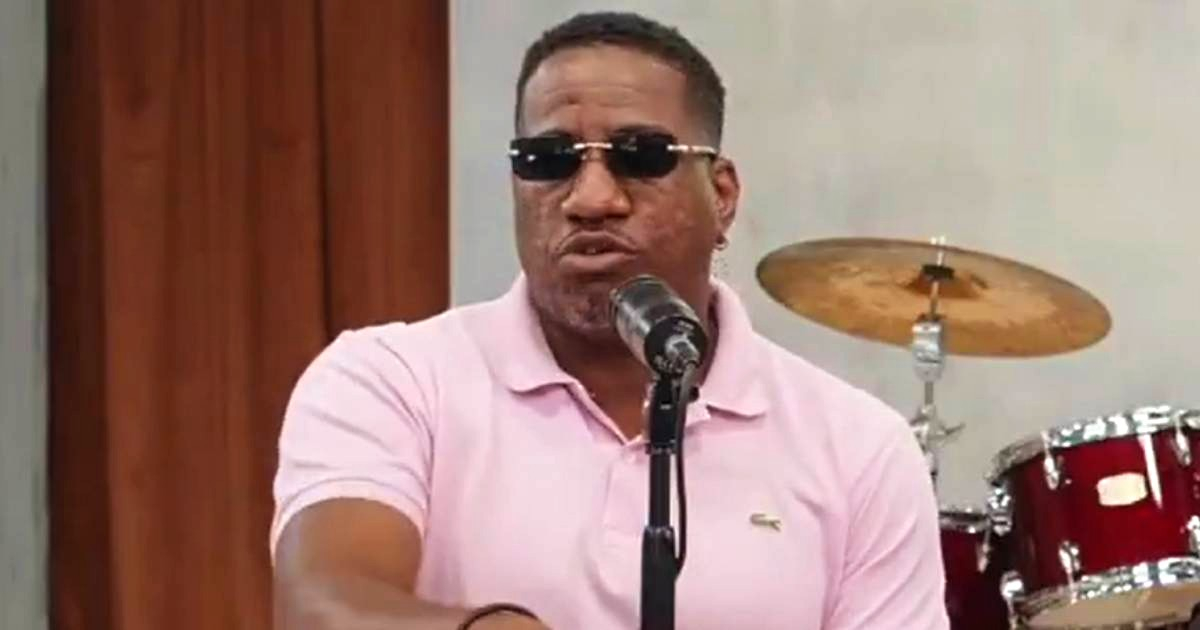
Roberto Bouly, a dance teacher who escaped from the dictatorship over ten years ago, currently resides in Argentina, where he has shaken up the political debate in that country with a devastating testimony about the indoctrination he experienced from childhood under the Cuban regime and the repression faced by those who dare to protest on the island.
Bouly participated last Saturday in the program of journalist Esteban Trebucq, from La Nación+, El Pelado de la Casa, where he directly confronted the Argentine left by comparing the freedom of expression in that country with the reality in Cuba.
"Those guys who are protesting here, or who are burning American flags and so on, could they protest in Cuba? No, they should do that in Cuba," challenged Bouly, whose words resonated strongly on social media.
In one of the most impactful moments of his speech, he recounted how the regime shapes the minds of children from an early age with the idea that Americans are bad. "We were indoctrinated with 'Pioneers for Communism, we will be like Che'... Truly, that phrase resonated throughout my generation and I, being in this country and knowing all the things that happened in Cuba, I ask myself: How did they truly instill in our heads from the moment we woke up that 'Americans are bad' and 'Pioneers for Communism, we will be like Che'? How is that like Che? If Che was a murderer, exiled homosexuals, and created concentration camps."
At another moment, in a video shared on Instagram by the account borderperiodismo the Cuban was emphatic in describing the current situation of the island. Cuba has been taken for 67 years, a phrase that summarizes decades of absolute control by the Castro regime over the population.
Bouly also recalled the figure of the singer-songwriter Pablo Milanés, who before his death in November 2022 had publicly distanced himself from the regime he once supported, as an example of how even figures close to power eventually recognized the reality of the dictatorship.
In his account, Bouly referred to the Military Units for Production Assistance (UMAP), forced labor camps where approximately 35,000 people deemed antisocial by the regime were interned during the 1960s, as evidence of the repressive history of the Cuban dictatorship.
Bouly's testimony also included references to political prisoners who have suffered the brutality of the Cuban judicial system, such as the case of Luis Robles, sentenced to five years for enemy propaganda and disobedience, and later released in January 2025 after negotiations between Cuba and international actors.
A confrontation between Bouly and Argentine activist Francisco Escolar was shared by the President of Argentina, Javier Milei, who publicly supported the Cuban on March 21. The debate highlighted two irreconcilable viewpoints. While the Argentine insisted on blaming the United States and Donald Trump for the crisis on the Island, Bouly responded firmly, drawing on his direct experience.
"Typical of a leftist. He tries to sell the wonders of communist garbage from his comfortable place in capitalism to a person who suffers from communist garbage," wrote the leader.
Filed under: