
Related videos:
Amid a backdrop of escalating tension with the United States and an internal crisis affecting millions of Cubans, the regime once again turned to one of its most exploited symbols: Playa Girón.
The call did not come from a military podium, but rather through a message on social media from Roberto Morales Ojeda, Secretary of Organization of the Central Committee of the Communist Party, who appealed to "combative memory" and "patriotism" as he began the month of April.
"We are facing days of reaffirmation and patriotism, of intense work and a battle of ideas," wrote the leader in a speech that revives the epic narrative of the Cold War to emphasize unity in the face of the "blockade" and current challenges.
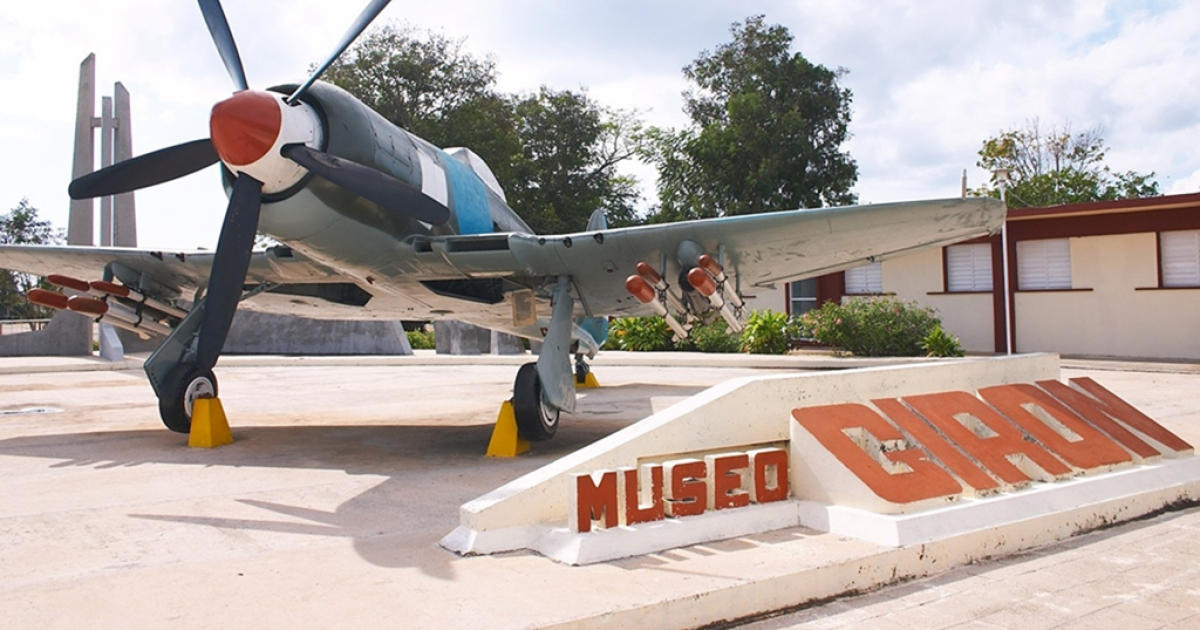
The reference is not coincidental. April marks the anniversary of the Bay of Pigs invasion in 1961, when the Brigade 2506 —composed of Cuban exiles— was defeated by the forces of then-leader Fidel Castro. Since then, the regime has turned that episode into one of the pillars of its political legitimacy, presenting it as "the first great defeat of imperialism in Latin America."
However, more than six decades later, the use of Girón reemerges in a very different context: an island plagued by blackouts, shortages, and unprecedented mass migration.
Morales Ojeda's speech coincides with months of intense military propaganda promoted by the government. Since January, the country has been the scene of exercises for the so-called "National Defense Day," where militias, maneuvers, and weaponry that many Cubans consider outdated have been showcased.
While the government speaks of "combative disposition" and "war of all the people", the images that have been circulated show old rifles, worn-out equipment, and drills that have elicited more skepticism than trust both inside and outside the island.
Everything is happening under increasing geopolitical pressure. Following the capture of Nicolás Maduro in a U.S. military operation earlier this year, Washington has made it clear that its capacity to act in the region remains intact, even mentioning Cuba within its strategic radar.
In that context, the constant invocation of Girón seems to respond less to an imminent threat and more to an internal political necessity: to mobilize emotions, reinforce the narrative of resistance, and divert attention from a crisis that the government itself is unable to contain.
The problem is that, for many Cubans, the epic of 1961 no longer suffices to explain the reality of 2026.
While the official discourse insists on past victories, daily life on the island continues to be marked by uncertainty, a lack of basic services, and the feeling that the country remains trapped in a rhetoric that does not offer concrete solutions.
Thus, amidst recycled slogans and appeals to a history turned into a political tool, the regime once again bets on propaganda as a shield against an increasingly difficult reality to hide.
Filed under: