
Related videos:
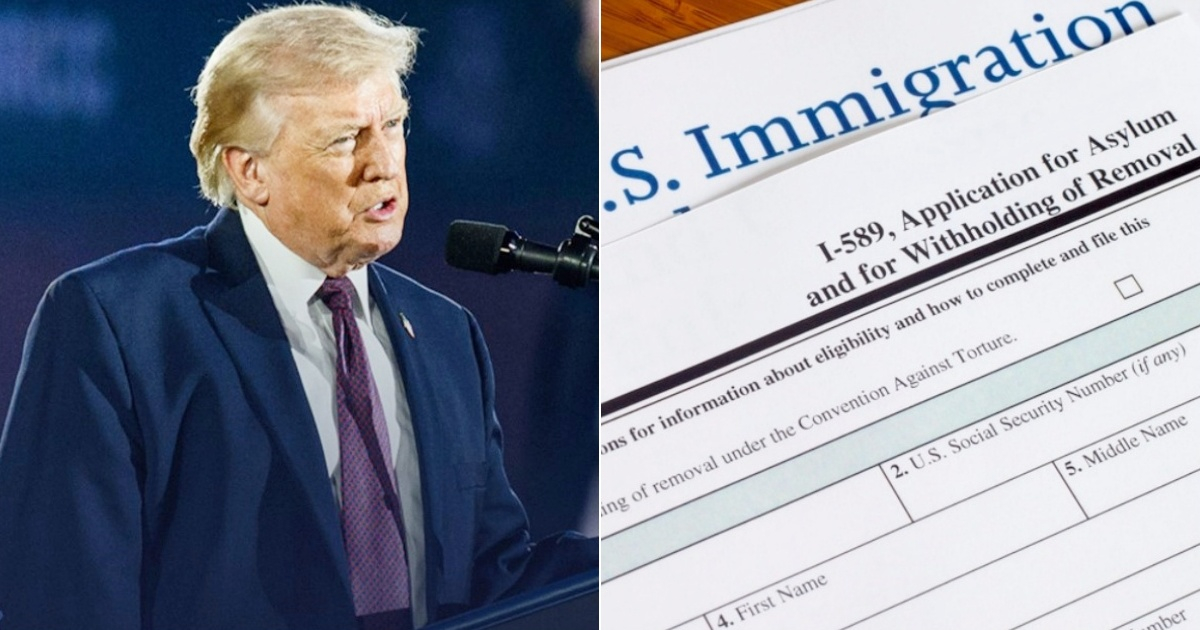
The administration of Donald Trump reactivated the review of asylum applications that had been frozen since the end of 2025, but the measure is not general: it only benefits applicants from countries that are not included in a list of 39 nations considered to be high risk, which includes Cuba.
The measure means that “the pending asylum cases that were put on immigration pause by the federal government since late 2025 for National Security reasons are now ‘unfrozen’”.
Nonetheless, the relief is partial, as citizens of those 39 countries – including Venezuela – remain under restrictions, which limits the actual impact of the announcement.
Cuba is part of the group of countries classified as high risk by the current administration, which means its citizens do not benefit from the resumption of asylum processes.
According to the Department of Homeland Security (DHS), the decision aims to prioritize resources based on the level of risk:
"This measure allows resources to be focused on maintaining a rigorous verification process regarding national security and public safety for the highest-risk cases."
In practice, this means that while some applicants may resume interviews or receive decisions, cases related to those 39 countries remain frozen.
Lawyer Benítez advised those in this group to keep their files updated and their addresses current to avoid missing future notifications.
The partial lifting of the suspension allows for the resumption of interviews and decisions in cases that had been stalled for months, but only for applicants from countries not on the list. For the others, there are no changes for now.
The origin of the migratory pause
The freezing of asylum processes was imposed in November 2025 following a shooting in Washington D.C., when an Afghan citizen—who had entered the United States under a humanitarian program—opened fire on National Guard members, resulting in one death and leaving one seriously injured.
As a result of that event, the Trump administration ordered an unprecedented suspension of all asylum applications processed outside of immigration courts, regardless of the applicant's nationality.
The list of restricted countries was expanded in December 2025 to include 39 nations.
In the case of Cuba, its inclusion is linked to its designation as a state sponsor of terrorism and its refusal to accept repatriations; Venezuela, on the other hand, is listed due to the lack of a central authority that issues reliable documents.
Beyond Asylum: Other Current Restrictions
The limitations are not restricted to asylum. Citizens from those 39 countries also face the suspension of other immigration benefits, including:
- work permits.
-permanent residencies (green card).
-citizenship applications.
These measures are part of a broader immigration policy that the Trump administration has intensified since early 2025, including the elimination of programs such as CBP One, mass raids, and stricter restrictions for asylum seekers.
Government officials defend these actions as necessary to strengthen national security and combat immigration fraud.
However, immigrant advocacy organizations argue that individuals who meet legal requirements are being harmed.
In this context, the partial reactivation of cases represents a limited relief: while some applicants see their processes resume, others—including Cubans—remain in indefinite wait under the current restrictions.
Filed under: