
Related videos:
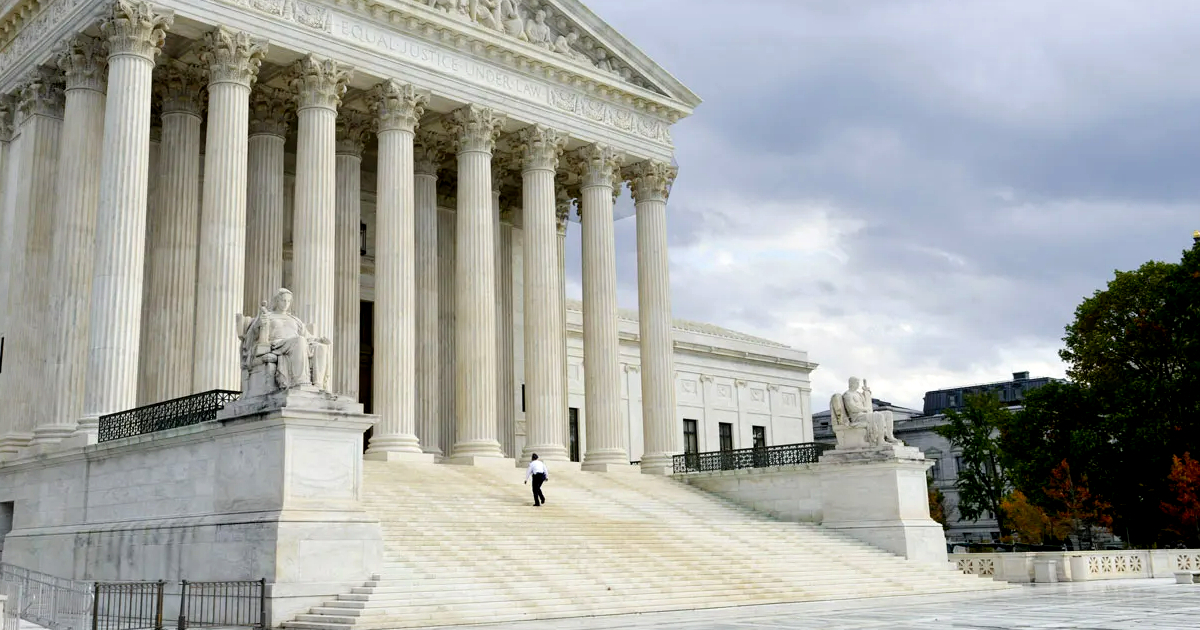
The Supreme Court of the United States issued a unanimous ruling that could have implications for thousands of Cubans with open immigration cases, including those who rely on political asylum as a means to remain in the country.
The decision limits the extent to which federal courts can review asylum denials issued by immigration authorities.
The ruling, issued on March 4 in the case Urias-Orellana v. Bondi, establishes that appellate courts must apply the "substantial evidence" standard when reviewing the conclusions of immigration judges and the Board of Immigration Appeals (BIA).
In practice, this means that federal courts must accept the conclusions of immigration authorities as long as there is reasonable evidence to support them, even when it comes to determining whether a person has suffered persecution or has a well-founded fear of persecution in their country of origin.
The ruling could impact Cubans seeking protection in the United States, particularly those who cannot take advantage of the Cuban Adjustment Act and whose primary legal recourse is to demonstrate political persecution.
More difficult to reverse asylum denials
So far, some federal courts have been examining more thoroughly whether the facts presented by an applicant qualify as persecution. In certain cases, they could even reevaluate the entire case file when reviewing an appeal.
The Supreme Court resolved that discrepancy and concluded that the courts of appeals must be limited to determining whether the administrative decision is supported by reasonable evidence.
According to the court, immigration law states that administrative findings are conclusive "unless any reasonable adjudicator is compelled to reach a different conclusion," which reflects the deferential standard of judicial review.
In other words, to overturn a denial of asylum, the evidence presented by the applicant would have to be so compelling that it would compel any reasonable judge to reach a different conclusion.
The case that led to the decision
The case analyzed by the Court involved Douglas Humberto Urias-Orellana, a Salvadoran citizen who requested asylum after entering the United States in 2021 with his family.
During his migration process, the applicant claimed to have been threatened by a hitman in his country. The immigration judge found his testimony credible but concluded that the described events did not meet the legal threshold of persecution required by U.S. law to grant asylum.
The Board of Immigration Appeals upheld the decision, and subsequently, the First Circuit Court of Appeals also supported it. The case then reached the Supreme Court to clarify what type of review federal courts must apply.
In her opinion, authored by Judge Ketanji Brown Jackson, the court held that Congress designed the immigration system to grant deference to the conclusions of specialized agencies.
The ruling also emphasizes that the assessment of persecution combines elements of fact and law, yet it must still be reviewed under the same deferential standard.
Possible impact for Cubans
The decision could have implications for thousands of Cubans who are currently seeking political asylum in the United States.
In recent years, many migrants from the Island have sought asylum as a way to regularize their immigration status, particularly those who have not been able to access other legal mechanisms.
Among them are numerous Cubans with form I-220A, a document of supervised release given to migrants detained at the border who are then released while their immigration process continues.
This document does not constitute a legal admission or a parole permit, which has left many Cubans in a migratory limbo and without direct access to the Cuban Adjustment Act.
For many of them, political asylum has become one of the few alternatives to remain in the United States legally.
With the new standard established by the Supreme Court, the chances of overturning an asylum denial in federal courts could be significantly reduced.
A system with greater administrative weight
The ruling also reinforces the role of immigration authorities within the U.S. judicial system.
By requiring that federal courts grant greater deference to administrative decisions, the Supreme Court has consolidated a model in which much of the legal battle for asylum seekers is determined in the early stages of the immigration process.
For thousands of Cubans awaiting a resolution to their cases —including many with I-220A— the decision does not immediately change their legal status, but it could influence the chances of success for future appeals in federal courts.
Filed under: