
Related videos:
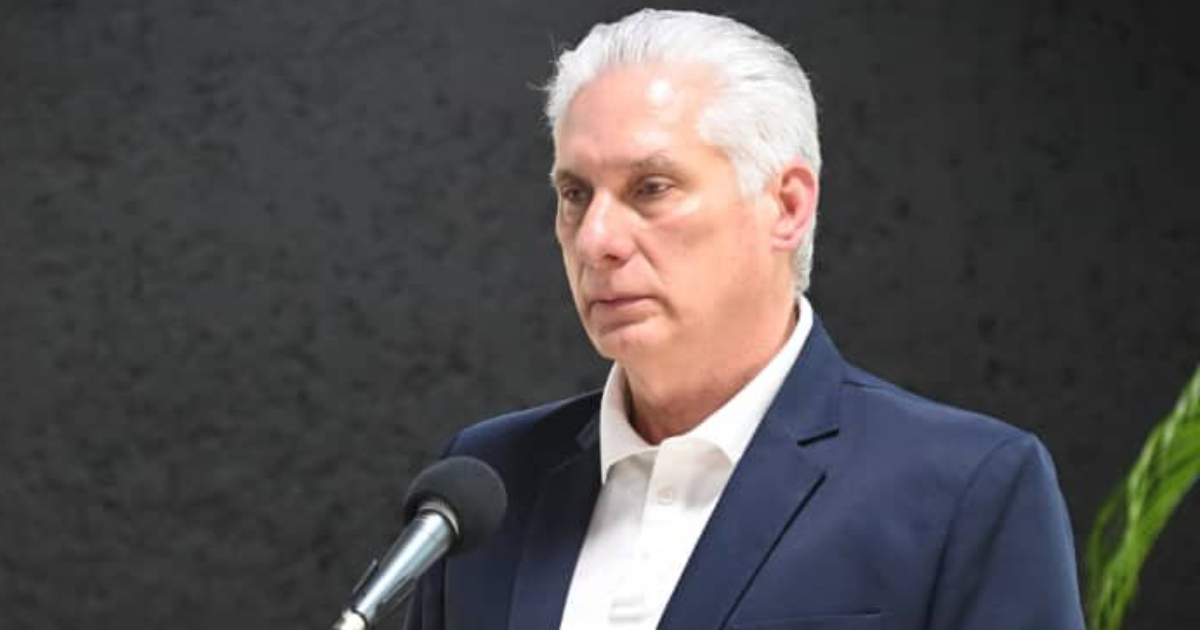
The Cuban leader Miguel Díaz-Canel stated on Monday that the regime will not yield to the crisis the country is facing, during a meeting in Havana with leaders of international ecumenical organizations visiting the island.
"The concept we have shared and defended is that we will not give up," he stated during the exchange held at the Palace of Conventions, in the context of Holy Week.
The meeting was attended by religious representatives who, according to official data, represent about 600 million Christians in around 120 countries. The delegation was invited by the Council of Churches of Cuba and the Reformed Presbyterian Church.
Díaz-Canel thanked for the visit and interpreted it as a sign of international support amid the internal situation in the country. “We greatly appreciate, and we give much significance to your visit, as it reaffirms that Cuba is not alone in a moment like the one we are experiencing, but it also reaffirms the historical relationship that you have had with the Church and with the Cuban people,” he expressed at the meeting, the content of which can also be seen in a video shared on social media.
During his intervention, the leader once again held the United States responsible for the crisis the island is facing, aligning with the official narrative that attributes the economic difficulties to the embargo.
"What we are experiencing is a cumulative process of 67 years of blockade," he stated, according to the report published on the official site of the Presidencia de Cuba regarding the meeting with ecumenical leaders, while denouncing what he described as a sustained policy of pressure against the country.
In this regard, he insisted that the current situation corresponds to a "war economy imposed by the empire" and asserted that there is "a collective punishment towards the Cuban people."
The leader urged religious leaders to convey this vision abroad. "What we ask of you, who visit us, is that, with the awareness and sensitivity you have shown towards Cuba, you can explain the harshness of this situation; it is a punishment, it is a violation of the human rights of Cubans, and it deprives a people—who are generous, hardworking, and supportive—of the most basic necessities to develop their lives in peace," he said.
The meeting took place against a backdrop of profound economic crisis in Cuba, characterized by shortages of food, medicine, and fuel, as well as prolonged blackouts affecting a large part of the population, a situation that the government itself has highlighted in recent exchanges with international and religious actors.
In recent months, the energy situation has worsened due to the reduction in oil shipments from Venezuela, which has increased the challenges in electricity generation and intensified service interruptions.
Despite this scenario, the official discourse maintains a narrative focused on resistance and on denouncing U.S. sanctions as the primary cause of the crisis, a point that Díaz-Canel reiterated before international religious leaders.
Filed under: