
Related videos:
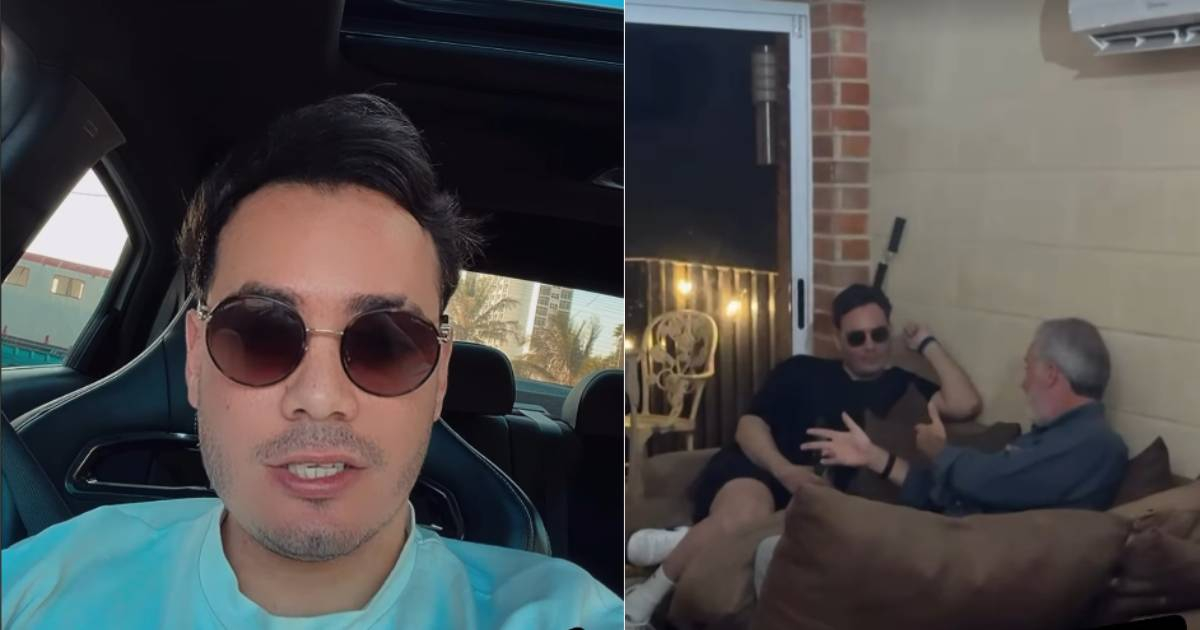
Sandro Castro, grandson of Fidel Castro and an influencer from Havana, stated in an exclusive interview with CNN that he does not receive privileges because of his last name, while also launching direct criticisms against the ruler Miguel Díaz-Canel and expressing a closer affinity to capitalism than to communism.
"My surname is my surname. I am proud of it, of course, but I don’t see the help you mention. I am like any other citizen," said the 33-year-old when asked about the possible benefits of belonging to the Castro family.
However, during the conversation, he acknowledged having an electric generator, a resource that is inaccessible to most Cubans, while describing the daily difficulties on the island.
"We have to fight, as all Cubans say. It’s tough, very tough... even for a Castro. You endure countless hardships: one day there's no electricity, no water, a shipment doesn't arrive, it's very hard," he said.
Owner of the bar EFE in Vedado and with a growing presence on social media, Sandro Castro did not hesitate to question the current government's management. “In my opinion, he is not doing a good job, because there were many things he should have done a long time ago that have not been done properly and are currently harming us,” he stated about Díaz-Canel.
He also spoke candidly about the feelings of the population. "I believe that most Cubans want capitalism, not communism. And that has created divisions and, sadly, hatred," he stated.
In this regard, he emphasized that there is a silent majority on the island with economic aspirations different from the current model. "There are many people in Cuba who think in a capitalist way and who want there to be capitalism with sovereignty in Cuba," he noted.
When the CNN journalist asked what her grandfather would think of these stances, she replied cautiously: "He was a person who had his principles; everyone is as they are. That's my way of thinking."
The statements come in the midst of a recent history of public provocations by the influencer, which include mockery of the government on social media, a satirical video featuring an impersonator of Donald Trump proposing to "buy Cuba," and criticisms of cultural figures like Silvio Rodríguez.
By October 2025, he had made his position clear on Instagram: “Revolutionary yes. Communist no. I respect my country and government.”
His growing media exposure was amplified following a profile published by The New York Times, which placed him at the center of the debate about the limits of criticism within the Castro family itself.
While sectors aligned with the government label him as an "ideological enemy," opposition voices question his credibility, pointing out the gap between his lifestyle and the reality faced by most Cubans. In his own business, for example, the entrance fee is more than 1,000 Cuban pesos and the minimum spending per table reaches 15,000 CUP, which is equivalent to nearly two months' average salary on the island.
"The economic situation in Cuba is hitting everyone, especially those at the bottom," acknowledged Sandro Castro himself, in a phrase that encapsulates the contradiction of a critical discourse that, despite its nuances, emerges from a privileged position within Cuban reality.
Filed under: