
Related videos:
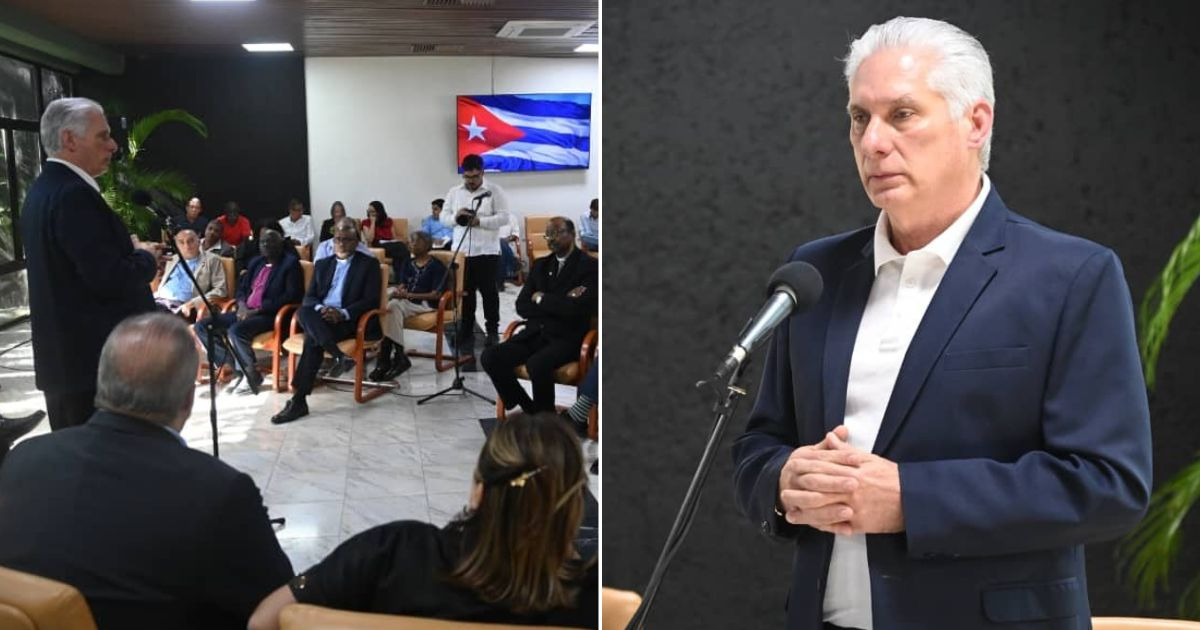
The Cuban president Miguel Díaz-Canel urged a delegation of international religious leaders on Monday to share the regime's official narrative about the crisis facing Cuba with their congregations, essentially turning them into spokespersons for his government to 600 million Christians from about 120 nations.
The meeting took place at the Palace of Conventions in Havana, where Díaz-Canel received high-level ecumenical representatives invited by the Council of Churches of Cuba (CIC) and the Reformed Presbyterian Church, as part of the Holy Week celebrations.
"We ask that you demonstrate this reality; that you tell this reality, and to the leaders of our churches, to continue developing the community initiatives that have always supported us," stated the president, according to official media reports.
Visitors, for their part, stated that Cuba is not a threat to the United States, aligning with the discourse of the Cuban regime at a time of increasing tension with Washington, according to the report from the official agency Prensa Latina.
The visit occurs in a context of intense religious diplomatic activity on the island.
Days earlier, U.S. Ambassador Mike Hammer met with the Alliance of Evangelical Churches in Cuba, signaling that faith communities have become a battleground for political contention between the regime and its opponents.
The crisis that the Cuban government is asking these leaders to explain to the world is presented as an unprecedented situation, marked—according to the official version—by the impact of the U.S. embargo on the national economy.
But of course, they conveniently omit the part about being the ones responsible for plunging Cuban civil society into one of the worst crises in its history.
The Cuban economy has experienced a contraction of 23% since 2019, with widespread shortages of food, medicine, and fuel affecting the entire population.
That situation is compounded by the energy collapse worsened by the end of oil shipments from Venezuela since December 2025, which has left the country without one of its main sources of supply and has deepened the blackouts that Cubans experience daily.
Filed under: