
Related videos:
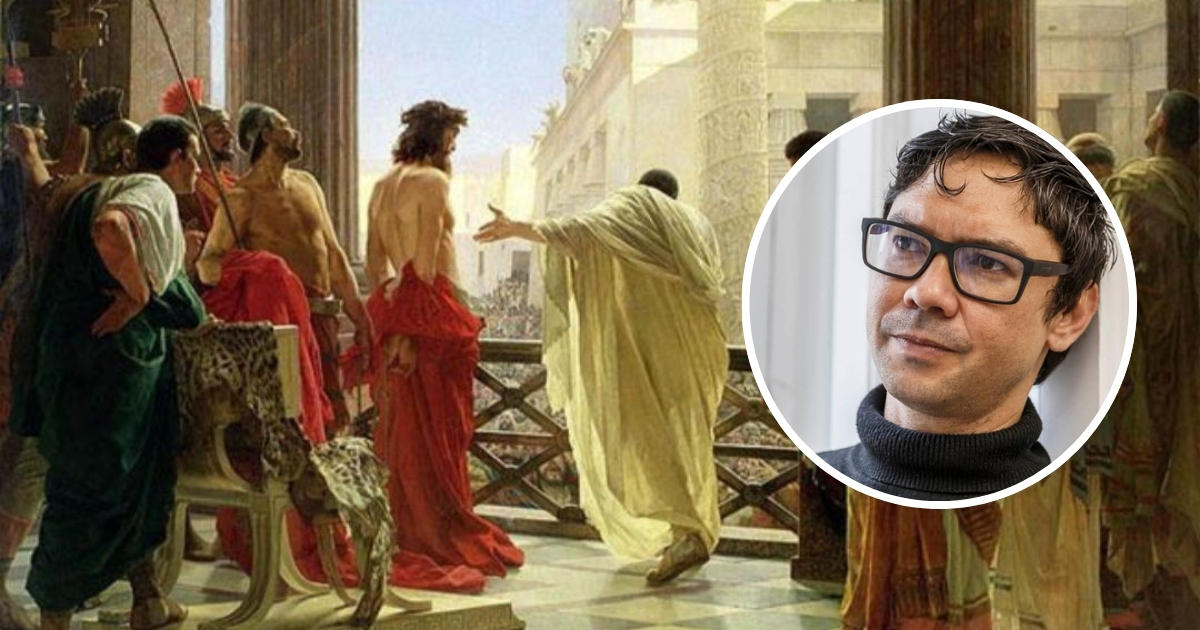
The Cuban playwright and activist Yunior García Aguilera denounced this Friday that the regime of Miguel Díaz-Canel is carrying out what he called an "Operation Barrabás": the regime releases common prisoners to simulate clemency before the Vatican and the international community, while political prisoners remain incarcerated.
The report comes a day after the Cuban government announced the pardoning of 2,010 inmates, officially presented as the largest in a decade and framed as a humanitarian and sovereign gesture on the occasion of the 65th anniversary of the victory at Playa Girón.
García accompanied the message with the painting "Ecce Homo" (1871) by the Italian Antonio Ciseri, which depicts the biblical moment when Pontius Pilate presents Jesus before the crowd before releasing the criminal Barabbas. The metaphor is direct: the regime releases the guilty while keeping the innocents imprisoned.
The pardon announced on Wednesday explicitly excludes those convicted of crimes against state security, terrorism, or espionage, categories under which the regime classifies the majority of political prisoners.
Independent organizations document the extent of what is excluded from these measures of clemency. Prisoners Defenders reports 1,214 political prisoners in Cuba as of the end of February 2026, while Justicia 11J records at least 760, including 358 detained during the protests on July 11, 2021.
The pattern reported by García is not new. In the release process of January 2025, when the regime freed 553 inmates, only 40% were political prisoners; the rest were common inmates, including those convicted of serious crimes.
The Vatican-mediated process, announced on March 13, also follows this logic. Of the 51 prisoners whose release was announced in that context, the OCDH has only confirmed 27 as political prisoners to date, calling the process a "poor advancement."
Other opposition voices joined in the criticism. Berta Soler, from the Ladies in White, described the pardon as "smoke and mirrors for the international audience" and pointed out that the prisoners from 11J "remain untouched." José Daniel Ferrer, from the Cuban Patriotic Union (UNPACU), was more specific: "They exchange criminals for image, but Maykel Osorbo, Luis Manuel Otero, and others remain in prison."
García, aged 39, is the founder of the citizen movement Archipiélago and was the main promoter of the Civic March for Change on November 15, 2021. On the day of that march, regime forces blocked his street with a bus and surrounded his home with agents and pro-government mobs to prevent him from leaving. Two days later, he fled to Madrid, where he has lived ever since.
From exile, García maintains a constant critical activity and has an open case in Cuba that, as he himself has stated, could result in a sentence of 27 to 30 years in prison if he returned to the island.
Filed under: