
Related videos:
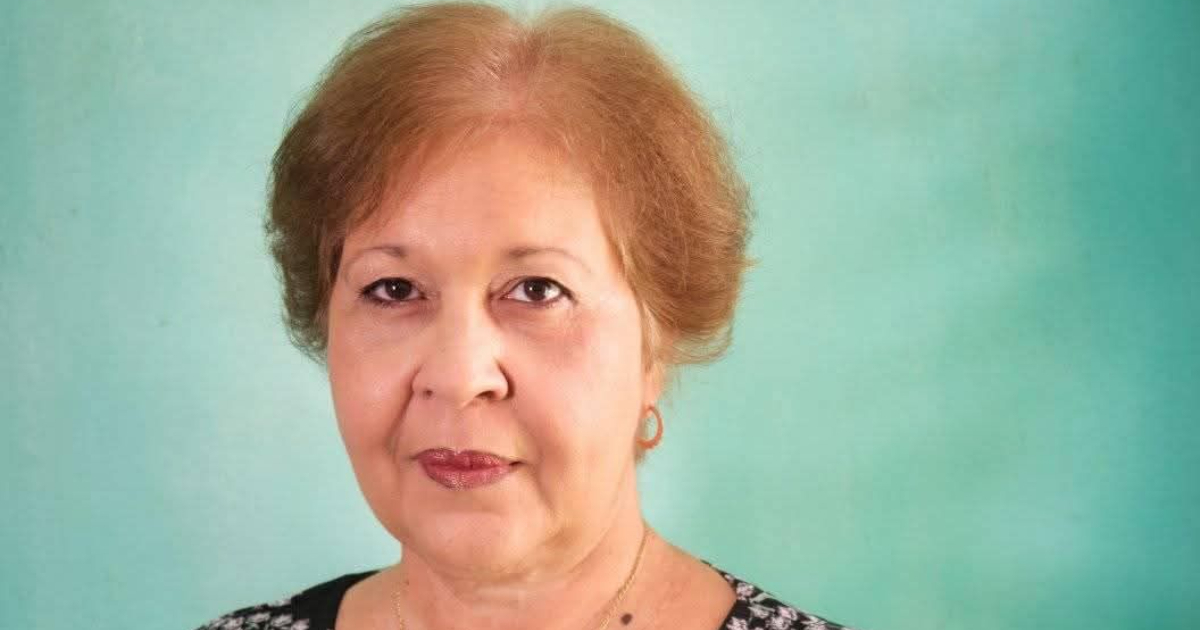
The Cuban intellectual Alina Bárbara López Hernández stated that the crisis facing Cuba is not a recent consequence of the measures taken by U.S. President Donald Trump, but rather the result of decades of internal policies by the government itself.
In an interview granted to Opción Marxista Internacional, which she later shared in full on her Facebook profile, López was emphatic: “The situation in Cuba and for its people is precarious, humanitarian, but long before Trump's oil blockade.” She added, “The misery predates Trump, driven by the unpopular policies of successive Cuban governments.”
The historian questioned why part of the international community focuses solely on external sanctions while ignoring the internal situation of the country. “None of them mention our political prisoners or the conditions of daily repression against freedom of expression,” she pointed out.
In his analysis, he describes a scenario of structural deterioration and deep social crisis. “People are going hungry, exactly that word is the one to use, there is no other,” he stated, referring to the shortage of food, prolonged blackouts, and the collapse of basic services.
He also attributed the country's current weakness to accumulated decisions of the political system: “I believe that this weakness of Cuba as a nation [...] is essentially due to the Cuban government.”
López also denounced the increase in repression and cited specific cases that illustrate the situation. He mentioned the intellectual José Gabriel Barrenechea, who was sentenced to six years in prison for participating in a peaceful protest; Professor Ariel Manuel Martín Barroso, sanctioned to ten years for writing a critical graffiti; and the young people Ernesto Medina and Kamil Zayas, who are being investigated for a podcast about the reality in Cuba.
According to reports, there are over a thousand political prisoners in Cuban jails, and there have been reported deaths in state custody due to lack of medical care, food, and suitable conditions.
In this context, he warned about a phenomenon he considers particularly serious: the loss of trust in internal solutions. "That is extremely painful to acknowledge: there is a crisis of patriotism in Cuba," he stated, noting that part of the population views external pressure as a possible way out of the internal political shutdown.
The academic has repeatedly stated that the underlying problem in Cuba is not solely economic but political, linked to the lack of rights and the exclusion of citizenship, as she has argued in her critiques of the economic reforms promoted by the regime, where she warned that without political changes, it is impossible to reverse the crisis.
In that same vein, she explained her transition from academic analysis to civic action, considering that silence was no longer an option given the country's deterioration, as she stated in a personal reflection in which she affirmed that “it was not possible to remain silent”.
In the interview, she also discussed her own personal situation. She explained that she is facing legal proceedings due to her civic activism and that the prosecution is seeking prison sentences for both her and the anthropologist Jenny Pantoja for exercising the right to peaceful protest.
Despite the seriousness of the situation, he rejected foreign military intervention: "I would never ask for military intervention in my country." However, he deemed another form of international support necessary and added: "I do believe, with all the responsibility in the world, that Cuba would require humanitarian intervention in the style of the UN Blue Helmets."
López argued that the solution to the crisis must come from within the country. “My country needs internal changes, not because the United States says so, but because it is what we demand as those who live here. Cuba needs the people in this country to be heard, it needs changes that come from the grassroots, it needs democracy, it needs things to function, we need pluralism, respect for different ideas, because without that it is not possible to build a functional country,” he stated.
His statements come in the context of a growing economic and social deterioration on the island, characterized by shortages, inflation, prolonged blackouts, and an increase in citizen discontent.
Filed under: