
Related videos:
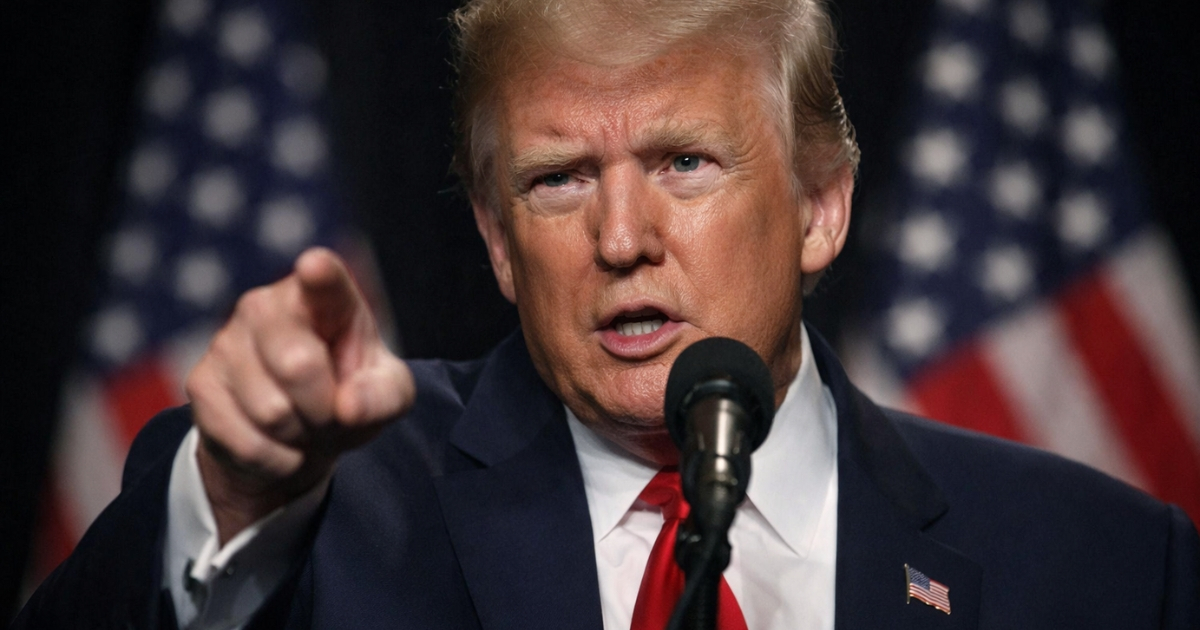
This Monday, Donald Trump once again stated to reporters that Cuba will be next, yes to fall, describing it as "a disaster, a failed country" that will fail very soon and we will be there to help our great Cuban-Americans. This is the most direct statement in a sustained escalation throughout March. Here are seven key points to understand what it means and what may come next.
1. What exactly did Trump say?
In response to a journalist's question, Trump replied straightforwardly: "Cuba is a disaster. It's a failed country. It will fail very soon, and we will be there to help, to help our great Cuban-Americans." He added that the families of many Cuban-Americans "were mutilated and killed by Castro." He left no room for ambiguity.
2. What does "Cuba is next" mean?
It is not the first time Trump has used that phrase. On March 28, at the FII Priority Summit in Miami before investors, he said, "Cuba is next" after mentioning his actions in Venezuela and Iran, adding ironically: "pretend I didn't say it, please, media". On March 16, at the White House, he declared: "I will have the honor of taking Cuba". According to Bloomberg, the plan is not a military invasion but rather to turn the island into an economic protectorate through energy isolation and controlled transition.
3. What has the Trump administration already done?
The pressure is concrete and accumulating. On January 3, Delta Force captured Nicolás Maduro in Caracas, cutting off Venezuela's supply of between 26,000 and 35,000 barrels of oil per day to Cuba, which constitutes 80-90% of its imports. On January 9, Mexico suspended its shipments due to the threat of tariffs. On January 29, Trump signed Executive Order 14380, declaring Cuba an extraordinary threat and imposing tariffs on countries that supply oil to it. The Coast Guard intercepted at least seven tankers. Since January 2025, the administration has imposed over 240 sanctions against Cuba.
4. What is the energy situation on the island?
Catastrophic. On March 25, the electrical generation deficit reached 1,885 megawatts during peak nighttime hours, with only 1,145 MW available against a demand of 3,000 MW. Blackouts are affecting between 50% and 64% of the country. Satellite images show that nighttime light intensity in Cuban cities has fallen by up to 50% compared to historical levels. The economy has seen a decline of 23% since 2019, and a contraction of -7.2% is projected for 2026. Protests with pot-banging began on March 7 in Havana and multiple locations across the country.
5. What did the Democrats do in Congress?
On March 27, 14 Democratic congress members led by Gregory Meeks and Pramila Jayapal introduced the Act to Prevent an Unconstitutional War in Cuba, aiming to limit the executive's ability to take military action without Congressional authorization. Meanwhile, more than 8,000 Cuban Americans gathered in Hialeah at a rally supporting Trump's actions against the Cuban regime.
According to reports, there are secret negotiations led by Marco Rubio to reach an economic agreement with sectors of the Cuban government. Senator Ted Cruz, for his part, has stated that there will be changes in Cuba in six months. Meanwhile, human rights organizations noted that Cuba recorded 1,214 political prisoners, highlighting that internal repression persists despite external pressure.
Filed under: