
Related videos:
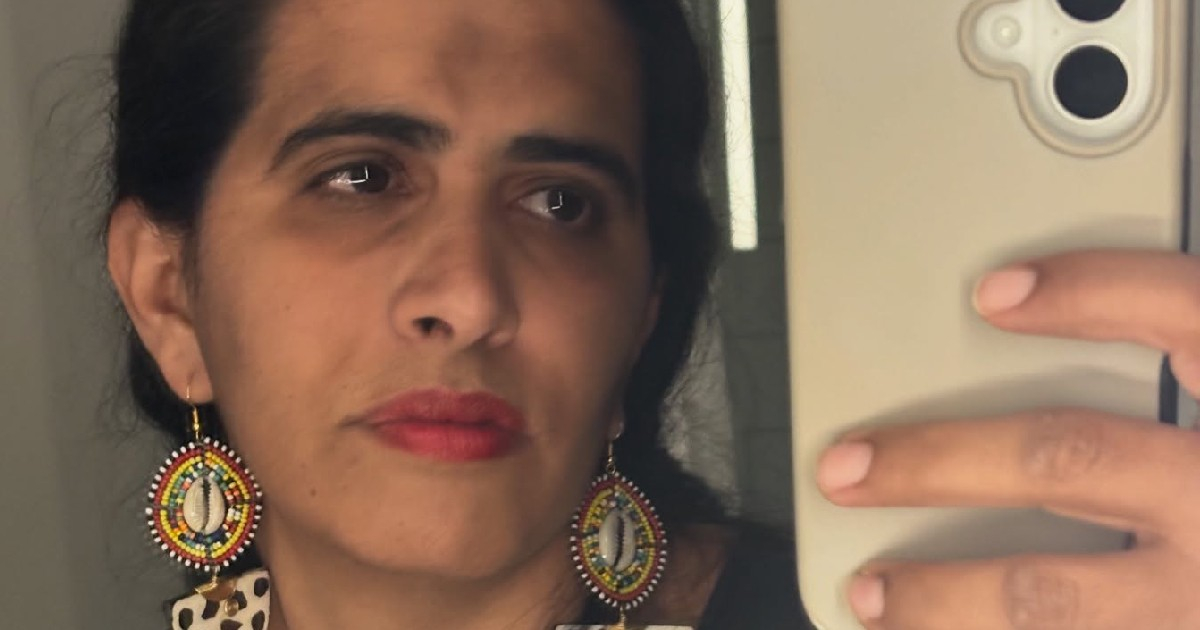
The activist and art curator Anamely Ramos González denounced this Friday that the releases announced by the Cuban regime only benefit common prisoners, while political prisoners remain incarcerated and are subjected to what she described as "extreme cruelty."
The Cuban government announced the pardon of 2,010 sanctioned individuals, presented as a gesture for Holy Week under Article 90, Section II of the Constitution. However, the decree explicitly excludes crimes against authority, a legal category that the regime systematically uses against protesters and political opponents, particularly those from the protests on July 11, 2021.
According to the information that reached Ramos, releases are taking place in two forced labor camps in Havana: 41 common prisoners in Toledo 2 and 75 in La Lima, with crimes including theft, violence, and drugs.
The activist described the procedure as a deliberate display of sadism: "They gather the prisoners and read the list of those who will be released. Just imagine… many of the political prisoners are in shock, completely devastated. Extreme cruelty."
Ramos was direct in pointing out the intentions of the ruling power in the country: "They are possibly bringing out the worst from the prisons for the streets, because the regime does not want Cubans to be safe; it wants to ensure its own safety."
The activist also took aim at part of the international press, accusing it of complicity with Castroism for often reporting with biases and viewpoints that would benefit the government of the nation at the expense of the civil society mistreated by it. She called for reporting from the perspective of the Cuban people, not their perpetrators.
His message concluded with a direct call to action: "Our political prisoners hurt us, family. We have to move for them and for all of us. It is now."
The activist's complaint adds to a chorus of critical voices. The artist Ulises Toirac described the pardon as a selective trap for excluding crimes against authority. Manolín "El médico de la salsa" accused the regime of using the pardon as "manipulation to prolong its power." Opposition leader José Daniel Ferrer pointed out that the regime is using the pardon to escape a tight spot without including any political prisoners, in a context marked by the arrival of Russian oil to the Island.
Human rights organizations also condemned the announcement. Prisoners Defenders, through its president Javier Larrondo, reported that the pardon takes place amidst a repressive crackdown with dozens of new political prisoners recorded just in March. The organization reported 1,214 political prisoners at the end of February 2026, while Justicia 11J estimates at least 760, including 358 from the 11J protests. The Cuban Observatory for Human Rights demanded the inclusion of all political prisoners in a swift and transparent process.
This is the second mass pardon of 2026. The first one took place on March 12, when 51 prisoners were released following an agreement mediated by the Vatican, of which only between 19 and 27 were verified as political prisoners by independent organizations. The same deceitful pattern repeats itself in all the pardons of recent years.
Filed under: