
Related videos:
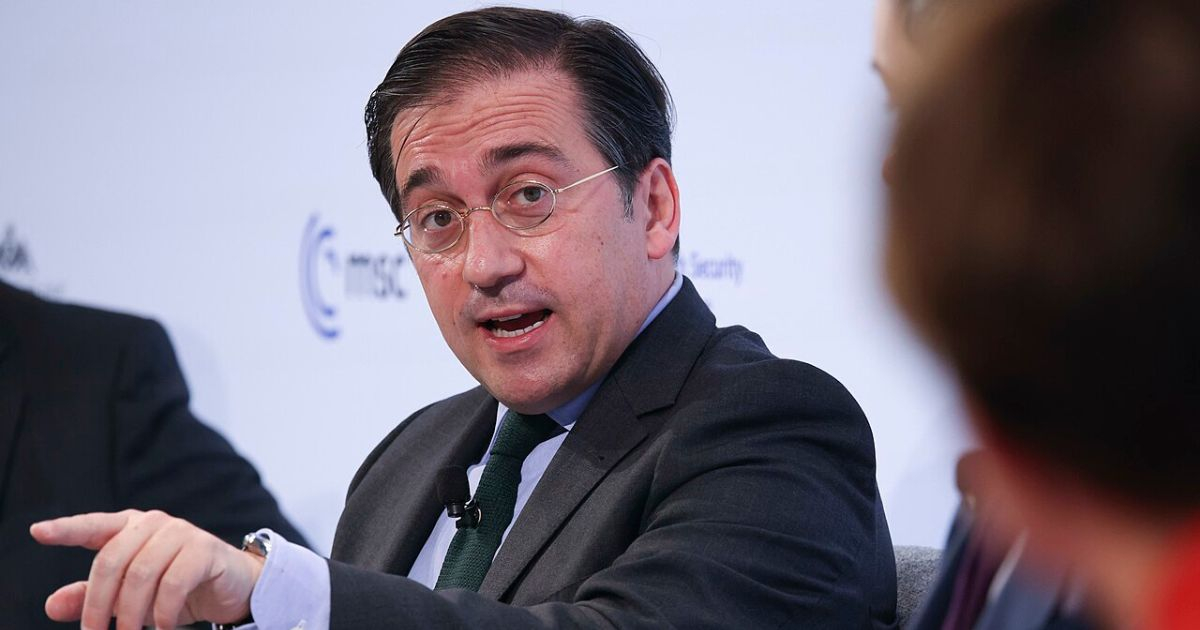
The Spanish Minister of Foreign Affairs, José Manuel Albares, stated this Monday in an interview with the public broadcaster TVE that Spain is "in conversation with other countries to try to do something" jointly in Cuba, while admitting that the country "cannot do everything on its own."
Albares stated that Spain can do two things, and it is doing them: clarifying its opposition to the U.S. embargo and enlisting other countries to take that stance, a process that "takes some time," as seen in cases such as Gaza, Ukraine, Greenland, or Iran.
"Spain is the one that ultimately leads these positions", insisted the chancellor, who expressed confidence that the Spanish stance will end up setting the international path, as was the case with Palestine or Iran.
However, Albares' statements overlook an uncomfortable reality: the crisis facing Cuba did not begin with the pressures from Washington, but is the accumulated result of 67 years of communist dictatorship, poor economic management, and a model that has systematically undermined the country's productive capacity.
What has indeed worsened the situation in recent months is the Operation Absolute Resolve on January 3, 2026, through which the United States intervened in Venezuela and captured Nicolás Maduro, cutting off the supply of Venezuelan crude oil to Cuba, its main historical supplier.
This was joined by the Executive Order 14380, signed by Trump on January 29, which declared a national emergency due to Cuban threats and imposed tariffs on third countries supplying oil to the island.
The result has been an unprecedented energy crisis: power outages lasting between eight and twenty hours a day, a deficit in electricity generation exceeding 1,500 MW, and the collapse of distributed generation due to lack of fuel for months.
In this context, Spain has positioned itself as the first country in the world to mobilize humanitarian aid to Cuba, with two packages valued at over 1.3 million euros.
The first was announced on February 16 following Albares' meeting with the Cuban Foreign Minister Bruno Rodríguez Parrilla in Madrid, and included food and medical supplies channeled through the United Nations system.
The second was distributed last Wednesday in Santiago de Cuba: one thousand basic kits containing rice, legumes, canned goods, and hygiene products, benefiting approximately 5,000 people, coordinated by the Spanish Agency for International Development Cooperation along with the World Food Programme and the Pan American Health Organization.
Albares committed to sending as many aid packages as "necessary," but the Spanish initiative poses a question that the chancellor does not answer: to what extent does this humanitarian aid serve to alleviate the suffering of the Cuban people, and to what extent does it contribute to sustaining a regime that has denied fundamental freedoms to that same people for decades?
The chancellor also demanded that it be "only the Cuban people" who can decide their future, referring to the threats from President Donald Trump, who on March 16 stated that he would have the "honor of taking Cuba" and on March 27 said that Cuba would be "the next" after Iran.
While Spain seeks to formulate a multilateral response, Cubans continue to face blackouts, shortages, and repression under a regime that has shown no signs of political openness or respect for the human rights of its own people.
Filed under: