
Related videos:
Federal Judge Alvin K. Hellerstein of the Southern District of New York dealt a new blow to Nicolás Maduro's legal strategy by prohibiting his lawyers from sharing evidence of the case with other co-defendants who have not yet been arrested.
In the court order, Hellerstein was categorical: the material of the case "may not be shared with any defendant who has not yet been arrested, nor with their lawyers"; and he added that "it is not necessary to share this evidence to prepare the defense" of those who are already present in the proceedings.
The decision fully supports the position of the Prosecution, which had requested that restriction during the second hearing on March 26, arguing risks to witnesses and the integrity of the investigation, according to reports from CNN.
The co-defendants excluded from access to the evidence are key figures of Chavismo.
Among them are Interior Minister Diosdado Cabello; Maduro's eldest son Nicolás Maduro Guerra -nicknamed "Nicolasito"-; former official Ramón Rodríguez Chacín and Héctor Rusthenford Guerrero Flores, alias "Niño Guerrero", the alleged leader of Tren de Aragua, a gang designated by the government of Donald Trump as a transnational terrorist organization.
All of them deny the charges against them and remain beyond the reach of U.S. justice.
The Venezuelan political prisoner Pedro Rojas warned in NTN24 that the measure is crucial to protect possible witnesses infiltrated within the Venezuelan government itself: "Nicolás Maduro will not act in good faith; they will go after them."
Rojas also emphasized the historical dimension of the process: "The judge has understood what should be clearly requested in the most delicate trial in contemporary North American history."
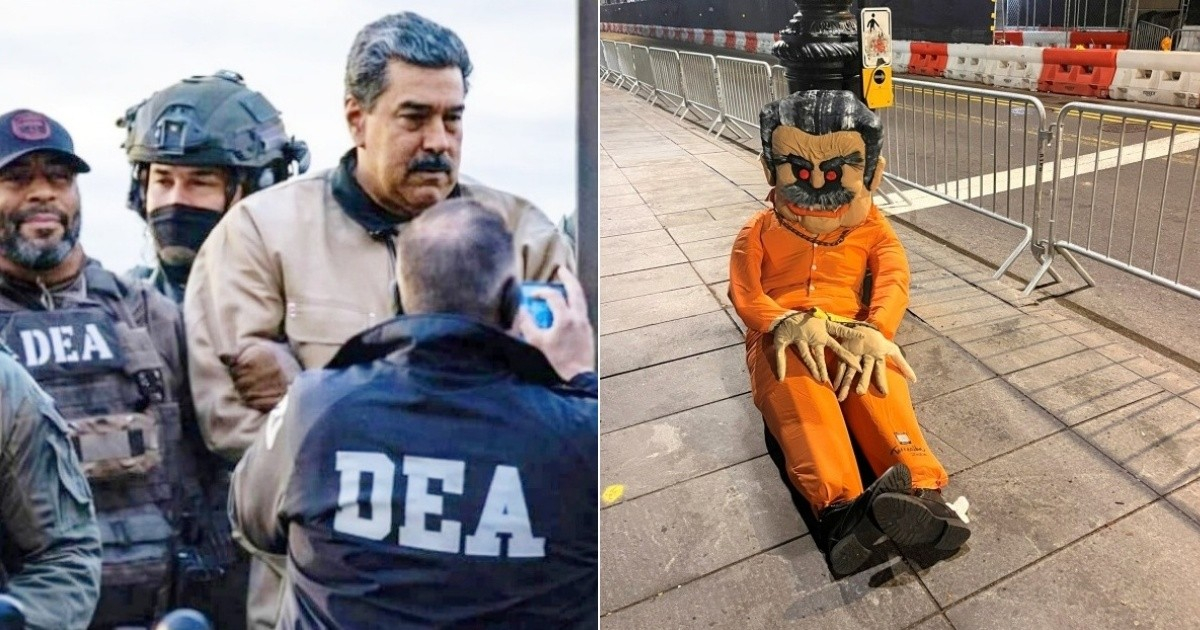
This ruling is the second recent judicial setback for Maduro and his wife Cilia Flores, captured in Caracas on January 3 during the so-called "Operation Absolute Resolution," carried out by U.S. special forces with CIA support.
Both have been incarcerated for more than 90 days at the Brooklyn Metropolitan Detention Center and are facing charges of narco-terrorism, drug trafficking, money laundering, and corruption, to which they have pleaded not guilty.
The first recent setback occurred on March 26, when Hellerstein refused to dismiss the case despite the defense's arguments regarding the freezing of Venezuelan funds to pay legal fees.
That financial knot remains unresolved. Maduro's lawyer, Barry Pollack, insists that his client has the right for the Venezuelan State to cover his legal representation, but the sanctions from the Office of Foreign Assets Control (OFAC) prevent this without a special license.
The prosecutor Kyle Wirshba rejected that possibility with a compelling argument: "If the purpose of the sanctions is that the accused are plundering Venezuela's wealth, allowing them access to those same funds now to cover their defense would undermine the effect of those sanctions."
Judge Hellerstein promised to issue a decision on the funding for the defense at a later date, but made it clear that this matter does not invalidate the process.
In parallel, the political situation in Venezuela is becoming more complicated: Delcy Rodríguez has already exceeded 90 days as acting president - the initial constitutional limit set by the Supreme Court following Maduro's capture - and the National Assembly controlled by Chavismo will have to decide whether to extend her interim mandate for another 90 days.
Filed under: