
Related videos:
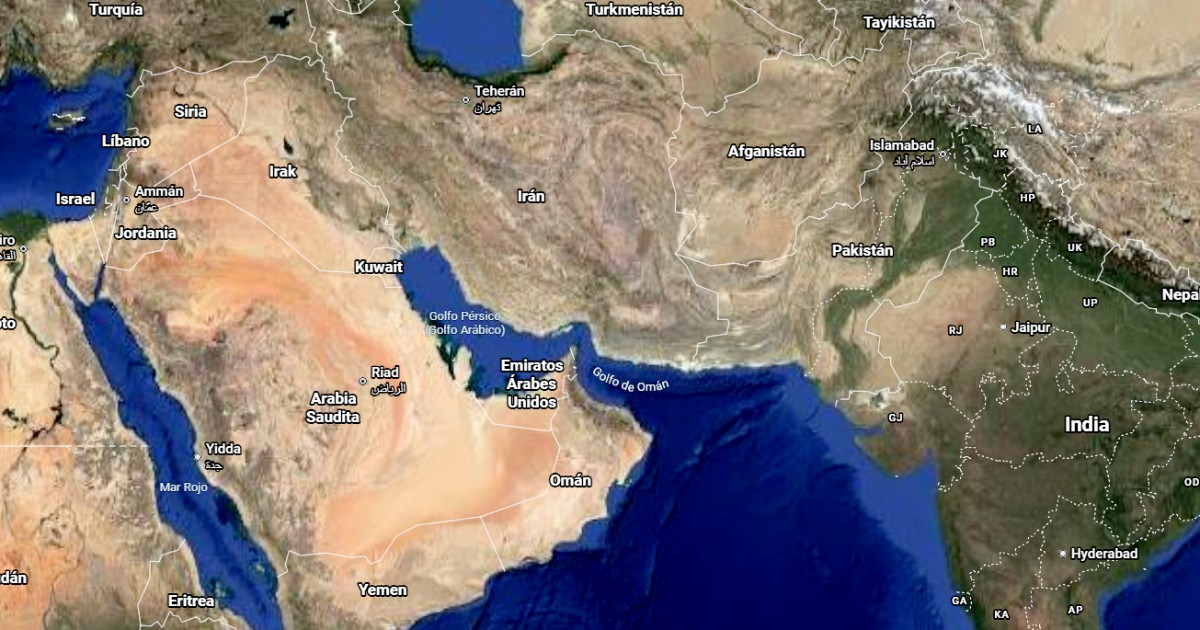
President Donald Trump declared this Wednesday that he is considering a joint venture with Iran to charge tolls on ships passing through the Strait of Hormuz, in a proposal that would mark a historic shift in U.S. foreign policy, according to the New York Post.
The statement was made in an interview with Jonathan Karl from ABC News, just hours after a two-week ceasefire between the United States and Iran was implemented, reached on Tuesday with the mediation of Pakistan.
"We are considering doing it as a joint venture. It's a way to secure it, also to secure it in front of many other people," Trump said. "It's a beautiful thing."
The proposal comes at a time of heightened tension in the region. Operation Epic Fury, launched by the United States and Israel, destroyed more than 90% of Iran's missile capacity and 95% of its drones, as well as key nuclear facilities.
In response, Iran closed the Strait of Hormuz with mines, drones, and missiles, collapsing naval traffic by 97%, stranding 2,000 ships with 20,000 sailors and driving the price of Brent crude above 115 dollars per barrel.
The ceasefire, conditioned on the immediate, complete, and safe opening of the strait, caused oil prices to drop below 100 dollars per barrel.
However, Iran had already begun to impose de facto tolls since March 26, demanding payments in Chinese yuan and cryptocurrencies from tankers escorted by the Revolutionary Guard.
The Iranian Parliament formalized these charges on March 30 with a law that imposes up to two million dollars per trip. According to The Telegraph, the estimated toll is one million dollars per ship, and the system could generate up to 500 billion dollars for Iran.
Despite the ceasefire, an Iranian official threatened on Wednesday to destroy ships that transit without authorization from the Iranian navy, according to an audio shared with the Wall Street Journal.
The Strait of Hormuz, through which approximately 20% of the world's oil passes, is considered an international maritime passage under the 1982 UN Convention on the Law of the Sea, which expressly prohibits the collection of tolls.
The professor James Kraska from the United States Naval War College was blunt: "Imposing tolls violates traffic rules; it has no legal basis."
Singapore declared that it will not negotiate over passage through the strait, which it considers a right and not a privilege. The United Arab Emirates rejected the notion that Hormuz could be "controlled or taken hostage" by a single country.
Historically, Washington has advocated for free navigation in the strait supported by naval presence, so Trump's proposal to share revenues with Iran represents a break from decades of U.S. foreign policy.
The formal negotiations between both countries are scheduled for Thursday, April 10, in Islamabad, with Vice President JD Vance representing the United States and Mohammad Bagher Ghalibaf representing Iran.
Filed under: