
Related videos:
The price of oil surged on Thursday, just two days after President Donald Trump announced a two-week ceasefire with Iran, amid growing doubts about the strength of the agreement and the actual situation in the Strait of Hormuz, reported Telemundo.
U.S. crude rose by more than 7.5%, surpassing 101 dollars per barrel in the early hours of the day, while international Brent increased by about 4%, reaching approximately 99 dollars per barrel.
Until this Thursday, the prices of U.S. crude have risen by more than 70% since the beginning of the conflict, emphasized NBC News.
This rebound came after U.S. crude plummeted more than 16% on Wednesday following the announcement of a ceasefire, a drop that was abruptly halted by indications that the agreement might be fracturing.
The main warning sign was that on Wednesday only four ships passed through the Strait of Hormuz, the lowest level since March 31, according to data from S&P Global Market Intelligence.
Since Trump announced the ceasefire on Tuesday night, maritime traffic in the strait has not increased at all.
Iranian media reported that the strait has been closed again following Israeli attacks against Hezbollah in Lebanon, and Mohammad Bagher Ghalibaf, the president of the Iranian Parliament, directly accused Washington of violating the agreement.
Trump responded on X with a direct warning: "Violations of the ceasefire carry explicit costs and strong responses."
Iran insists that any ceasefire agreement must include the cessation of Israeli attacks in Lebanon, something that the U.S. and Israel reject, considering that conflict to be independent.
Another central dispute is added to this: Washington demands the total and free opening of the strait, while Iran intends to control the passage and charge tolls to the ships that cross it.
The CEO of the Abu Dhabi National Oil Company, Sultan Al Jaber, was emphatic this Thursday in a LinkedIn post: "This moment requires clarity. So let’s be clear: the Strait of Hormuz is not open. Access is restricted, conditioned, and controlled."
Al Jaber added that "markets remain at a critical crossroads" and that the last shipments that passed through the strait before the conflict are now arriving at their destinations.
Commodity analysts at ING summarized the situation in a morning note: "Optimism regarding the ceasefire faded after Iran stated that several terms of the agreement had been violated."
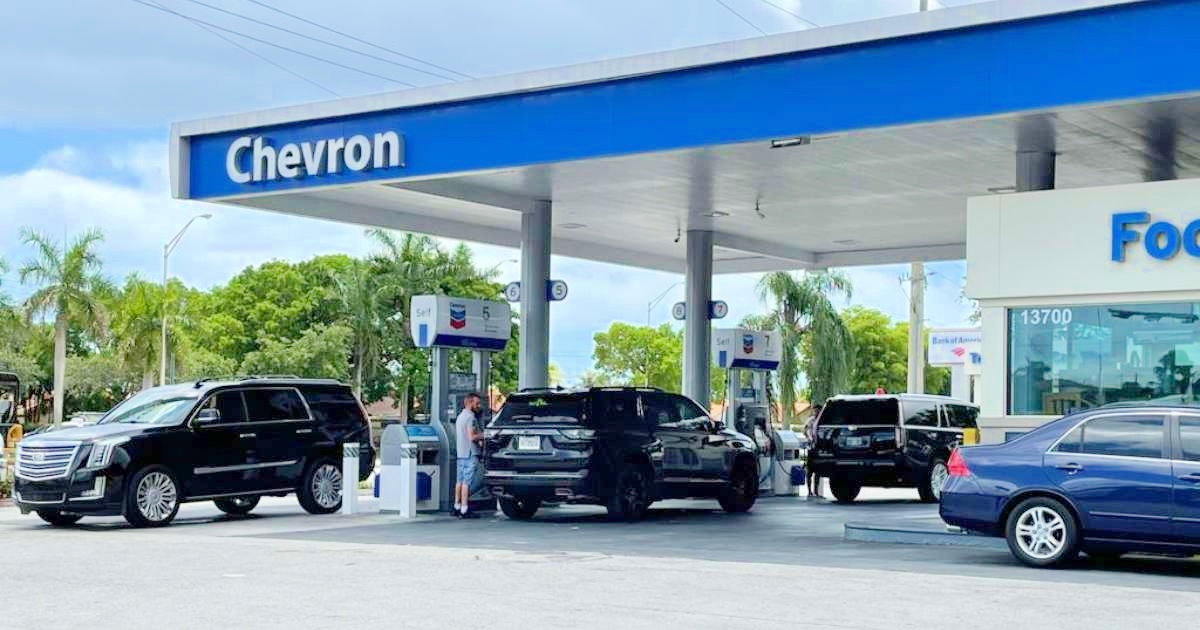
The impact on consumers is direct. The average price of gasoline in the U.S. reached $4.17 per gallon this Thursday, according to the American Automobile Association, continuing a month-long rise that brought the price up from the $2.98 per gallon recorded before the conflict.
The stock markets also reflected uncertainty: the S&P 500 opened with a decline of 0.2%, the Nasdaq fell by 0.3%, and the Dow plummeted 200 points shortly after the opening.
Formal negotiations between delegations from the U.S. and Iran were scheduled for this Friday in Islamabad, Pakistan, a country that acted as a key mediator in the agreement. Patrick De Haan, an analyst from GasBuddy, warned that "this roller coaster may not be over yet."
Filed under: