
Related videos:
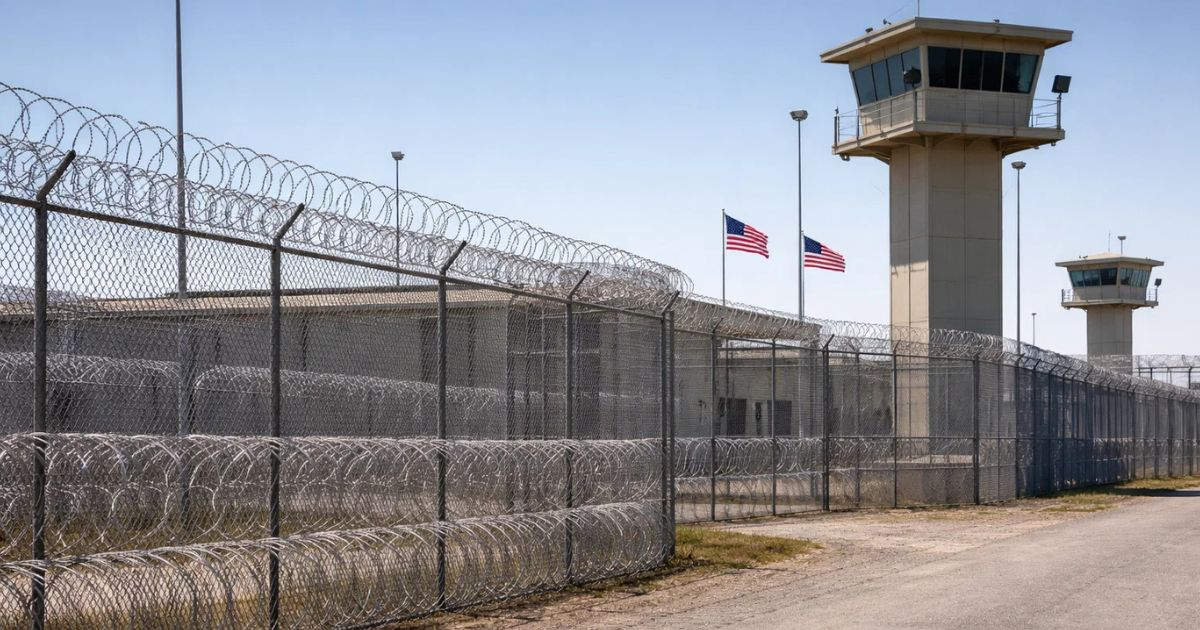
The U.S. Department of Homeland Security, under Secretary Markwayne Mullin, is reviewing plans to convert commercial warehouses into mass detention centers for immigrants nationwide, a project that has sparked strong community opposition, particularly in Florida, reported AP.
The most prominent case in the state is that of Orlando, where federal agents and private contractors inspected an industrial warehouse of nearly 440,000 square feet located in the eastern part of the city in January 2026 to convert it into an immigration detention facility.
The mayor of Orlando, Buddy Dyer, and the city commissioners publicly opposed the project, but the City Council did not take any formal action in its meeting last Tuesday, which angered activists who accused the officials of "betraying the city’s ideals" by claiming helplessness in the face of federal authorities.
In neighborhoods like MetroWest and Lake Nona, signs bearing the message "No Lake Nona Concentration Camp" have appeared since March 24, reflecting public opposition to the plan.
The city's attorney, Mayanne Downs, explained in February why local governments have little room to maneuver: "ICE is immune to any local regulations that interfere with its federal mandate."
The plan was funded with 45 billion dollars approved by Congress in the summer of 2025 through the so-called "One Big Beautiful Bill Act" and includes the creation of 16 regional facilities with a capacity of about 1,500 people each, as well as up to eight "mega centers" with a capacity for up to 10,000 detainees, aiming to achieve around 70,000 people detained daily.
As of now, the DHS has spent approximately 1.074 billion dollars on 11 warehouses in various states.
On April 1st, the DHS paused the purchase of new warehouses —including the one in Orlando— while Mullin reviews the contracts signed under her predecessor Kristi Noem. Eight agreements were canceled, including one in Kansas City, Missouri, reported Click Orlando.
The resistance to the plan is national and encompasses the entire political spectrum.
In Williamsport, Maryland, a town of just about 2,000 people, there is bipartisan opposition to an 825,000 square foot facility for 1,500 detainees.
In Roxbury Township, New Jersey, conservative communities are rejecting a facility of approximately 500,000 square feet.
In Georgia, the city of Social Circle has blocked the water meter of the warehouse purchased by ICE for 128.6 million dollars, and Democratic senators Raphael Warnock and Jon Ossoff labeled the plan as "unfeasible."
Florida is one of the states most affected by the immigration policy of the Trump administration: according to a report by the American Civil Liberties Union (ACLU) from February 2026, it has allocated more state and local resources to the enforcement of immigration laws than any other state in the country.
The saturation of the existing detention system is the immediate trigger for the plan. The Krome Detention Center in Miami-Dade, designed for 600 people, housed nearly 1,700 detainees in April 2025, almost triple its capacity, while ICE's overall occupancy reached 109% nationwide.
Human rights organizations have criticized these facilities as human warehouses that do not provide humanitarian guarantees for the detained individuals.
Filed under: