
Related videos:
A testimony from the largest immigration detention center in the United States has raised concerns after it was revealed that guards allegedly made comments about which detainee might face a life-threatening situation, in an environment marked by shortages, distress, and alleged negligence.
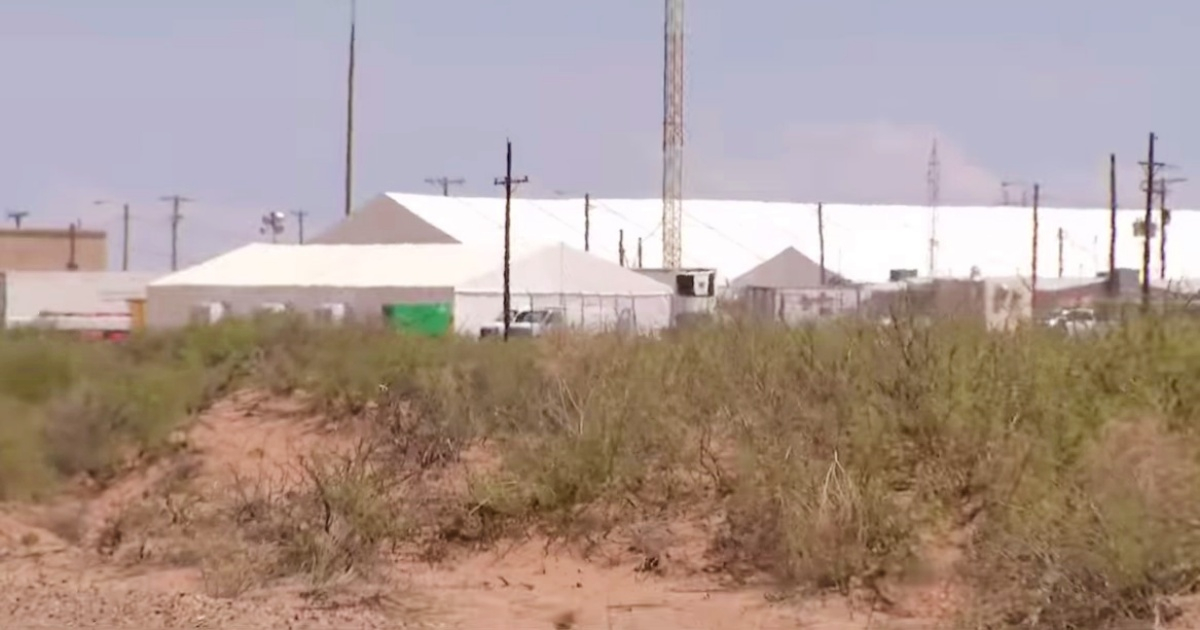
The report comes from Owen Ramsingh, a former detainee who spent weeks at the East Montana Camp in Texas, a massive facility built in the desert to house thousands of immigrants. According to his account, shared with the AP agency, he heard a guard comment that he had contributed 500 dollars to an internal bet regarding a possible fatal outcome within the center.
The impact of that conversation was even greater because he himself claimed to have gone through a moment of deep emotional crisis.
The testimony does not appear as an isolated fact, but as part of a broader picture of what is happening within this camp, where numerous complaints about the treatment of detainees are accumulating. Over a hundred calls to 911 recorded in five months document suicide attempts, seizures, violent fights, and medical emergencies that, according to reports, were not always addressed appropriately.
"Every day felt like a week; the camp was a thousand times worse than a prison," Ramsingh described following his deportation to the Netherlands.
The reported conditions paint a very complex picture: overcrowding, food shortages, rapidly spreading diseases, and limited—or nonexistent—access to medical care. Inside the tents, where thousands of people live, resting becomes difficult and uncertainty becomes a constant.
A Cuban man in his 50s reported that he spent weeks requesting medication to treat his diabetes and hypertension without receiving it. Faced with the deterioration of his situation, he ultimately agreed to be deported voluntarily to Mexico, separating from his wife and son in the United States due to fears that his health would worsen in the facility.
Another serious incident occurred when a 55-year-old Cuban migrant died following a self-harm episode. The forensic doctor concluded that it was a homicide by asphyxiation after guards had subdued him by force.
The figures reflect a concerning reality: at least six additional suicide attempts were recorded in emergency calls, along with a confirmed case of suicide involving a Nicaraguan migrant.
Although the authorities claim that the detainees receive adequate care, collected testimonies point to a different reality. They report insufficient rations, unsanitary facilities, the use of force by private guards, and a sustained decline in mental health.
In this context, the revelation of betting among staff at the center not only exposes a possible loss of sensitivity towards the suffering of others but also increases the feeling of vulnerability among those who remain detained.
As criticism rises and some lawmakers call for the closure of the camp, thousands of migrants—many with no criminal records—continue to find themselves in a system that, instead of providing protection or answers, places them in a position of extreme vulnerability.
For many Cubans and other migrants, the so-called "American dream" ends up becoming a traumatic experience within these tents in the desert.
Conditions in ICE detention centers have come under increasing scrutiny. Previous investigations also documented at least 60 violations of federal regulations in various centers across the country. At the same time, ICE has expanded its detention capacity through a contract worth up to 1.3 billion dollars to convert commercial spaces into detention centers.
Filed under: