
Related videos:
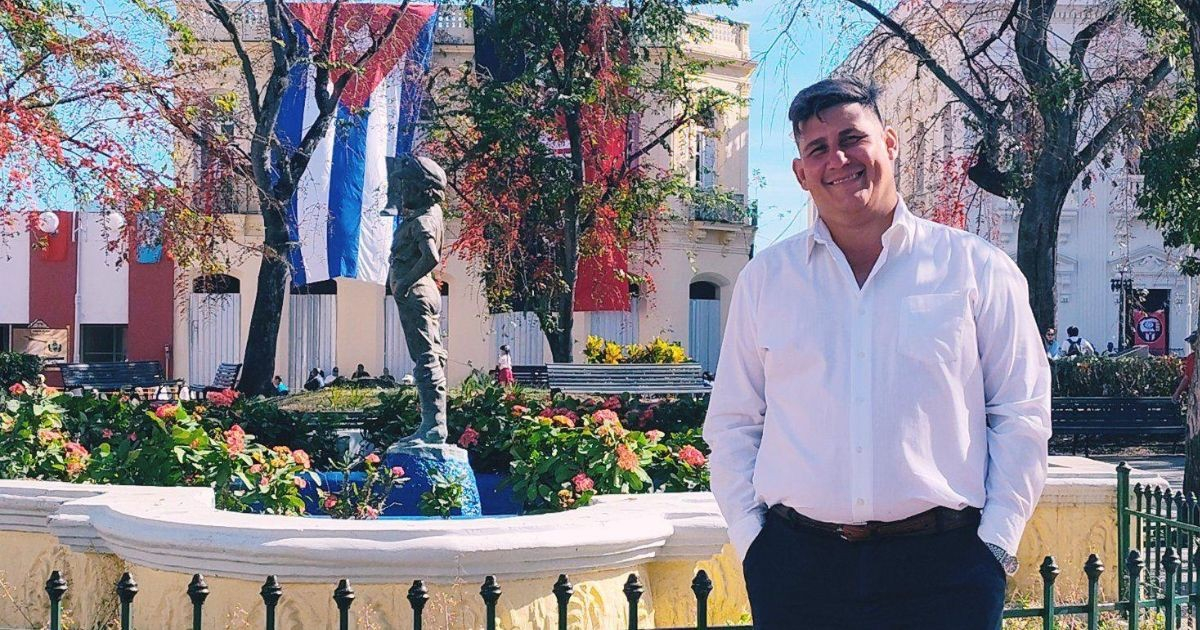
Henry Omar Pérez, a reporter for the Cuban News Agency (ACN) from Villa Clara, posted a photo on social media this Sunday of a marked ballot with an X — the vote uniting all candidates, including Miguel Díaz-Canel Bermúdez — along with the message: I voted for Miguel Díaz-Canel Bermúdez and I would do it again.
The post, accompanied by the hashtag #IStandByMyPresident, was made hours after NBC News aired the final part of the interview in which Díaz-Canel categorically refused to relinquish power.
In a second publication, Pérez was even more direct in his support for the leader: Resign? Not resign! Bold and ready!, clearly alluding to Díaz-Canel's refusal to step down, highlighting that the regime has summoned official journalists to defend the leader on social media.
In the interview with journalist Kristen Welker from the show Meet the Press, recently recorded at the José Martí Memorial in Havana, Díaz-Canel stated: "The concept that revolutionaries abandon or resign does not belong to our vocabulary."
In response to the direct question about whether he would resign to save Cuba, the leader reacted with irritation: Are you asking that question to Trump? Does that question come from the State Department?
In his post, Pérez also justified his position in ideological terms: "It is my right; I would never be part of those who want annexation and war in my country."
The support from the official journalist fits into a documented pattern of organized defense of the ruling party by the Cuban state media, which operates as an extension of the regime's propaganda apparatus.
The campaign #YoSigoAMiPresidente is a state-sponsored digital propaganda tool deployed at least ten times throughout 2024 to support Díaz-Canel on social media.
In February 2026, journalist Arleen Rodríguez Derivet made a passionate defense of Díaz-Canel's speech, while Leticia Martínez Hernández, the head of press for the ruler, published a poem on Facebook praising him as "an tireless leader."
Pérez has a documented history of aligning with the regime: in November 2025 he called the independent media outlet El Toque a terrorist and insulted its director José Jasán Nieves as a "crook" and "saboteur."
The contrast with the prevailing sentiment of Cubans is striking: an informal survey published on Facebook on April 11 by activist Elieser El Bayardo showed that 95% of over 8,000 commenters wanted Díaz-Canel to step down from power.
The activist noted that more than 59% of the views of that post came from within Cuba, reflecting the widespread rejection of the ruling government precisely in the country that Pérez claims to defend.
Díaz-Canel's interview with NBC is the first of a Cuban leader on that program since Fidel Castro appeared in 1959, and it takes place against the backdrop of maximum pressure from the Trump administration, which has imposed over 240 new sanctions on Cuba since January 2026 and demands the leader's resignation as a precondition for any negotiation.
Filed under: