
Related videos:
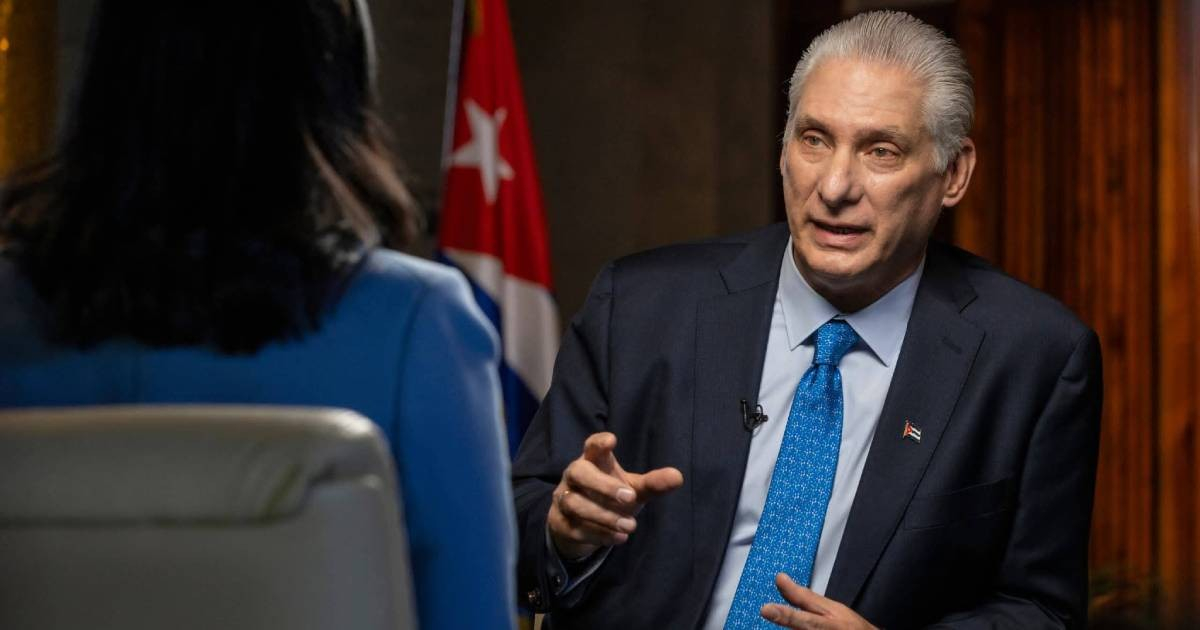
Miguel Díaz-Canel reiterated his well-known speech on revolutionary resilience this Sunday during his first appearance on U.S. television, a 53-minute interview with Kristen Welker from NBC News aired today on the program "Meet the Press".
The interview was recorded last Thursday at the José Martí Memorial in Havana and is the first by a Cuban leader on that American program since Fidel Castro appeared in 1959.
In response to the question of whether he feared being captured or eliminated by the United States —referring to the capture of Venezuelan president Nicolás Maduro and the assassination of Iranian Supreme Leader Ali Khamenei in U.S. military operations— Díaz-Canel replied with the same script he had used five days earlier in an interview with Newsweek: "I am not afraid. I am willing to give my life for the revolution."
He went further by quoting the Cuban national anthem: "If it is necessary to die, we will die, for as our national anthem says: to die for the homeland is to live."
The regime's leader also stated that removing a leader would not solve anything, as Cuba has a "collective leadership" with "hundreds of people" ready to take command.
The statements are practically identical to those made by Díaz-Canel last Monday to Newsweek, where he
Regarding the energy crisis that is affecting the Cuban people, Díaz-Canel acknowledged that the Russian tanker Anatoly Kolodkin arrived in Matanzas on March 31 with about 700,000 barrels of crude oil, which "will only cover one third of Cuba's oil requirements in a month," and that 1,200 megawatts of generating capacity have been out of operation for four months. He exclusively blamed the U.S. embargo for the suffering of the Cubans and rejected any responsibility of the government.
When the journalist asked him if he would take any responsibility for the suffering endured by the Cuban people—who face outages lasting up to 20 hours, along with shortages of food and medicine—Díaz-Canel dodged the question and once again pointed to Washington.
Regarding negotiations with the United States, he confirmed that conversations are taking place but admitted that he has not spoken with Secretary of State Marco Rubio: "I have not spoken with Secretary Rubio. I do not know him."
Additionally, Díaz-Canel categorically rejected Washington's demands to release more than 1,200 political prisoners, hold multiparty elections, and recognize independent unions and a free press.
In response to the question of whether he would resign to save Cuba, he reacted with irritation: Would you ask that question to Trump? "Is that question coming from the State Department?" and he closed the matter with another line from his usual script: "The concept of revolutionaries who surrender and abandon power is also not part of our vocabulary."
Filed under: