
Related videos:
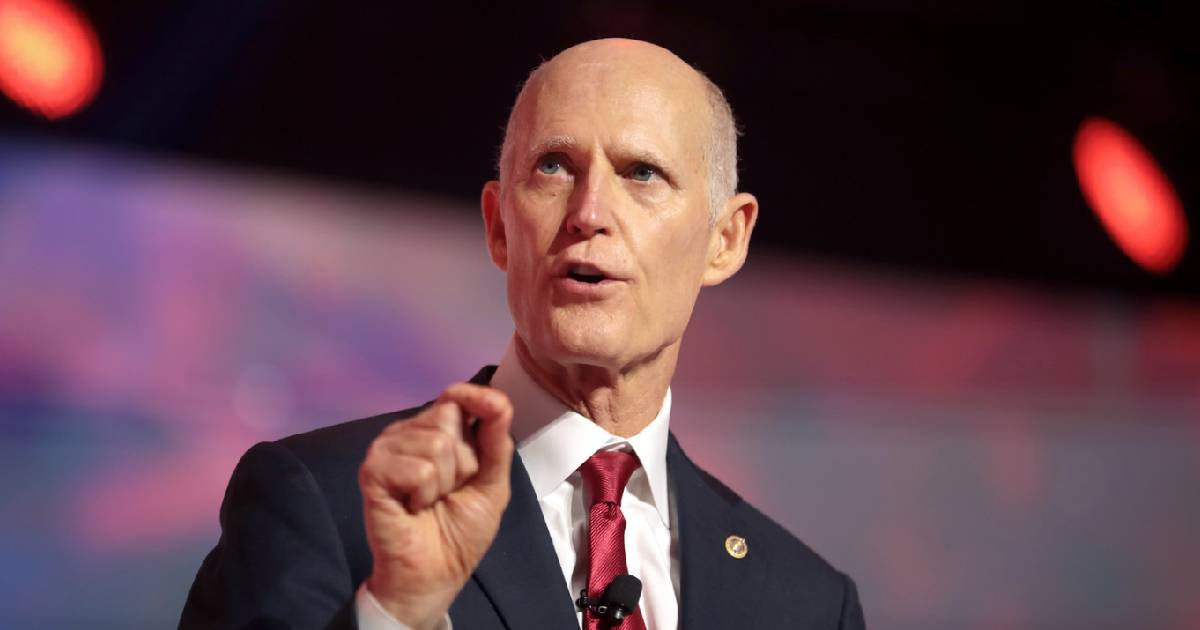
The Republican Senator from Florida, Rick Scott, issued an official statement last Thursday in which he described as "ridiculous" NBC granting a platform to Miguel Díaz-Canel on the program "Meet the Press," accusing the network of effectively recognizing him as the legitimate president of Cuba.
The interview, conducted by host Kristen Welker last Wednesday in Havana, at the José Martí Memorial in Plaza de la Revolución, marked the first appearance of a Cuban leader on American television in decades, since Fidel Castro was interviewed on the same program in 1959.
"It is ridiculous that NBC gives a platform to a brutal and illegitimate communist dictator, effectively recognizing him as the legitimate president of Cuba, while he continues to uphold the one-party communist system, oppressing the Cuban people, imprisoning innocent political prisoners, and silencing the opposition," stated Scott.
The senator added that "the Castro/Díaz-Canel regime thrives on propaganda and repression" and that the American people, as well as Cuban families in Florida, deserve the truth, "not a sterilized interview that legitimizes a dictatorship."
In his statement, Scott made five specific questions that NBC should have asked Díaz-Canel.
The first concerns the mass pardon of over 2,000 prisoners announced by the regime on April 2, which excluded all political prisoners despite organizations such as Human Rights Watch, Prisoners Defenders, and Justicia 11J documenting more than 1,200 people imprisoned for political reasons, including protesters from July 11, 2021.
The second, regarding Cuban medical missions, which generate between $6 billion and $8 billion annually while the doctors receive only between 10% and 25% of their salary, with practices described as forced labor and human trafficking, according to the Department of State and the Inter-American Commission on Human Rights.
The third one, regarding intelligence operations by Iran, China, and Russia on Cuban soil; the fourth, about the absence of free and multiparty elections; and the fifth, concerning internet censorship for ordinary citizens while the regime's elites, including Sandro Castro, Fidel's grandson, have unrestricted access.
In the interview, Díaz-Canel emphatically rejected the idea of stepping down from power. "Resigning is not part of our vocabulary", he stated, and countered Welker by asking: "Do you ask that question to Trump?" "Does that question come from the State Department?".
The Cuban-American congresswoman María Elvira Salazar also reacted strongly, labeling Díaz-Canel a "dictator appointed by the Castro regime" and comparing him to Nicolás Maduro.
The first segment of the interview aired last Thursday on "Meet the Press NOW" and "NBC Nightly News"; the extended version was broadcast last Saturday.
Scott closed his statement with a direct warning: "The Cuban people deserve freedom, transparency, democracy, and Patria y Vida, no more lies and propaganda. We will not be deceived."
Filed under: