
Related videos:
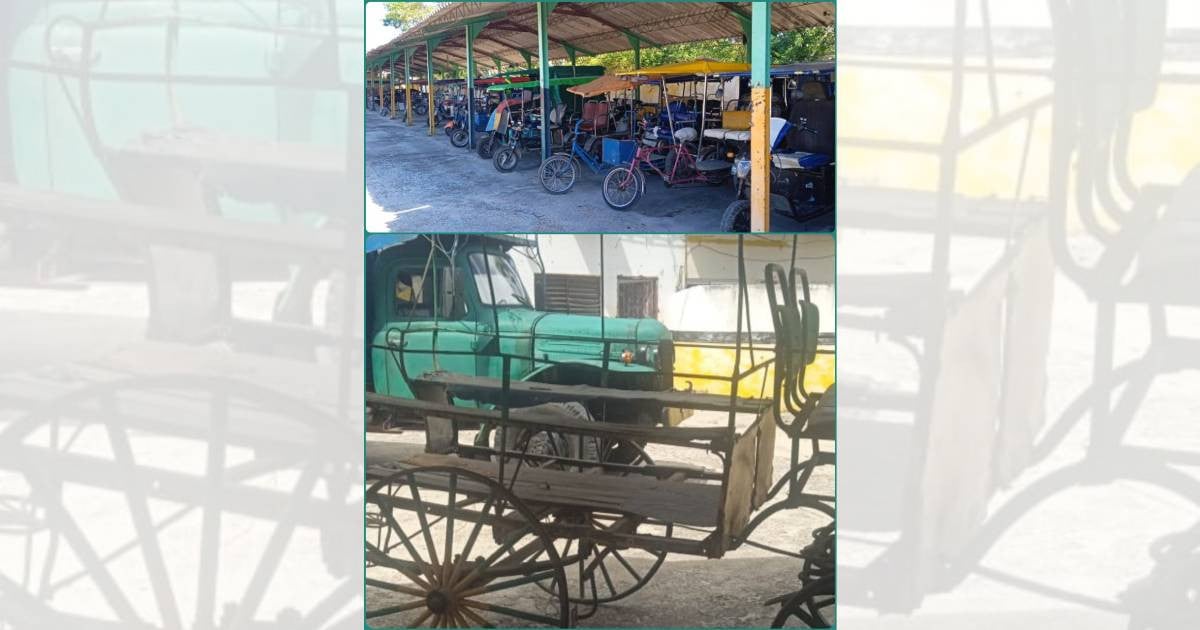
Police operations against bike taxis, electric tricycles, and horse-drawn carriages in Santiago de Cuba have sparked criticism on social media, where citizens question why the government is targeting alternative means of transportation amid the severe mobility crisis facing the population.
In this regard, the Facebook profile Héroes del Moncada, associated with the Ministry of the Interior, explained this Sunday that such measures respond “to complaints and concerns from the public” and aim to reduce the occurrence of traffic accidents, some of which have resulted in the loss of human lives.
According to the publication, among the detected violations are animal-drawn vehicles operating without proper braking mechanisms or without the required lights for nighttime.
Violations of Article 96 of the Traffic Safety Code are also mentioned, which imposes penalties on drivers who do not possess the appropriate license for the type of vehicle or who refuse to undergo tests mandated by law enforcement officers.
The authorities also indicated that vehicles have been detected parked in prohibited areas or obstructing traffic, as well as vehicles that do not meet the established technical requirements or violate other legal provisions.
However, the publication sparked numerous critical reactions from citizens who questioned the priority of these operations in a context marked by a lack of public transportation.
Several commentators noted that bicycle taxis, tricycles, and horse-drawn carriages have become one of the few means available to transport the population in the midst of fuel shortages and the limited availability of vehicles.
Other users criticized the difficulties in obtaining a driver's license in the country, noting that the process can be lengthy and expensive for those who rely on these means for their livelihood.
There were also those who questioned why the authorities focus their efforts on sanctioning these transporters while other issues that directly affect the daily lives of Cubans persist, such as rising food prices and the insufficient state transportation to meet demand.
The publication from the official profile after the operation on Wednesday, which resulted in the seizure of more than 200 motorcycles and at least 20 cars in the city, according to reports received by independent journalist Yosmany Mayeta Labrada.
The operation in April surpasses in scale that recorded on February 19, when the authorities immobilized 181 vehicles, including motorcycles, electric tricycles, and tricycles in the Provincial Deposit Center of Santiago de Cuba, citing violations of Law 109 of the Road Safety Code.
On that occasion, the official broadcaster CMKC reported that the vehicles had been seized for illegal parking, driving without a license, poor technical condition, and illegal modifications to the exhaust systems.
The impact of these actions is particularly severe given the collapse of public transportation in the province.
Out of the 196 routes in Santiago de Cuba, only 126 are operating —a mere 64.3%— with reduced frequencies due to fuel shortages, spare parts, and the deterioration of nearly 70% of the roadways.
In that void, motorcycles, electric tricycles, and informal transport vehicles have become the backbone of daily mobility for thousands of residents in Santiago, who have no other option to get around the city.
The situation becomes even more contradictory when considering that in February 2026, the Ministry of Transport issued temporary licenses for motorcycles and tricycles without license plates, valid until December 2026
Moreover, on March 24, Resolution 7/2025 from Minint came into effect, which expanded the license plates for motorcycles and mopeds from five to six digits to regularize thousands of vehicles without plates.
Filed under: