
Related videos:
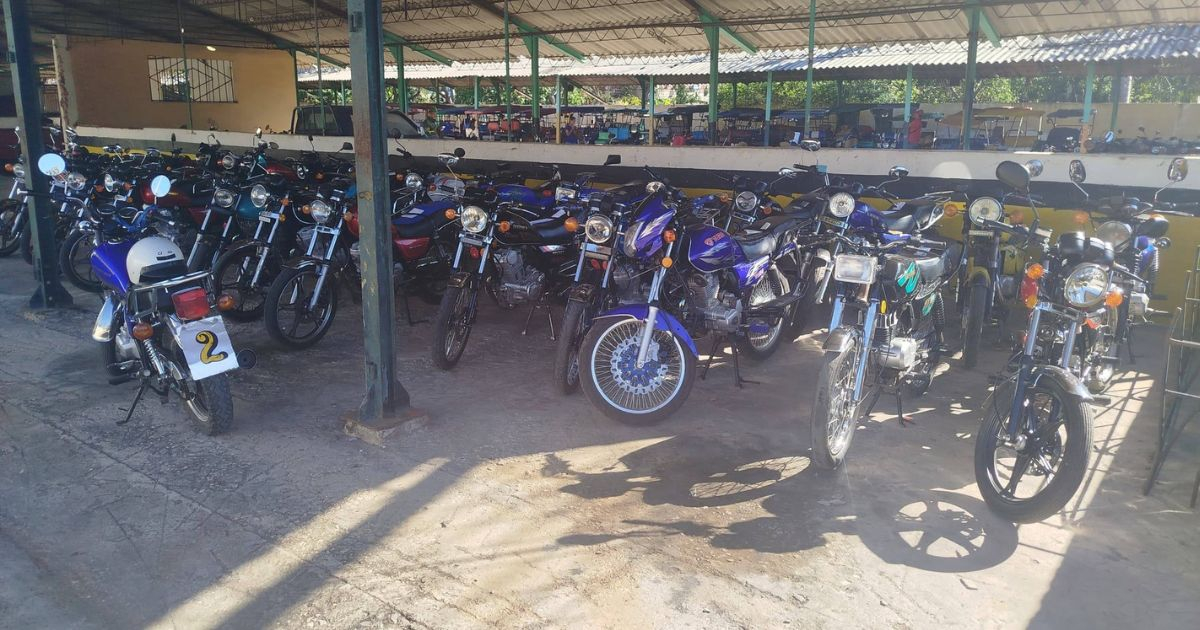
A large operation against motorcyclists and carriage drivers in Santiago de Cuba resulted this Thursday in the seizure of more than 200 motorcycles and at least 20 horse-drawn vehicles, according to reports received by the communicator Yosmany Mayeta Labrada.
The citizen Fernando Mendoza, one of those affected, described that the authorities are towing motorcycles and cars to the impound lot "for any reason," which has caused alarm among the informal transport workers in the city.
The images shared show several people gathered near what appears to be a holding area, with a considerable number of occupied vehicles and citizens waiting for information about their means of transportation.
So far, there is no official explanation regarding the reasons for the operation or the regulations under which the occupations are carried out, which exacerbates the uncertainty among those affected.
The April operation exceeds in scale that of February 19, when the authorities immobilized 181 vehicles —motorcycles, electric tricycles, and tricycles— at the Provincial Deposit Center in Santiago de Cuba, citing violations of Law 109 of the Traffic Safety Code.
On that occasion, the state-run station CMKC reported that the vehicles had been impounded for improper parking, driving without a license, poor technical condition, and illegal modifications to exhaust pipes.
That operation in February also triggered a wave of citizen criticism.
"Seriously, with the situation we are experiencing? Now that transportation is so bad, they decide to be so radical and take away the little that is keeping people moving on the streets. This is madness," wrote the user Adri Diva on social media.
Other users were just as blunt. "They've chosen the worst moment for that law," noted user Wik, while Raul Oscar summarized the authorities' actions this way: "Detention, prohibition, fines, seizure—those are the procedures and the government's favorite words."
The impact of these actions is particularly severe due to the collapse of public transportation in the province.
Of the 196 existing routes in Santiago de Cuba, only 126 are operational —64.3%—, with reduced frequencies due to a shortage of fuel, spare parts, and the deterioration of almost 70% of the roads.
In that void, motorcycles, electric tricycles, and informal transport vehicles have become the backbone of daily mobility for thousands of residents of Santiago, who have no other alternative for getting around the city.
The situation becomes even more contradictory when considering that in February 2026, the Ministry of Transportation issued temporary licenses for unregistered motorcycles and tricycles, valid until December 2026, and that on March 24, Resolution 7/2025 from Minint came into effect, which increased the motorcycle license plates from five to six digits to regularize thousands of unplated vehicles.
While the regime implements regularization measures with one hand, with the other it carries out mass detention operations that directly strike those who sustain the transportation of the population during one of the most critical moments of the crisis facing Cuba.
Filed under: