
Related videos:
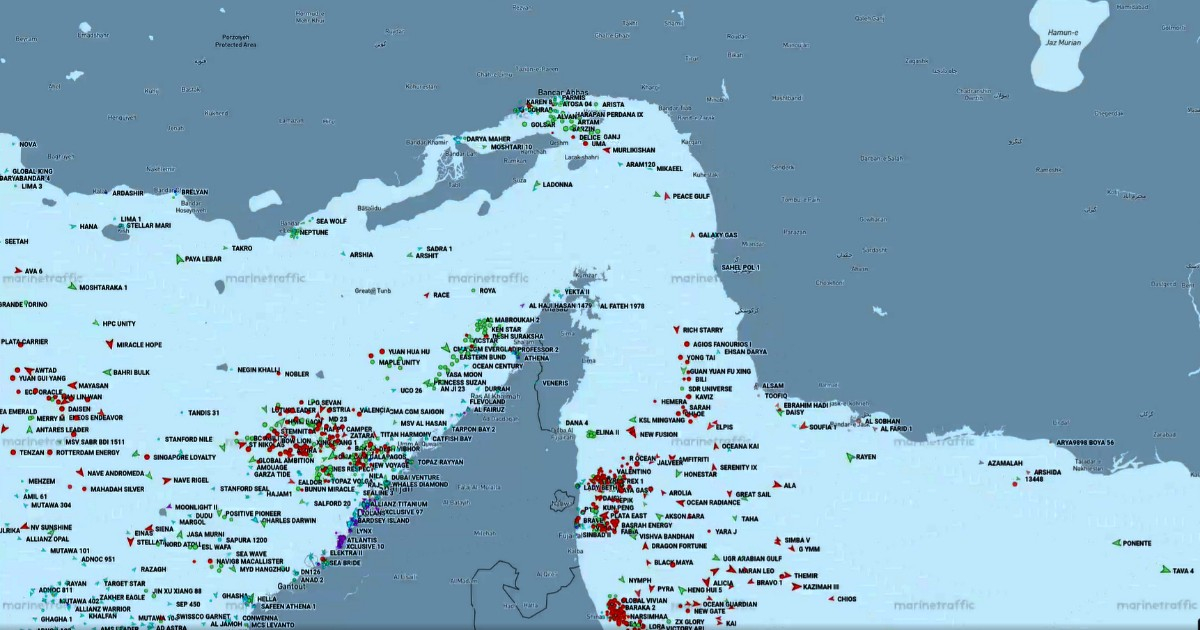
The United States Central Command (CENTCOM) stated this Tuesday that during the first 24 hours of the naval blockade of Iranian ports, no vessel managed to breach the device deployed in the Strait of Hormuz, as part of Operation Epic Fury. However, independent maritime tracking data partially contradicts that statement.
According to the official statement from CENTCOM, more than 10,000 sailors, Marines, and aviators, along with over a dozen warships and more than 100 combat and surveillance aircraft, are participating in the operation aimed at preventing maritime traffic to and from Iranian ports in the Persian Gulf and the Gulf of Oman.
"During the first 24 hours, six merchant vessels followed the instructions of U.S. forces to turn around and return to an Iranian port in the Gulf of Oman," stated Central Command.
Additionally, CENTCOM specified that the blockade is applied impartially to vessels of all nationalities entering or leaving Iranian ports and coastal areas, while ensuring freedom of navigation for ships transiting the strait to non-Iranian ports.
However, real-time maritime tracking data tells a different story. The analyst OSINTdefender published information from MarineTraffic showing a handful of vessels that transited the strait during that same period, and "a substantial —but not total— decline in incoming traffic to Iranian ports."
More specifically, three oil tankers registered under the flags of Panama, Russia, and China reportedly crossed the strait this Tuesday despite the blockade, one of which is explicitly sanctioned by Washington, according to maritime tracking data cited by El País and MarketScreener.
On Monday night, a tanker from the so-called Iranian shadow fleet also successfully crossed the strait, according to a report by Middle East Monitor.
CBS News reported that by midday this Tuesday, it was unclear whether the U.S. Navy had begun effective interdiction operations, raising questions about the actual scope of the deployment in its initial hours.
The blockade was ordered by President Donald Trump on April 12 via Truth Social, following the collapse of negotiations lasting more than twenty hours in Islamabad, Pakistan, and came into effect at 10:00 a.m. on Monday, April 13.
Trump had warned that no one paying an illegal toll will have safe passage and threatened to "immediately eliminate" any Iranian vessel that challenges the blockade.
The blockade is part of Operation Epic Fury, the joint military campaign of the U.S. and Israel against Iran, which targeted over 900 Iranian sites in its first 24 hours, including nuclear facilities in Natanz, Isfahan, and Fordow.
Iran had declared "complete control" of the Strait of Hormuz on March 4, laying mines, drones, and missiles, which left more than 2,000 ships with 20,000 sailors stranded and collapsed naval traffic by 97%, driving the price of Brent crude from $67 to over $126 per barrel.
Iran described the blockade as "piracy" and illegal, a position echoed by the International Maritime Organization. China, the main buyer of Iranian oil with approximately 1.71 million barrels per day, warned against interference in its trade routes.
The UN declared this Tuesday that it is "very likely" that negotiations between Washington and Tehran will resume.
Filed under: