
Related videos:
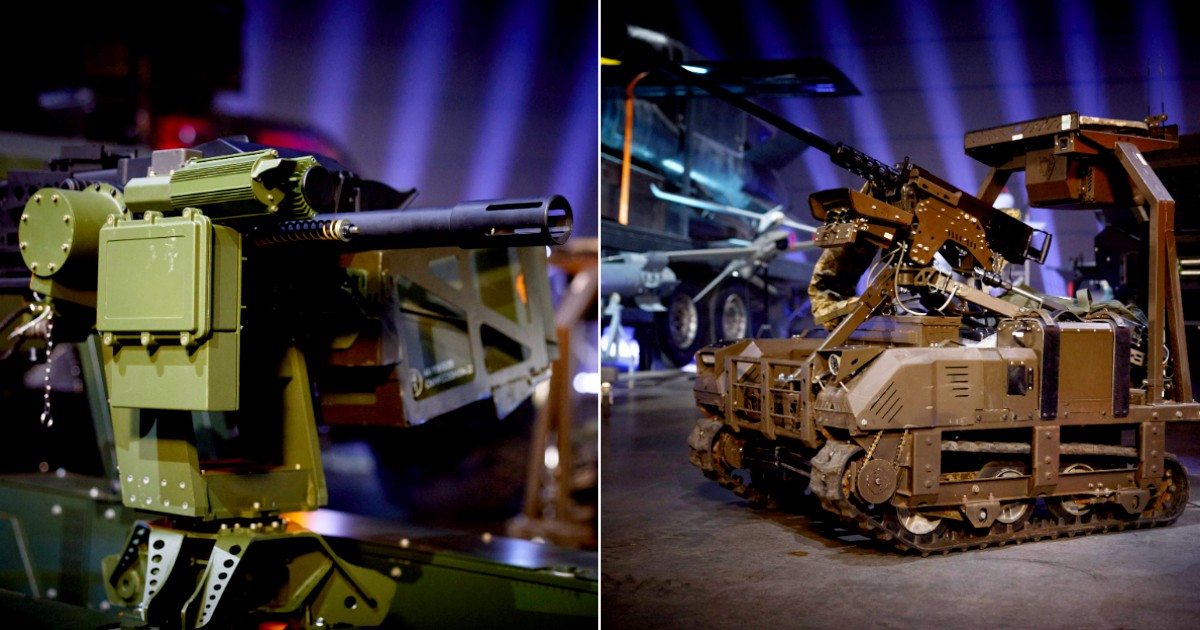
For the first time since the start of the large-scale Russian invasion in February 2022, Ukrainian forces have managed to capture an enemy position using exclusively unmanned platforms, without direct infantry intervention and without reporting any own casualties.
According to information provided by President Volodimir Zelenski in a thread on his X account, Russian soldiers have surrendered in the face of the advance of ground robotic systems and drones that reclaimed territory occupied by Kremlin forces.
The president announced this milestone in the context of the Day of the Defense Industry Worker of Ukraine, during an official ceremony in which he also presented awards to employees of the country's military-industrial complex.
The announcement not only holds symbolic value, but also signifies a significant shift in the way operations are conducted on the battlefield, characterized by the increasing application of cutting-edge technology.
“The future is already at the front line, and Ukraine is building it. For the first time in the history of this war, an enemy position was taken exclusively by uncrewed platforms,” stated Zelenski.
According to the president, robotic systems such as Ratel, TerMIT, Ardal, Rys, Zmiy, Protector, and Volia have completed over 22,000 missions in just three months. These operations have significantly reduced the exposure of Ukrainian soldiers in high-risk areas, replacing their presence with technology capable of operating under enemy fire.
This advance occurs in a context of prolonged and highly exhausting war. After more than three years of open conflict, the front has stabilized in several areas, with intense fighting but limited territorial gains. In this scenario, technological innovation has become a key factor in tipping the balance.
Since the beginning of the invasion, Ukraine has relied heavily on the intensive use of drones, both aerial and naval, to offset Russia's numerical and resource superiority. This strategy has enabled Kyiv to carry out precision strikes, reconnaissance tasks, and now even offensive operations without direct human presence on the front line.
Zelenski emphasized that Ukraine is currently in a stronger position than in earlier stages of its recent history, including the onset of the conflict in 2014, when Russia annexed Crimea and supported separatists in the Donbas. According to the president, the country's current ability to resist and adapt demonstrates a qualitative leap in its defense.
In the maritime arena, the president highlighted the experience that Ukraine has amassed in the Black Sea, where the use of naval drones such as Sea Baby, Magura, and Sargan has enabled challenges to the Russian fleet, attacks on strategic targets, and the maintenance of key export routes for grain. These operations have been regarded as unprecedented by military analysts.
The development of this technology is part of a broader push from the Ukrainian defense industry, which has increased the production of artillery, ammunition, and protection systems amid the conflict. Zelensky even suggested that some of these advancements could become exportable products for allied countries interested in such capabilities.
"Ukraine is strong because it can defend itself. It is modern because it is changing the rules of the game," the president stated, expressing gratitude to the hundreds of thousands of workers in the sector for their continued contribution under wartime conditions.
The use of robots and autonomous systems in combat confirms a growing trend in contemporary conflicts, where technology not only redefines military strategies but also becomes a key tool for reducing human casualties.
In the case of Ukraine, this approach aims to sustain resistance against the criminal invasion ordered by Vladimir Putin while adapting to a prolonged war with global implications.
Filed under: