
Related videos:
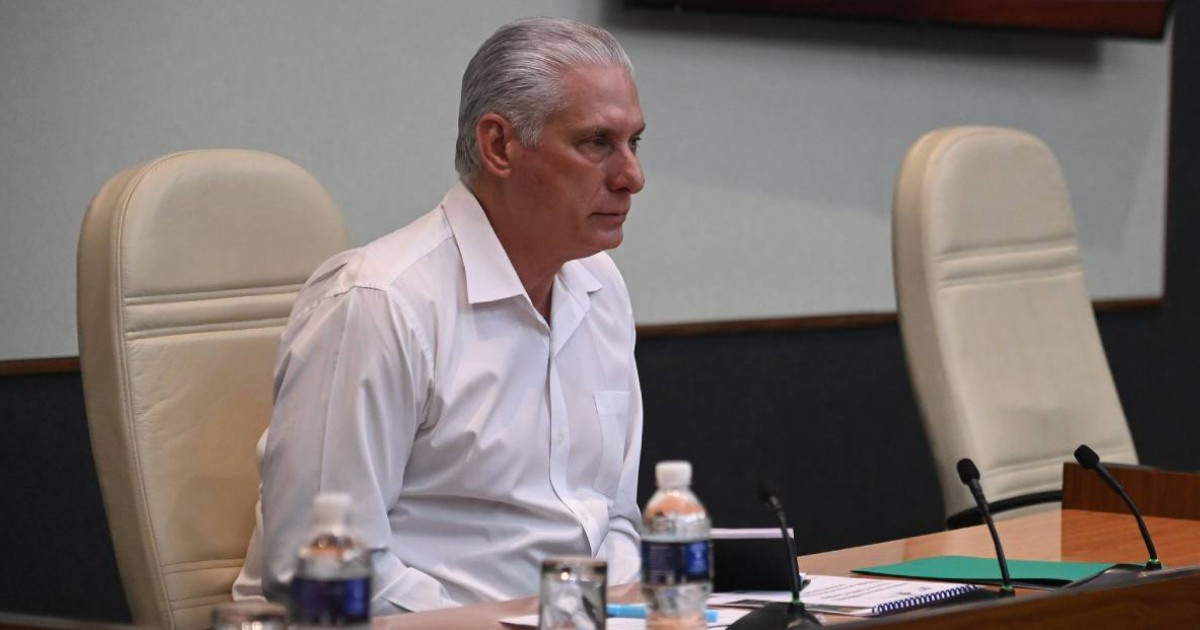
Miguel Díaz-Canel met this Tuesday with Cuban experts and scientists to discuss renewable energy projects related to the energy transition, in a meeting that the regime presented as a step forward, but which in practice revisits initiatives known for years while the island suffers from power outages of up to 25 hours a day.
These were the 10 main points of the meeting:
- Promotion of renewable energies. The central focus was to utilize available resources and technologies for energy generation from renewable sources, with initiatives that the regime categorizes as "short-term" solutions.
- Role of universities in the energy transition. The National Group of Universities for Renewable Energy Sources and Energy Efficiency (GNUFRE), established in 2019 with seven universities, now spans all higher education institutions in the country, but most of them are not even open to students due to the fuel crisis.
- Biogas Projects Using Agricultural and Industrial Waste. Proposals were presented to finalize and bring into operation biogas projects that can be replicated throughout the country using waste from pigs, cattle, and industrial sources. They claim that Cuba has an estimated potential of over 491 million cubic meters per year of biogas.
- Development of biomethane for transportation (Martí Project). El doctor Manuel Alejandro Rubio Rodríguez, coordinador del GNUFRE y profesor de la Marta Abreu Central University of Las Villas, presentó el Proyecto Martí, descrito como la primera experiencia cubana de producción de biometano para transporte, basada en biodigestores de laguna tapada.
- Use of forest biomass (chips and pellets). A proposal was discussed to develop the value chain of solid biofuels, prioritizing their use in ovens, food cooking, construction material production, and steam generation, based on the National Bioenergy Atlas.
- Domestic Applications of Biogas. Among the projects presented is the Managuaco biogas project —a network for domestic use based on livestock waste with a Cuban biodigester— and the demonstration project La Pastora, a hybrid biodigester with a rubber membrane.
- Transformation of the sugar industry into an energy source. El proyecto que generó mayor atención fue el de Caña de Azúcar. Rubio argumentó que "una industria azucarera diferente puede ser la generación de electricidad base, flexible y sostenible de la transición energética a partir de los excedentes de electricidad". Esto ocurre cuando la The 2024-2025 harvest produced less than 150,000 tons, el nivel más bajo desde antes de 1899.
- Creation of incentives and regulations. The regime ensures that it is working on defining a regulation that will provide incentives to encourage the participation of the stakeholders in the solid biofuels value chain, in line with the tax exemptions approved in February 2026 for investments in renewables.
- Expansion of GNUFRE at the national level. The group, which emerged as a response to the Renewable Sources Policy approved in 2014, is also involved in the drafting of the Energy Transition Law, which is still in the consultation process.
- Focus on short-term solutions. El encuentro priorizó iniciativas con capacidad inmediata de resultados, como la producción de calor, en un contexto donde el The electricity generation deficit reached 1,900 MW en marzo de 2026.
The meeting takes place while Cuba is experiencing the worst electrical crisis in its recent history, with multiple total system collapses so far in 2026 and a generation availability of just 1,145 MW compared to a demand of 3,000 MW during nighttime peaks.
A report from the Transition Security Project estimates that 8 billion dollars in renewable energy would be needed to meet 93.4% of Cuba's electricity demand, a figure that the bankrupt regime is far from being able to mobilize.
In essence, the meeting once again brought to the forefront ideas that the regime has been announcing for more than two decades without concrete results: promoting renewable energy, harnessing biogas, modernizing the sugar industry, and the role of universities.
The reiteration of already known diagnoses and proposals amidst an unprecedented electrical crisis highlights the lack of real implementation and effective investment.
For this reason, rather than progress, the meeting left the impression that the government is still "rediscovering the wheel," reiterating theoretical solutions while millions of Cubans continue to face prolonged blackouts and an energy system on the brink of collapse.
Filed under: