
Related videos:
The Cuban regime once again blamed the U.S. for its rice production problems, this time during an inspection visit by Vice President Salvador Valdés Mesa to municipalities in the province of Matanzas.
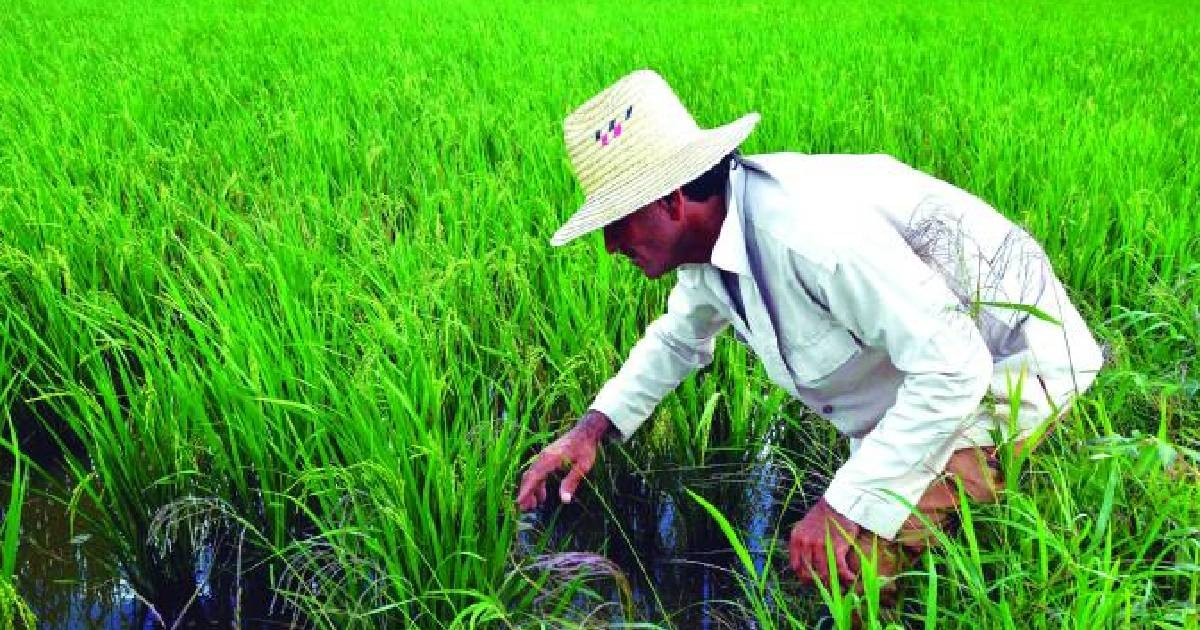
In Calimete, where over 200 producers cultivate rice and approximately 730 hectares have been planted in the current campaign, the official channel Canal Caribe reported that producers are facing two declared obstacles: the breakdown of an electrical transformer and "the intensification of the measures imposed on the country by the United States government."
A local producer or official explained that the fuel supply is essential for the irrigation system known as Rosarata: "Everything had to be halted because they know that the movement of oil is a fundamental requirement here in Rosarata. So we started trying to import it."
The same informant indicated that a container of oil has been imported and already paid for abroad, and that it was on its way at the time of the visit.
Valdés Mesa, a member of the Political Bureau of the Communist Party, visited the municipalities of Perico and Calimete accompanied by Mario Sabines Lorenzo, the first secretary of the party in Matanzas, and the vice-governor Lázaro Suárez Navarro.
The vice president called for making better use of the nearly 3,000 hectares available for rice cultivation in Calimete and for paying greater attention to the producers.
The visit occurs in the context of a deep agricultural crisis that the regime itself recognizes, although it attributes its causes to the U.S. embargo rather than to the centralized state agricultural model that independent economists identify as the structural problem.
In 2023, Cuba produced only 27,362 tons of rice compared to a total availability of 511,584 tons, of which 484,222 were imported, which means that the national production covers less than 6% of internal consumption.
In 2024, production was about 80,000 tons compared to a demand of 600,000, a gap that President Miguel Díaz-Canel himself promised to close by March 2026 by stating that Cuba could be self-sufficient in rice in two to three years.
Cuba is currently harvesting more than 1,700 hectares of hybrid corn in the provinces of Mayabeque, Cienfuegos, Ciego de Ávila, and Matanzas, with expected yields of over six tons per hectare.
It is not the first time that Calimete has served as a setting for unfulfilled promises: in November 2025, Valdés Mesa visited the same municipality and found that only 557 of the 1,500 hectares planned for the cold season had been planted, also due to failures in gates and transformers.
Filed under: