
Related videos:
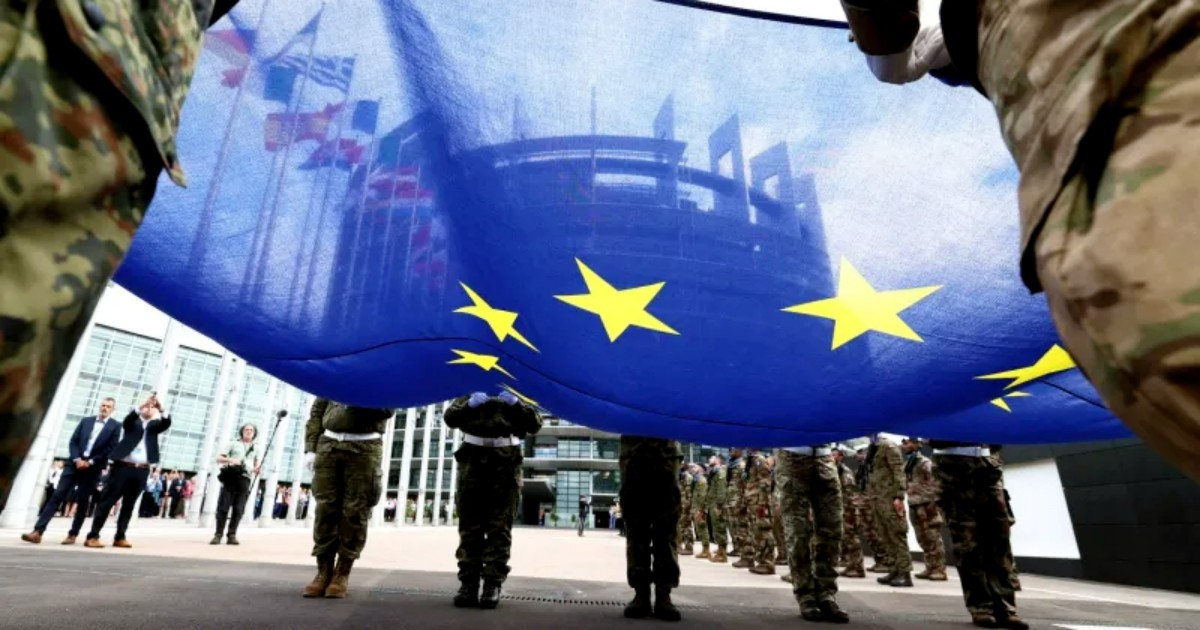
Europe is accelerating a contingency plan informally known as "European NATO" to ensure the defense of the continent if the United States withdraws from the Atlantic Alliance, as revealed by the Wall Street Journal in a report from Berlin and Brussels.
The plan, conceived last year and developed through informal discussions and working meetings on the sidelines of NATO, aims to place more Europeans in command and control roles within the alliance and to supplement U.S. military assets with their own resources.
The stated objective is to preserve deterrence against Russia, operational continuity, and nuclear credibility, even if Washington withdraws its forces from Europe or refuses to come to the defense of its allies, as President Donald Trump has threatened.
The immediate trigger was the crisis between Trump and NATO caused by the war against Iran: earlier this month, Trump threatened to withdraw the U.S. from the alliance due to the allies' refusal to support his military campaign, stating that the decision was "beyond any reconsideration."
Recently, Trump described European allies as "cowards" and NATO as a "paper tiger," adding in reference to Russian President Vladimir Putin: "Putin knows it too."
The plan was also accelerated following the threats from Trump to seize Greenland, territory of the ally Denmark. The president himself acknowledged: "Everything started with Greenland. We want it. They don't want to give it to us, and I said: 'OK, goodbye'."
The decisive shift has been Germany's change of position, which for decades resisted French calls for greater European sovereignty in defense. Chancellor Friedrich Merz began reevaluating that stance late last year, concluding that Trump was willing to abandon Ukraine and that there were no longer clear values guiding U.S. policy within NATO.
That German pivot unlocked a broader agreement that includes the United Kingdom, France, Poland, the Nordic countries, and Canada, presenting the plan as a "coalition of the willing" within NATO.
The German Defense Minister, Boris Pistorius, was direct: "NATO must become more European to remain transatlantic."
The Finnish president Alexander Stubb, one of the most involved leaders in the plans and who has a close relationship with Trump, called the president immediately after his threat to withdraw to inform him about the European plans.
The transfer of cargo from the U.S. to Europe is underway and will continue as part of the U.S. national defense and security strategy., Stubb stated to the WSJ.
"The most important thing is to understand what is happening and to manage and control it, rather than the U.S. simply withdrawing quickly," he/she added.
The Swedish ambassador to Germany, Veronika Wand-Danielsson, confirmed the dynamic: "We are taking precautions and maintaining informal conversations with a group of like-minded allies, and we will contribute to filling the gap within NATO when necessary."
The challenges are immense: the entire structure of NATO is built around U.S. leadership, from logistics and intelligence to supreme military command, which has always been held by an American. Europeans lack satellite systems, surveillance, and missile alert systems that are equivalent to those of the U.S.
The retired American admiral James Foggo, who held senior positions related to NATO, acknowledged that Europeans "have the capability" and "some of the hardware," but warned that they need to invest and develop capabilities more quickly, and that "a Europeanization of NATO should have happened sooner."
Merz and the French president Emmanuel Macron opened discussions on whether the French nuclear deterrent could be extended to cover other European nations, including Germany, while Berlin and London announced last month a joint project to develop stealth cruise missiles and hypersonic weapons with ranges exceeding 2,000 kilometers.
Filed under: