
Related videos:
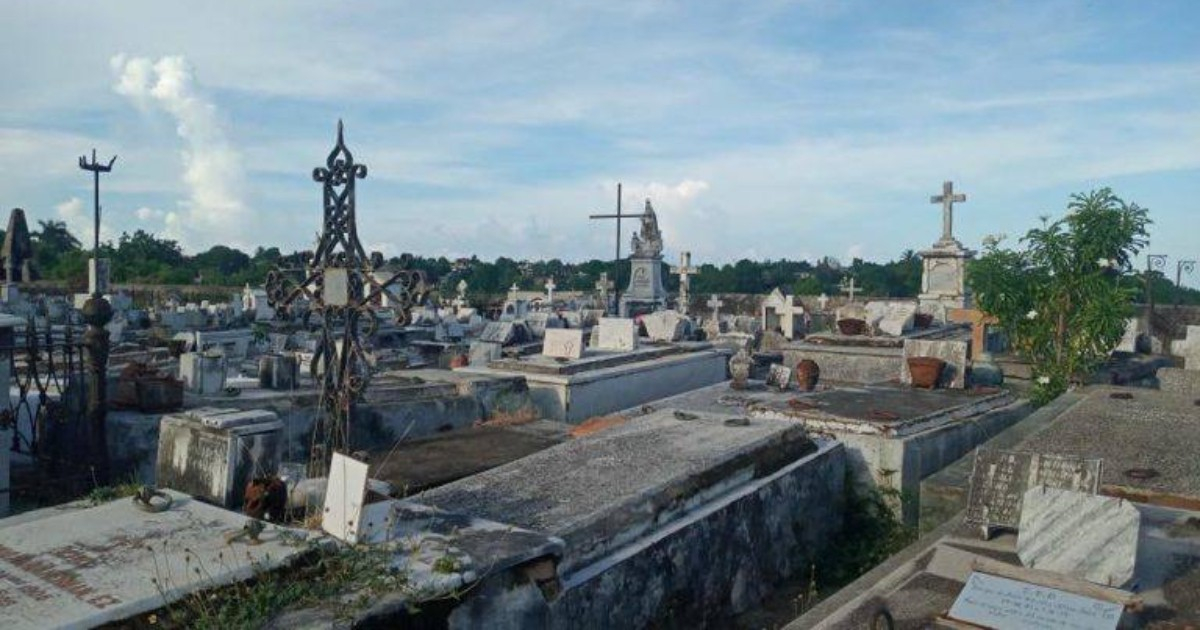
The Catholic Cemetery of Trinidad, one of the main examples of colonial Cuban funerary art, is facing a funerary heritage at risk due to neglect and deterioration, according to a report published this Tuesday by the newspaper Escambray.
The necropolis, with its earliest documented burials dating back to 1803, is home to a domed chapel dedicated to Our Lady of Health, vaults adorned with coats of arms, obelisks, and marble sculptures, artistic ironwork, and unique iconographic elements that reflect the architectural styles of the 19th century.
Bárbara Venegas Arboláez, a historian from Trinidad, sadly points out the underlying cause: "The main reason for its institutional neglect, we could say, is that its heritage values are not known."
Venegas emphasizes that the interior chapel is a rarity in Cuba: "There are few cemeteries in the country that have a chapel with a dome. Due to its technical rigor, this structure also reflects the technological and construction achievements that Trinidad attained during the colonial period." The chapel houses the Altar of the Souls, which was moved from the Parroquial Mayor in 1814.
The researcher Víctor Echenagusía Peña underscores the historical significance of the place with a powerful phrase: "This is also Trinidad." He mentions the surnames of wealthy families that rest there: Malibrán, Sánchez Iznaga, Borrell and Lemus, Brunet, Maury. Among the most notable graves, Venegas describes that of Berta Machado, a relative of the dictator Gerardo Machado: "This woman passed away in 1930, but when the dictator fell in 1933, the people took to the streets to eradicate all memory of that family. The bullet impacts are still there."
The vault of the Sánchez Iznaga family, built in 1890, stands out for its luxurious wrought ironwork and its columns topped with torches as a symbol of eternal fire. Researcher José Antonio Pérez Menéndez, in an article published in the magazine Tornapunta, notes that the more elaborate vaults of the 19th century "recreate pain, sadness, compassion, and at times even resignation."
The situation of the cemetery workers reflects structural neglect. The grave digger Osmani Cebey Ramos earns 2,500 pesos a month and summarizes his reality this way: "One has to manage here and there, but we need machetes, shovels, and other tools for the job." Regarding his salary, he states plainly: "Two thousand five hundred pesos. It's important work, although not everyone appreciates it. This can't be compensated with anything."
Lorenzo Fidel González Salabarría, recently appointed director of Necrological Services of Trinidad, acknowledges that the sector is "severely depressed" due to a lack of resources, low wages, and minimal attention to workers. For 2026, a budget of just over two million pesos has been allocated, intended solely for constructive actions on the entrance cover, the chapel, the perimeter walls, and painting, without including specialized restoration of the interior funeral heritage.
Felipe Ruiz Gutiérrez, director of Investments at the Office of the Conservator of the City and the Valley of the Sugar Mills, is emphatic: "Today, we do not have the resources or funding to support work of that magnitude."
The publication of the report on social media generated user reactions expressing regret about the condition of the cemetery and called for greater institutional attention towards this historical site, which is regarded as an integral part of the legacy of Trinidad, declared a World Cultural Heritage site by UNESCO in 1988.
The Trinitarian case is not isolated. The deterioration of Cuban cemeteries is a systemic crisis documented throughout the country: the situation at the Cementerio de Colón in Havana —a National Monument since 1987— was recently reported by independent journalist Camila Acosta, who showed human remains mixed with debris and stated: They are not graves, they are debris.
The municipal cemetery of Mayabe, in Holguín, was reported last February due to broken niches and exposed human remains. Cemeteries in Camagüey, Matanzas, Santiago de Cuba, Las Tunas, Ciego de Ávila, and Guantánamo are facing similar conditions, highlighting that the issue is structural and has no immediate solution in sight.
Filed under: