
Related videos:
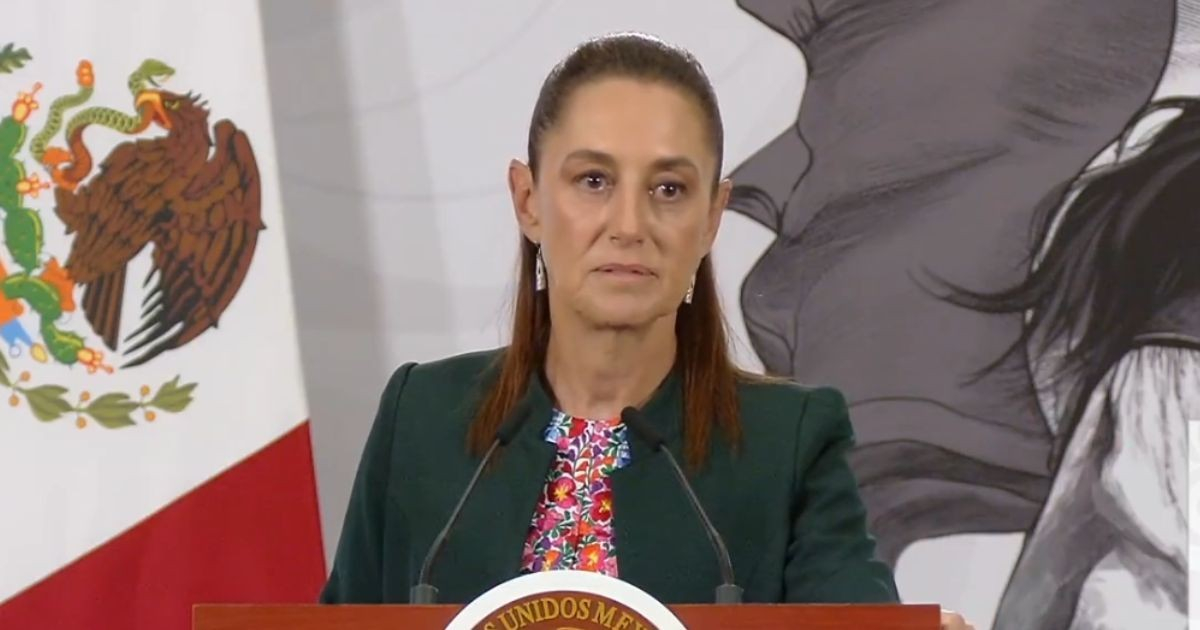
The Mexican president Claudia Sheinbaum stated that the energy sanctions imposed by the Trump administration against Cuba are "unfair" and accused Washington of "suffocating" the Cuban people, marking the strongest stance she has publicly taken against the United States during her term.
"Mexico has every right to send fuel, whether for humanitarian or commercial reasons," said Sheinbaum on Tuesday during a press conference, where she reiterated that she will maintain the program of Cuban doctors working in Mexican territory, unlike other Central American and Caribbean nations that canceled those programs under pressure from Washington.
The former Mexican ambassador to the United States, Arturo Sarukhan, described Sheinbaum's position on Cuba as "a Rubicon issue for her," emphasizing the political weight that this decision carries in the context of bilateral relations.
However, the discourse of solidarity clashes with a reality that Sheinbaum did not mention: Mexico has not sent a single barrel of oil to Cuba since the end of January of this year.
The state oil company Pemex canceled a shipment scheduled for January 27 due to pressure from the Trump administration, which days later signed Executive Order 14380 threatening tariffs on countries that supplied fuel to the island.
The last confirmed shipment was the vessel Ocean Mariner, carrying approximately 86,000 barrels, which arrived in Havana in January.
What makes it more difficult to maintain Mexico's silence is that the tariff threat lasted just three weeks: on February 20, the U.S. Supreme Court ruled the tariffs based on the International Emergency Economic Powers Act illegal, and Trump ended those tariffs effective February 24.
Despite the legal obstacle disappearing almost two months ago, Mexico has not resumed oil shipments to Cuba, not even as humanitarian aid, as Sheinbaum promised in January.
Instead, the Mexican government sent two ships with 814 tons of supplies in February, and a total of more than 2,000 tons of food in various shipments until April. Sheinbaum also personally donated 20,000 pesos, equivalent to about 1,000 dollars, to the aid efforts.
In March, the president acknowledged that her government was evaluating "various alternatives" to resume the fuel supply, but did not specify any measures.
Meanwhile, Cuba is experiencing its worst energy crisis in decades, with power outages of up to 30 hours a day and a generation deficit of up to 1,885 megawatts during peak hours, exacerbated by the simultaneous loss of Venezuelan oil following the capture of Nicolás Maduro on January 3rd.
During the second half of 2025, Mexico had shipped over three million barrels of Maya crude oil to Cuba, with average shipments of 17,200 barrels per day. The total amount of Mexican oil sent to the Island between January 2023 and September 2025 exceeded 1.4 billion dollars, according to reports from Pemex to the U.S. Securities and Exchange Commission.
In the same conference on Tuesday, Sheinbaum also protested the death of 15 Mexican citizens in the custody of the Immigration and Customs Enforcement (ICE), describing those detention centers as "incompatible with human rights standards and the protection of life."
The president ordered Mexican consuls to visit those centers daily instead of weekly and announced that she will take the case to the Inter-American Commission on Human Rights and the UN.
The toughening of Sheinbaum's rhetoric comes a week after the change in the Mexican Foreign Ministry: Foreign Minister Juan Ramón de la Fuente resigned due to health issues and was replaced by 38-year-old Roberto Velasco Álvarez, who was confirmed with 81 votes in favor in the Senate.
Filed under: