
Related videos:
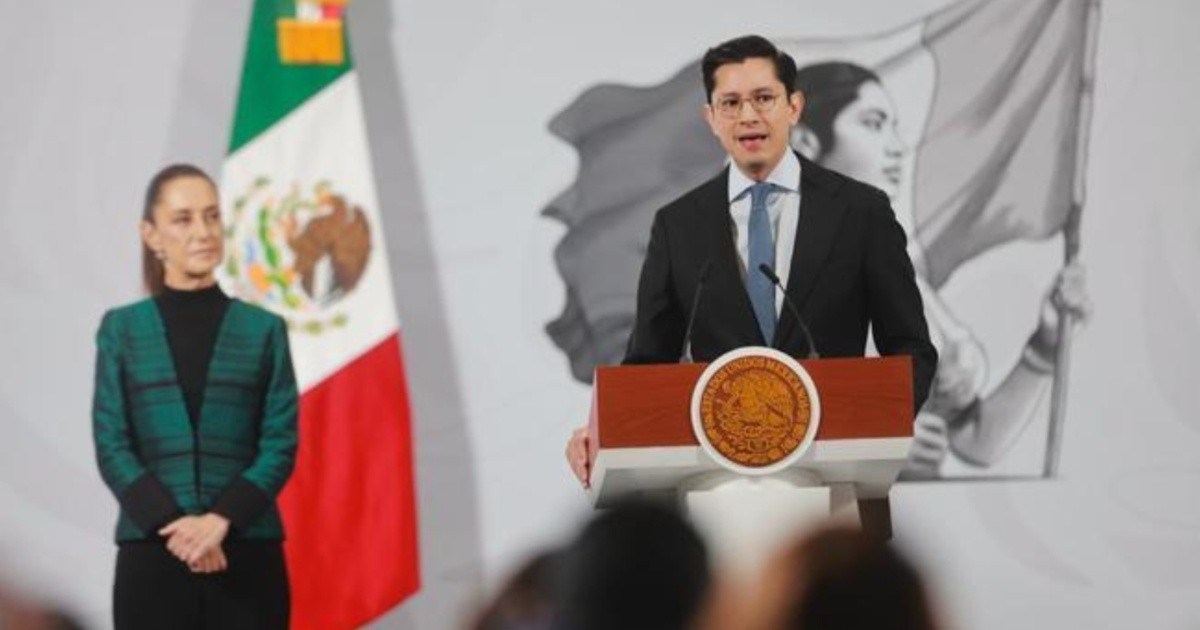
The Senate of Mexico ratified Roberto Velasco Álvarez as the new chancellor of the country this Wednesday, with 81 votes in favor and 30 against, following the departure of Juan Ramón de la Fuente from the Foreign Affairs Secretariat (SRE).
A note from the agency EFE confirmed that De la Fuente officially submitted his resignation a week ago due to "chronic back problems that required two surgeries," although journalist and analyst Jesús Lemus Barajas suggested a different hypothesis: that the real reason was that the United States stopped considering him a reliable interlocutor on security matters.
"The departure of Juan Ramón de la Fuente occurs because the U.S. government does not see him as a reliable interlocutor due to his lack of knowledge about the issue of insecurity (...) he was unable to inform the United States how the fight was being conducted, who was being monitored, and what the priority objectives were."
Velasco Álvarez, 38 years old, thus becomes the youngest chancellor of Mexico in 91 years, taking office at a time of high diplomatic tension with Washington.
Analysts have described his mission as almost impossible, given the complex bilateral scenario.
In his swearing-in address before the full Senate, the new chancellor emphasized the principle of cooperation without subordination as the guiding axis of Mexican foreign policy, directly referencing the pressures the country faces from the United States government.
Among the challenges facing the new head of the Ministry of Foreign Affairs is the internal humanitarian crisis: international organizations have documented more than 133,000 missing persons in Mexico, a figure that creates pressure both domestically and on the diplomatic agenda with Washington.
In the regional context, Mexico has maintained an active stance. The outgoing chancellor had reaffirmed at CELAC that they would continue providing all possible help to countries in need, in line with the policy of solidarity promoted by President Claudia Sheinbaum, who also announced the dispatch of over 2,000 tons of humanitarian aid to Cuba.
De la Fuente emphasized that this stance was a reflection of the historical relationship between the two countries and Mexico's approach to international cooperation, while also highlighting its commitment to decolonization processes.
Mexico's support for Cuba has generated divided opinions. While the government presents it as a gesture of regional solidarity, critical sectors question whether this type of assistance ultimately reinforces the Cuban state apparatus without addressing the structural problems affecting the population.
Filed under: