
Related videos:
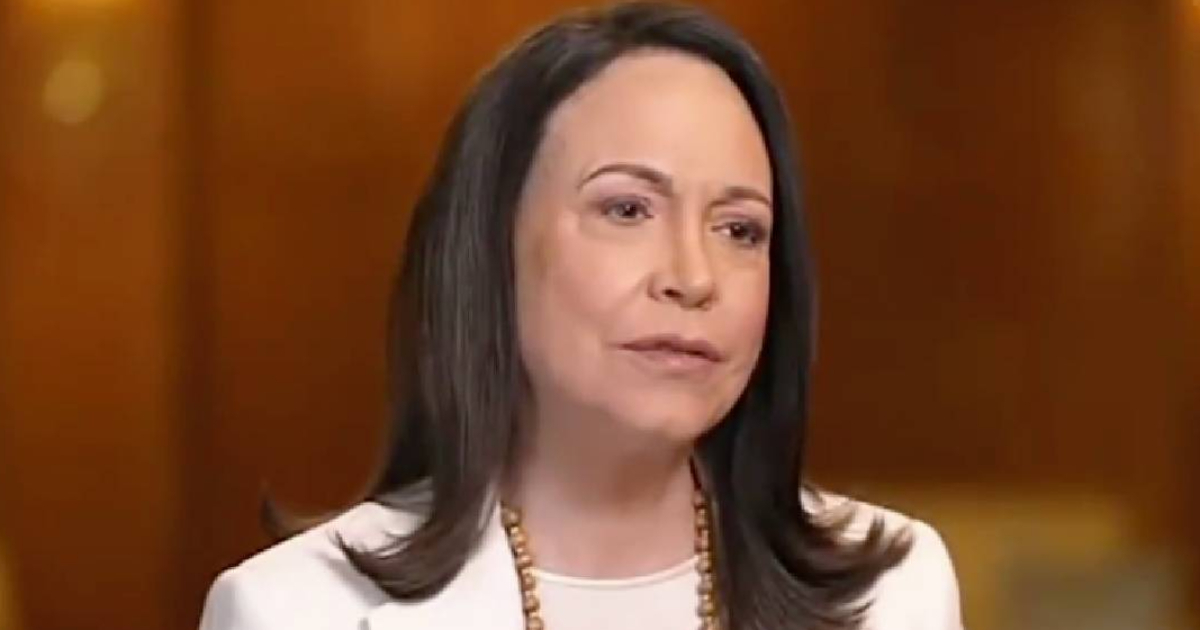
The U.S. Department of State stated this Thursday that Washington has clearly communicated to the Venezuelan interim government its expectation that opposition leader María Corina Machado will be able to return to the country and participate freely in the upcoming elections.
The statements were made by Michael Kozak, a senior official of the Bureau of Western Hemisphere Affairs at the Department of State, during a hearing before the Subcommittee on the Western Hemisphere of the U.S. House of Representatives.
Kozak was directly questioned by the Cuban-American congresswoman María Elvira Salazar, chairwoman of the subcommittee, who asked him if the United States has demanded that the government of Delcy Rodríguez not target Machado or any other opposition leader.
"Yes, I believe that is very clear to them. We hope that María Corina Machado can return and participate freely in an election," Kozak responded before Congress.
The official also acknowledged that the Amnesty Law approved by the Venezuelan interim government remains insufficient.
"There are some opposition politicians who still cannot return and participate. We want them to be able to do so," he noted.
Kozak also called for a cleansing of the Venezuelan Electoral Registry, which he described as completely biased and outdated, and demanded the reform of the National Electoral Council and the Supreme Court of Justice, whose members were appointed by Maduro and in whom, according to him, "no one trusts."
The statements come in the context of a political transition in Venezuela that began on January 3, 2026, when U.S. forces captured Nicolás Maduro in Caracas during the so-called "Operation Absolute Resolution."
Since then, Delcy Rodríguez has served as acting president, sworn in by the Supreme Court of Justice under the status of "forced absence."
The United States formally recognized Rodríguez as the interim head of state in March 2026 and reopened its embassy in Caracas on the 14th of that month.
The Secretary of State Marco Rubio outlined a three-stage plan for Venezuela: stabilization, recovery, and democratic transition with free elections before the end of 2026.
Kozak confirmed this Thursday that the first phase is considered successful, but emphasized that there are still fundamental conditions to be met before a credible electoral process can take place.
Machado, Nobel Peace Prize 2025 and leading figure of the Venezuelan democratic opposition, is currently outside the country on an international tour.
This Friday she will receive the Golden Key of the City Council of Madrid, and on Saturday, a massive gathering of the Venezuelan diaspora is planned at Puerta del Sol.
The opposition leader has declared that her return to Venezuela is imminent and that "the day is drawing near."
However, the repression against opposing figures has not stopped.
This Thursday, former Venezuelan legislator Alexis José Paparoni was arrested at Maiquetía airport while attempting to return to the country, an event that underscores the risks that continue to face those who oppose the Chavista regime that still controls key institutions.
Kozak also reported that the regime released fifty additional political prisoners in the hours leading up to the hearing, although Washington believes that these measures are insufficient to ensure truly free and competitive elections.
Filed under: