
Related videos:
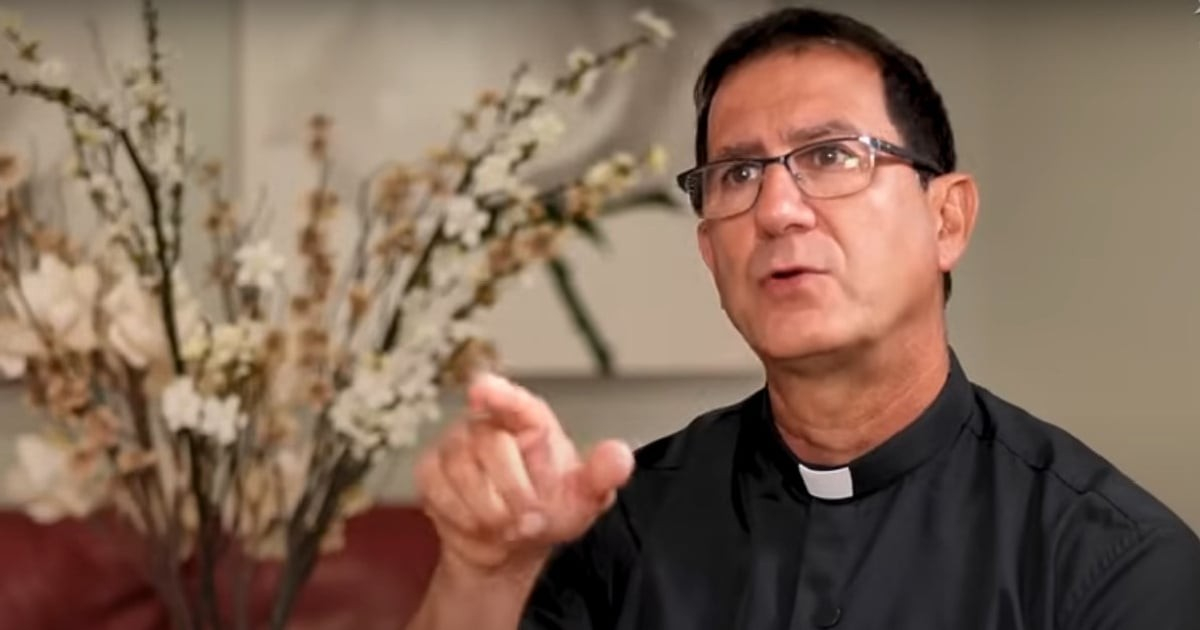
The Cuban priest Alberto Reyes Pías published another reflection this Friday on his Facebook profile in his usual section "I've been thinking...", where he argues that the Cuban government has committed crimes against humanity for more than six decades.
This is the second consecutive reflection from the priest on this topic. On April 10, in another text, he stated outright that what the regime is doing to its people is a crime against humanity.
In this new text, the Father begins with the legal definition of the Rome Statute of the International Criminal Court, which classifies as crimes against humanity the systematic and widespread attacks against the civilian population carried out by state power, including murder, extermination, slavery, deportation, illegal imprisonment, torture, and persecution on political or religious grounds.
With that legal basis, he poses a series of rhetorical questions that document, one by one, the regime's practices.
"Has there not been in Cuba since the triumph of the Revolution an organized and systematic repression against opponents, a repression that ranges from executions in La Cabaña to the numerous and ongoing detentions of anyone who expresses dissent against this system, including minors?" he inquires.
Reyes points out the existence of detention centers where individuals are tortured or held illegally, explicitly mentioning Villa Marista, the main headquarters of State Security, as a symbol of these practices.
Mention the death of Oswaldo Payá, leader of the Christian Liberation Movement, who passed away in 2012 in a car accident, the details of which remain unclear: "Has there not been a continuous persecution over the years against opposition leaders, including Oswaldo Payá, who died under circumstances that suggest a calculated assassination rather than an accident?"
Regarding medical missions, it is striking: "Are medical missions, whose participants have always had more than half of their salary deducted, not merely a governmental way to benefit from slave labor?"
The priest also denounces what he calls a "silent genocide": "Is it not a silent genocide, a normalized extermination, to keep a people in hunger, misery, lack of hygiene, and absence of medicine?"
And he adds, "Isn't the lack of freedom and hope a form of torture and a silent mechanism to annihilate the best of a people?"
Father Reyes also denounces the violent repression of popular protests, the subordination of the judicial system to the single party, the use of fear and police violence as instruments of control, the persecution of churches and the suppression of freedom of expression and the press.
In light of this situation, he criticizes the stance of the international community: "It is ironic that so many international bodies support the Cuban government and continue to defend the idea of a Caribbean Marxist paradise instead of feeling compelled to issue a condemnation for crimes against humanity."
Despite the harshness of the diagnosis, the priest concludes his publication with a message of hope: "With or without support, everything that is death in Cuba today, we will turn into life."
Alberto Reyes, parish priest of the Esmeralda parish in Camagüey, has been subjected to harassment, surveillance, and threats by the Cuban State Security.
However, this has not intimidated him; rather, it has intensified his public criticisms of the regime, including explicit calls for a change of government and political system in Cuba.
Filed under: