
Related videos:
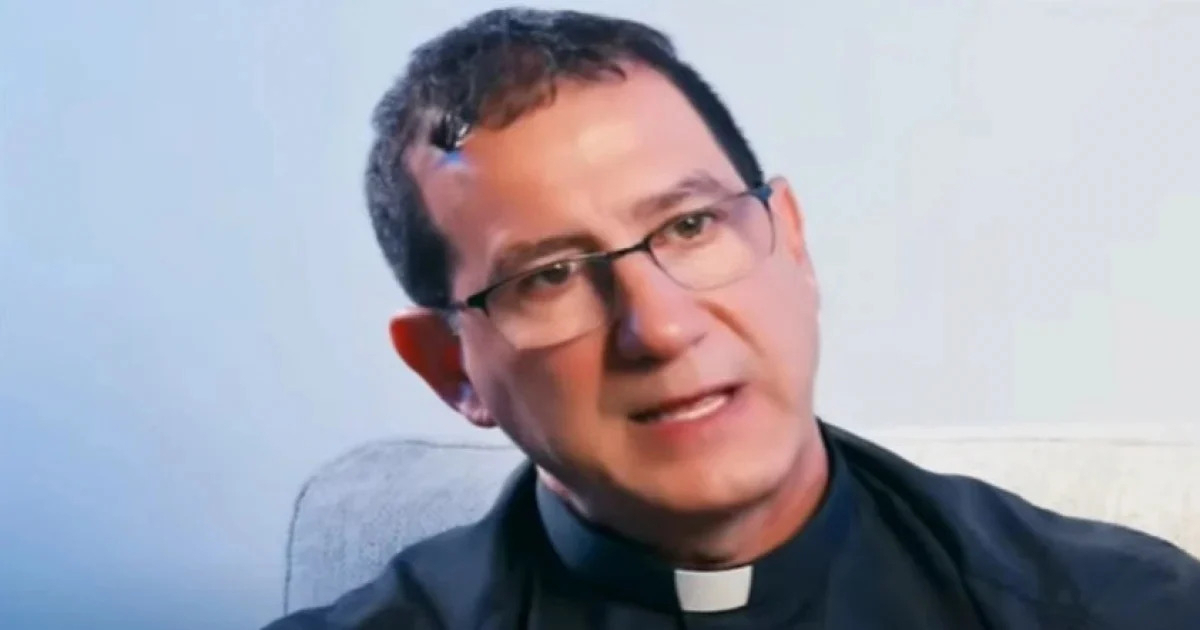
The Cuban priest Alberto Reyes published a reflection on social media in which he asserts that the true driving force behind a potential political change in Cuba lies not only in external factors or the economic crisis, but in the transformation of the citizens' attitude, who - he claims - have begun to lose their fear and demand their rights.
In a lengthy message shared on Facebook, Reyes stated that the need for political change in the island has become evident after decades of governance by the same system.
"Cuba needs a change of government and political system is an evident fact," he wrote.
In his view, the political project that has dominated the country for decades "has not only failed, it has failed spectacularly," leaving the country in an extremely deteriorated social and economic situation.
He argued that after nearly seven decades under the same model, the living conditions of the population reflect the exhaustion of the system.
"After nearly 70 years under totalitarian rule, living conditions on the Island couldn't be worse, and the situation for the people couldn't be more lamentable," he expressed.
Factors that exert pressure on the system
Reyes noted that there are multiple factors suggesting that Cuba is approaching a moment of political transformation. Among them, he mentioned the worsening economic crisis, which has reached unprecedented levels in the country.
He also referred to international pressure, particularly from the United States, as well as the distancing from former political and ideological allies of Havana, such as Russia and China.
He explained that this is compounded by the absence of a new international partner willing to financially support the Cuban government, as has happened in other stages of the Island's recent history.
In his analysis, the priest mentioned the growing diplomatic isolation of the Cuban government and the rejection by various countries of initiatives that had been promoted by Havana for years, such as international medical mission programs.
In his view, while the government tries to buy time in this adverse situation, it finds less and less external support.
"It seems that more and more doors are closing, fewer and fewer people believe in them, and fewer and fewer are willing to continue losing money and credibility by supporting a dictatorial and failed regime," he wrote.
The role of the people in change
Reyes argues that the decisive element is not found solely in those political or economic factors. In his opinion, the key to change lies in the attitude of the citizens themselves.
"The most important key is not there, but in a town that has grown weary, in a town that for the first time in a long time has begun to believe it has the right to freedom and prosperity, and has decided to do something to achieve it," he stated.
To illustrate the process, he reviewed events from recent years that reflect a change in Cuban society, such as the San Isidro Movement, the gathering of young people in front of the Ministry of Culture, July 11th, and the protests by university students against the increase in ETECSA rates.
Reyes also highlighted the increasingly clear positions of the Catholic bishops on the Island, who in recent years have issued public messages regarding the country's situation.
New movements and hope for change
The priest mentioned the emergence of new initiatives within civil society. Among them, he highlighted the group known as "El 4tico," which he described as one of the deepest reflections that have arisen in the recent public debate.
After the imprisonment of its members, Reyes noted that a new phenomenon called "Out of the Box" has emerged, driven by young Christians who are motivated by their faith.
"Young leaders of a different generation, young people who do not work alone, because they have the support of their Christian communities, communities that will not hesitate to defend them," he emphasized.
In his opinion, these movements reflect the emergence of a new generation of social and political leaders within the country.
To conclude his reflection, Reyes referenced a well-known phrase about the impossibility of stopping social processes once they reach a certain point of maturity: "They may cut all the flowers, but they cannot stop spring," he wrote.
The priest stated that this process is already underway in Cuban society and will continue to progress.
"This town, beyond its indoctrination, its fear, its insecurity, and its helplessness, has said ‘Enough!’ and has begun to move forward, and it will not stop until the day when, happily, we embrace each other and can say: ‘We are free!’," he concluded.
Filed under: