
Related videos:
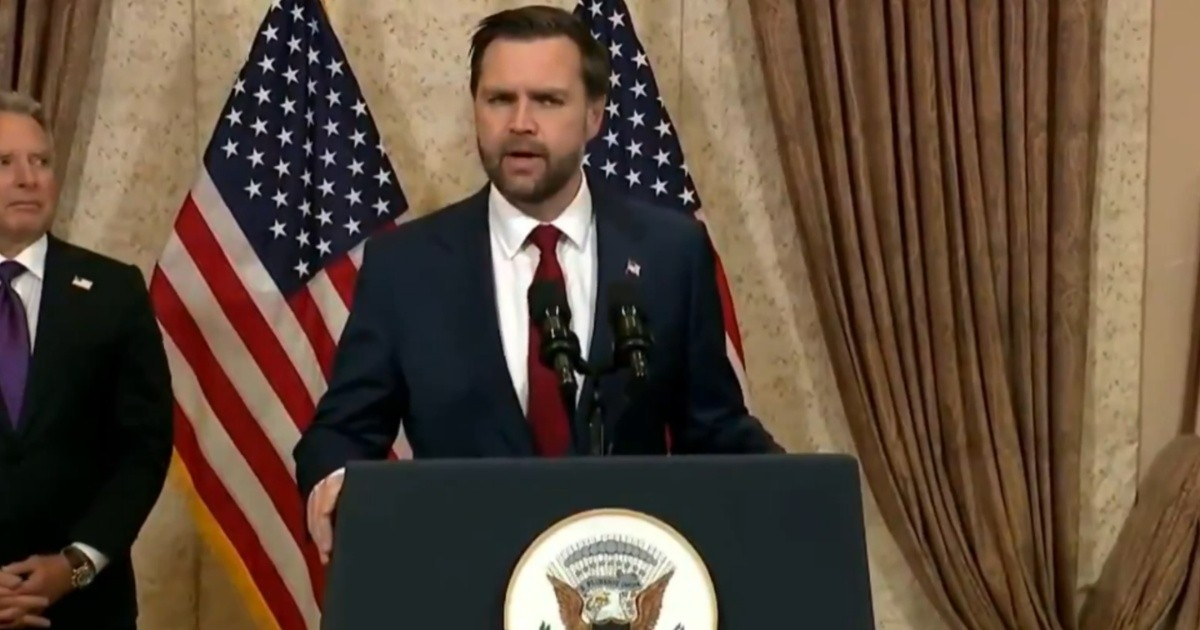
The Vice President of the United States, JD Vance, will lead a second round of negotiations with Iran on Monday in Islamabad, as confirmed by the White House this Sunday, at a time of heightened tension with the ceasefire set to expire.
Vance will be traveling with special envoy Steve Witkoff and Jared Kushner, son-in-law of President Donald Trump, who already participated in the first round held from April 10 to April 12, which concluded without an agreement after 21 hours of direct talks.
Trump announced the trip this Sunday on his platform Truth Social: "Representatives are going to Islamabad, where they will be tomorrow night to negotiate."
In the same message, the leader accused Iran of violating the current ceasefire and renewed his threats: "We are offering a very fair and reasonable agreement, and I hope they will accept it because, if they do not, every power plant and every bridge in Iran will be destroyed".
In statements to Fox News this Sunday, Trump was even more direct: "If the deal we negotiated is not finalized, I will destroy their bridges and their power plants."
The second round arrives with the clock ticking: the ceasefire that ended the Epic Fury Operation —a joint military campaign by the U.S. and Israel launched on February 28— expires on Wednesday, April 22, and Trump warned on Friday that he might not extend it if no agreement is reached.
The core of the conflict remains the Strait of Hormuz, through which 20% of the world's oil flows.
Iran closed the passage in retaliation for the American and Israeli attacks, causing the price of Brent crude to surge from 67 to over 126 dollars per barrel.
On April 18, Tehran reimposed strict control over the strait, claiming that Washington violated the ceasefire agreement, and Trump accused Iran of firing at a French ship and a British freighter in the passage.
After the collapse of the first round, Trump also ordered a naval blockade against Iranian ports, in effect since April 13, which, according to the president himself, costs Iran 500 million dollars a day.
Iran's position complicates the celebration of the new round: the agency Tasnim, affiliated with the Revolutionary Guard, reported this Sunday that Tehran does not plan to send a delegation to Pakistan while the U.S. naval blockade continues.
In the first round, the U.S. demanded the total dismantlement of the Iranian nuclear program and a twenty-year moratorium on uranium enrichment, while Iran offered only a five-year pause and claimed 270 billion dollars in compensation for war damages, positions that turned out to be incompatible.
At the end of that round, Vance stated: "The bad news is that we have not reached an agreement, and I think that's bad news for Iran much more than for the United States."
Pakistan, which plays a central role as a neutral mediator, deployed this Sunday a security apparatus of more than 10,000 personnel in Islamabad, closing main arteries, suspending public transport, and evacuating luxury hotels, in anticipation of the possibility of resuming talks.
Trump stated on April 16 that Iran had "accepted much" of the agreement proposed by Washington, although he did not provide details, as the deadline to prevent a resumption of conflict expires on Wednesday.
Filed under: