
Related videos:
The Cuban government emphasized the importance of strengthening political presence in communities and maintaining "combativeness" in response to what the official discourse describes as threats to the socialist system.
In this regard, the leader Miguel Díaz-Canel met this Saturday for two hours with more than fifty members of the Association of Revolutionary Combatants of Cuba (ACRC), where the neighborhood watch program "My Neighborhood for the Homeland" was highlighted, approved in March by the Council of State and structured around three fronts: Safe Neighborhood, Participatory Neighborhood, and Productive Neighborhood.
According to the digital site of the Presidency of Cuba, reserve lieutenant colonel Andrés Cobiella Santana, president of the Provincial Directorate of the ACRC in Havana, explained that Barrio Seguro promotes the participation of combatants in the National Days of Defense and the organization of surveillance systems in each area, in coordination with the Committees for the Defense of the Revolution (CDR) and the Federation of Cuban Women (FMC).
Participatory Neighborhood includes support for Popular Power delegates, assistance to vulnerable fighters, community sanitation, and the activation of health brigades for epidemiological surveys.
Barrio Productivo, for its part, promotes food production in backyards and plots by members of the Association.
On his part, the head of the Revolutionary National Police, First Colonel Eddy Manuel Sierra Arias, supported the initiative by stating that the work of the ACRC "is allowing us to strengthen our fight against crime, provide support to vulnerable individuals, boost food production, and other tasks that also directly contribute to defense."
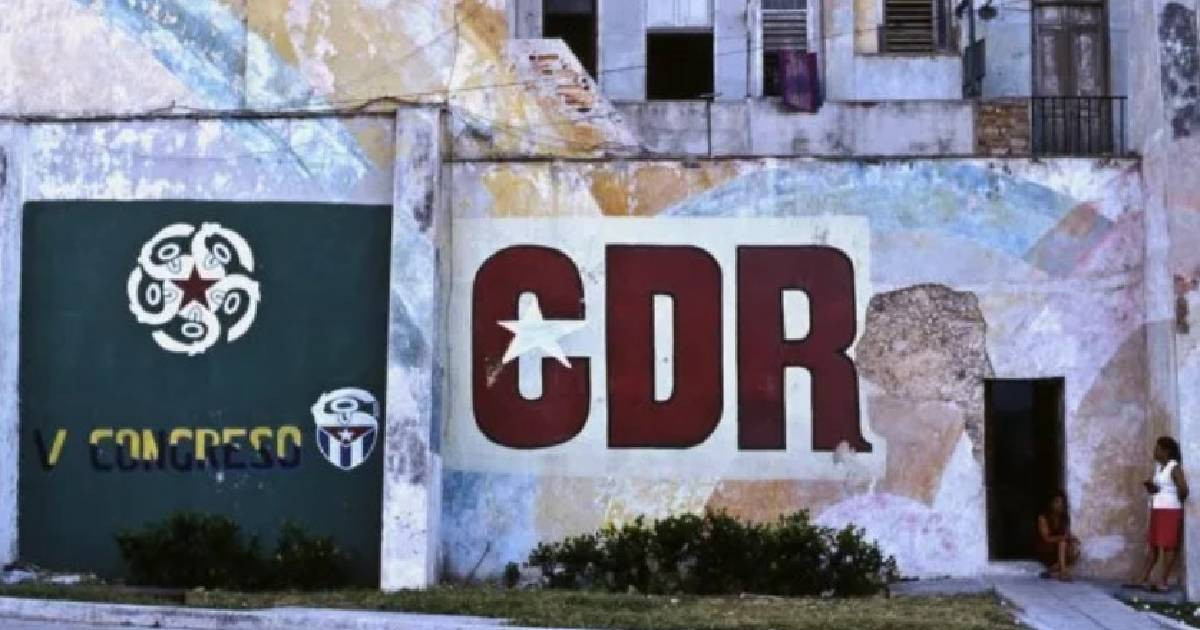
The program arrives at a time when the CDR, the historical neighborhood watch organization founded in 1960, is facing a crisis of legitimacy
Reinforce control amid social unrest
The regime's emphasis on "defense from the neighborhood" coincides with an increase in social tension in several provinces, primarily caused by the energy crisis, prolonged blackouts, and shortages of food and fuel.
In various locations, spontaneous demonstrations have been reported with slogans like "Freedom" or calls to take to the streets, reflecting the frustration of a population facing power outages of more than 20 hours daily in different areas of the country.
In this scenario, the government has revitalized the role of mass organizations and community surveillance as a mechanism to contain discontent and maintain territorial control.
During recent events of the Committees for the Defense of the Revolution, their national coordinator, Gerardo Hernández Nordelo, called to turn every neighborhood structure into a "battalion of defense and combativeness", capable of responding to protests against socialism.
In light of the energy collapse, Díaz-Canel himself recently acknowledged the need to ensure alternatives such as charcoal or firewood, an implicit admission of the state’s inability to secure basic services.
In many households, cooking with charcoal has become the only option, despite a bag costing between 1,700 and 5,000 Cuban pesos, an amount equivalent to the monthly salary of many state workers.
That contrast between political discourse and the daily crisis has fueled sarcasm on social media.
During an official event marking the 65th anniversary of the proclamation of the socialist nature of the revolution, held in Matanzas, many users questioned the alleged "achievements" of the system.
“What achievements? The one with coal?”, asked an internet user, in a phrase that encapsulates the frustration felt by many Cubans.
In this context, the narrative that “the defense of the revolution starts in the neighborhood” seems to be part of a broader strategy to maintain political control amid economic decline.
With increasingly worn-out institutions, a population drained by the crisis, and organizations like the Committees for the Defense of the Revolution losing influence among the youth, the regime is betting on reinforcing community surveillance as one of its last lines of defense against the growing social discontent.
Filed under: