
Related videos:
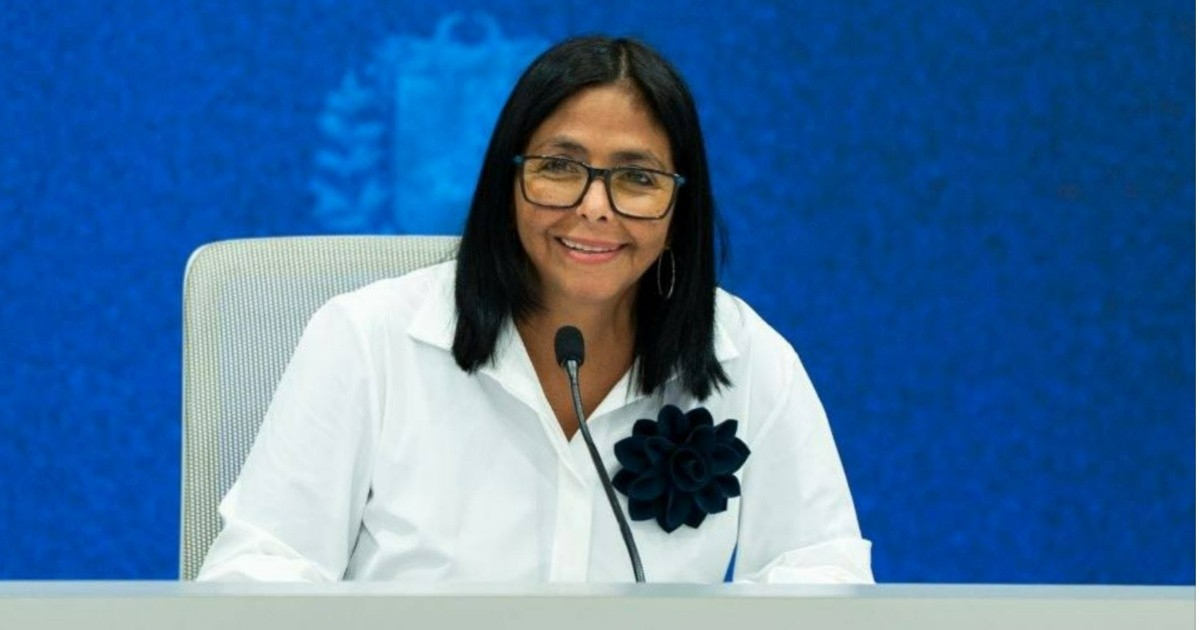
Delcy Rodríguez, the acting president of Venezuela, acknowledged this Sunday that her country Venezuela wants something different from its leaders, in a speech delivered at the beginning of the so-called Great Pilgrimage for Peace and Without Sanctions, a national mobilization of 13 days that started from the Zulia state heading to Caracas.
The statement, made while crossing the iconic Lake Maracaibo Bridge, is striking coming from someone who heads the same chavista apparatus that has led Venezuela to economic and political ruin for more than two decades.
"Venezuela wants something different, and it wants something different from its leaders, who should be responsible leaders towards their people, towards the citizens, who are concerned about what to do for the future," Rodríguez stated in remarks broadcast by the state channel Venezolana de Televisión.
The president, who took office following the capture of Nicolás Maduro in January 2026, seized the opportunity to demand a complete lift of the international sanctions imposed by the United States, the European Union, Canada, Switzerland, and the United Kingdom.
"I speak to the people of the United States, I speak to the peoples of Europe, I speak to their governments, to their authorities, enough with the sanctions against the noble Venezuelan people," she proclaimed in a speech that blends the rhetoric of openness with the continuity of the regime she herself was part of for years as executive vice president.
Rodríguez insisted that Venezuela is not asking for "handouts," but is claiming its rights, and that "a fundamental right is for Venezuela to be free from sanctions so it can develop freely with the world."
The pilgrimage traverses the country on three simultaneous routes from Zulia, Táchira, and Amazonas, and will culminate on May 1, when the leader is expected to announce a "responsible" increase in the minimum wage, which has been frozen at 130 bolívares per month —approximately 27 cents— since March 2022.
In Táchira, the Minister of Interior, Diosdado Cabello, was present, and in Amazonas, the President of Parliament and brother of the head of state, Jorge Rodríguez, which indicates that the mobilization is an operation of the Chavista apparatus, not a spontaneous expression of Venezuelan society.
Washington has partially relaxed sanctions: on April 1 removed Rodríguez herself from the list of the Office of Foreign Assets Control, and on April 14 authorized transactions with the Central Bank of Venezuela and other public banks. Despite these relaxations, Rodríguez insists that temporary licenses do not provide "legal security" and calls for a total and permanent lifting of the restrictions.
From Madrid, the opposition leader María Corina Machado warned this Sunday that "if Venezuelans feel that what is happening is merely an economic issue, related to money, and not about the people, they could completely lose their patience," indicating that Venezuelan society will not accept a transition that only benefits the regime's elites and multinational oil companies.
Filed under: