
Related videos:
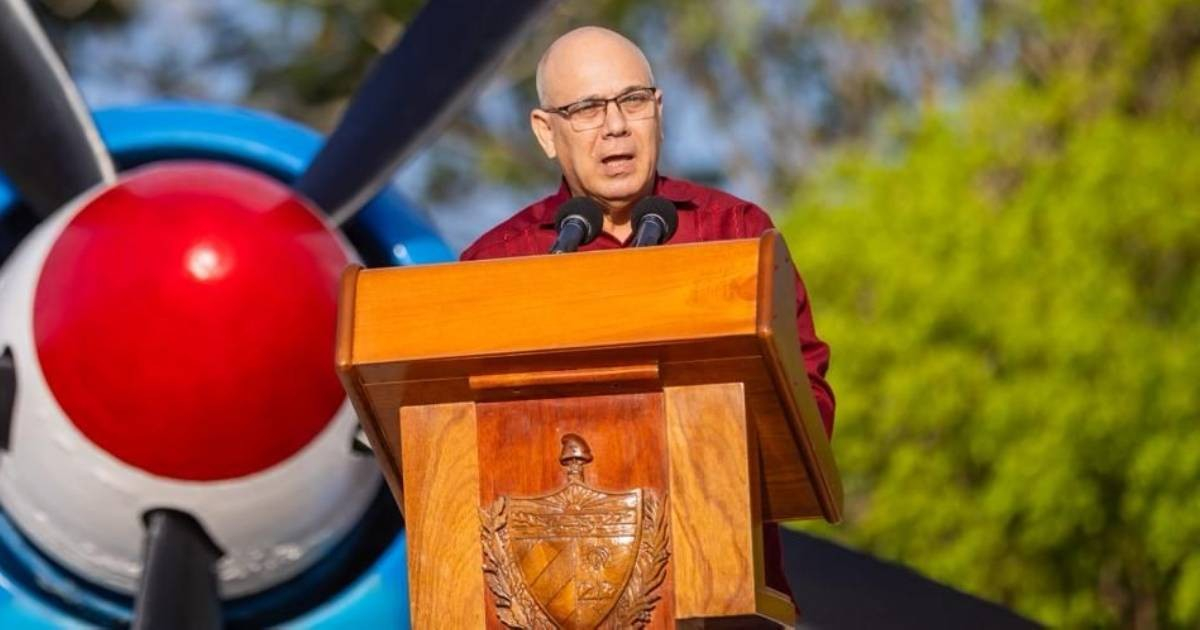
Roberto Morales Ojeda, Secretary of Organization of the Central Committee of the Communist Party of Cuba (PCC) and member of the Political Bureau, announced this Sunday on Facebook that civil society organizations have launched a signature collection campaign called "For the Homeland," in response to a context of blockade, slander, media aggression, and a permanent hybrid war, a claim that documented facts directly refute.
The campaign was announced last Friday by Yuniasky Crespo Baquero, head of the Ideological Department of the Central Committee of the PCC, during the closing of the V International Colloquium Homeland held in Havana from April 16 to 18.
The ruler himself, Miguel Díaz-Canel inaugurated the process on Sunday at the Ciénaga de Zapata Memorial Museum in Matanzas, during the main event commemorating the 65th anniversary of the Battle of Playa Girón.
The contradiction of Morales Ojeda is blatant: he was the main speaker at that event in Playa Girón where the campaign was launched, and hours later he presented it on social media as an initiative that originated from the grassroots.
However, in Cuba, there is no real independent civil society. The so-called mass organizations —the Committees for the Defense of the Revolution (CDR), the Federation of Cuban Women (FMC), the Central Workers' Union of Cuba (CTC), the Union of Young Communists (UJC), and others— are subordinate to the PCC, whose 2019 Constitution establishes it as a superior guiding force of society and the State.
Signature books were opened in all communities, workplaces, and educational institutions across the country starting this Sunday, to support the Revolutionary Government's Declaration "Girón is today and always," issued on April 17.
Opponents rejected the campaign immediately. José Daniel Ferrer, leader of the Unión Patriótica de Cuba (UNPACU), called for not signing, labeling the initiative as support for "tyranny." Activist Yamilka Lafita Cancio, known on social media as Lara Crofs, also publicly declined to participate.
Manuel Cuesta Morúa questioned the real impact of the campaign, pointing out that "in a situation where the unpopularity of the regime is extremely high", the government is trying to demonstrate popularity by forcing signatures to legitimize a "revolution that has been fading in recent years."
The anthropologist Jenny Pantoja Torres warned that many people participate not out of conviction but out of economic desperation and institutional coercion, as they depend on the State for their livelihood, and not participating can result in being targeted and facing repercussions in their jobs or studies.
Filed under: