
Related videos:
The Cuban regime has ended up trapped in its own narrative. While it discredits international media for not providing “dates, names, or positions” regarding its contacts with the United States, it is the official apparatus itself that confirms those meetings did take place… but deliberately withholds the same information.
The contradiction is not minor. It is at the heart of the issue.
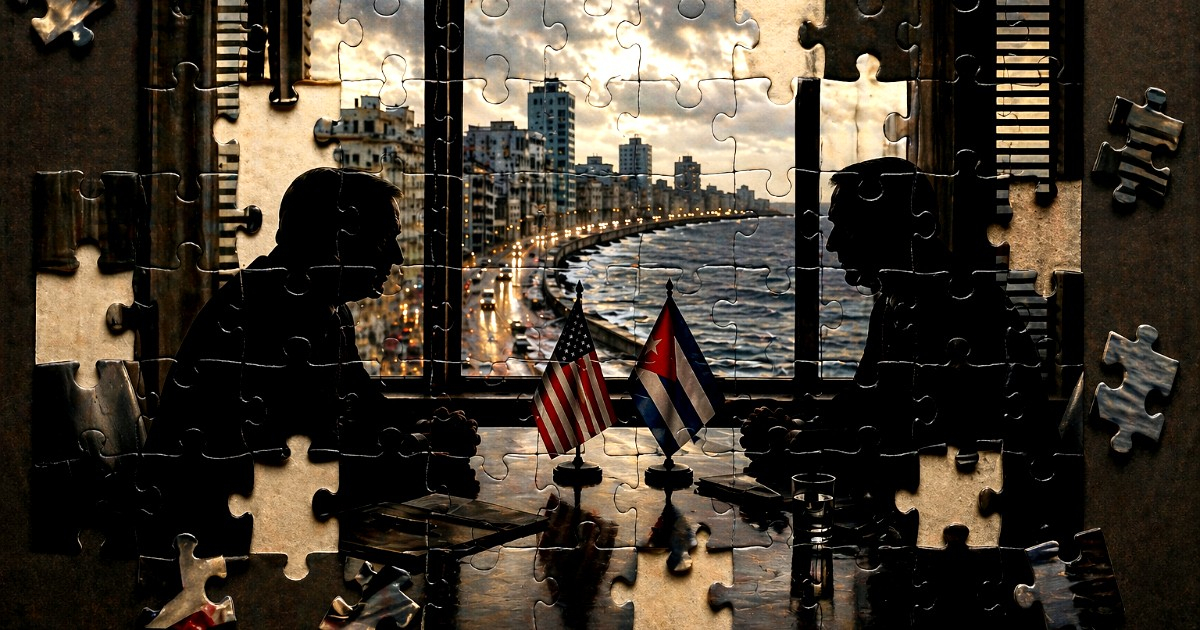
On one hand, Granma, the official outlet of the Communist Party of Cuba (PCC), acknowledged that "a meeting was recently held" in Havana between delegations from Cuba and the United States.
The confirmation is clear. It even adds that “deputy secretaries from the Department of State” participated, in plural, and Cuban officials at the level of vice minister.
But there ends the information: there are no names, no exact dates, no verifiable details. Everything, moreover, under an explicit justification: it is a "sensitive" issue that is handled with "discretion."
On the other hand, Razones de Cuba, part of the same political-communication apparatus, discredits the original information published by precisely because —it claims— “they do not mention dates, names, or charges”.
In other words, it uses the lack of concrete data as an argument to cast doubt on the reports of those meetings. That’s where the narrative falls apart.
Because it is not about two independent voices, but rather the same system communicating in parallel.
The regime questions the lack of information… while concealing exactly those details in its official version. It discredits others for not providing information that it itself chooses not to disclose.
The incoherence is evident: if the Cuban government has already confirmed that a meeting took place, why does it not publish the information it demands from others? Who were those “assistant secretaries”? How many participated? What positions do they hold? When and where did the meeting exactly occur?
None of that has been answered.
Appealing to "discretion" does not resolve the contradiction; it reinforces it. Because it turns the acknowledgment into an incomplete act: the fact is recognized, but any possibility of independent verification is blocked.
Moreover, this ambiguity allows the regime to maintain a dual position: to acknowledge the inevitable in order to avoid further discrediting itself, while at the same time controlling the political implications of information by concealing key data.
And there are many topics on the table: the release of political prisoners, compensation for expropriations, internet via Starlink, among other issues that have shaken the regime's board.
But that strategy has a clear limit. If the regime believes that external reports lack dates, names, and positions, it has a direct way to dismantle them: make them public.
It does not recognize —it cannot, it has no way to justify it— that the Castro family is the one that truly holds power and decides the fate of the nation.
And in that silence—more than in any leak—is where the true contradiction and the intimate nature of the regime are revealed: a dictatorship that for more than 67 years has claimed national wealth, the country, and has subjected Cubans through the terrorism of a totalitarian State.
Filed under: