
Related videos:
The Cuban regime has opened a new call for admission to the Journalism program, with a selection exam scheduled for May 21 at 9:00 AM in all provinces of the country.
The exam will be sent by the Rector Center, the University of Havana, through the Provincial Admissions Commissions, as published by the Faculty of Communication in Artemisa Diario on April 20.
Students in 11th grade who are interested in applying to the University College for the 2026-2027 academic year may present themselves, as well as 12th-grade students; however, the latter must first fulfill one year of Active Military Service before entering in the 2027-2028 academic year.
Candidates for the 11th-grade University College must have more than 90 points in Spanish, Cuban History, and Political Culture, and an overall average of more than 85 points. Registration closes on May 4 in the pre-university institutions, and the lists must reach the Provincial Commissions by May 10.
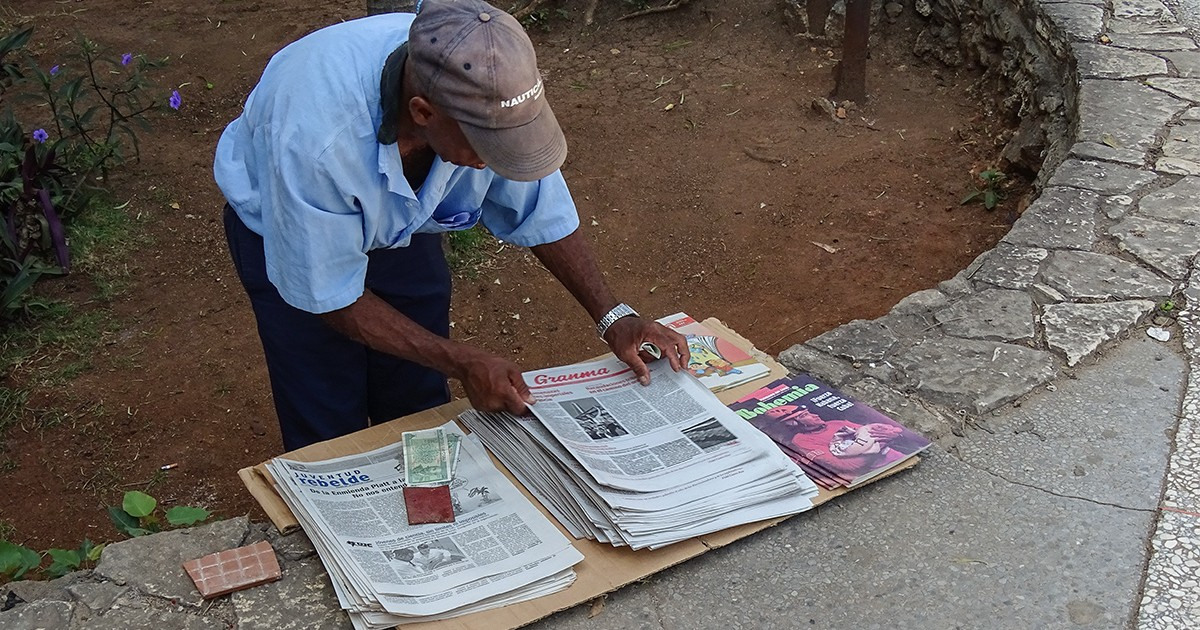
What the call does not mention is the type of journalism taught and practiced in Cuba: one that is completely subordinated to the Communist Party, where the media is owned by the State by constitutional mandate, and the Social Communication Law of 2024 legally excludes independent journalism.
The Union of Journalists of Cuba (UPEC), which comprises 3,660 members, defines itself as an organization of "soldiers of the Party." At its XI Congress in 2024, the head of the Ideological Department of the Communist Party, Rogelio Polanco, emphasized the consolidation of the "model of revolutionary and socialist press." Just on April 17, UPEC called to impose the truth against the alleged lies of the independent press.
The independent journalist Mónica Baró, a graduate of the University of Havana from 2007 to 2012, puts it bluntly: "There is no training in truthful journalism in Cuba". Baró has documented how the Central Committee of the Party dictated to journalists what and how they should report, and how censorship was the norm even from the university practices.
The announcement comes at a time of deep vocational crisis. In 2025, only two eleventh-grade students took the aptitude test for Journalism at the Manuel Ascunce Domenech campus of the University of Ciego de Ávila, an alarming contrast to the years when dozens competed for a few spots. A report from that very university revealed that only 49% of students enrolled in the program manage to graduate; most drop out for economic reasons.
Salaries partially explain this abandonment. In April 2026, Cubadebate published a job offer for web journalist-editors with a base salary of 5,060 Cuban pesos per month, equivalent to less than 10 dollars, under the motto "Narrate the news from Cuba". The offer generated widespread mockery. Additionally, starting from the 2024-2025 academic year, women pursuing this career must complete a year of Mandatory Military Service, an unprecedented measure in other Cuban university degrees.
Meanwhile, those practicing independent journalism on the island face systematic repression: arbitrary detentions, confiscation of equipment, and sentences of up to 10 years in prison for charges such as "enemy propaganda." Cuba ranks 171 out of 180 countries in the 2025 World Press Freedom Index by Reporters Without Borders, in a red zone of "very serious" conditions.
Filed under: