
Related videos:
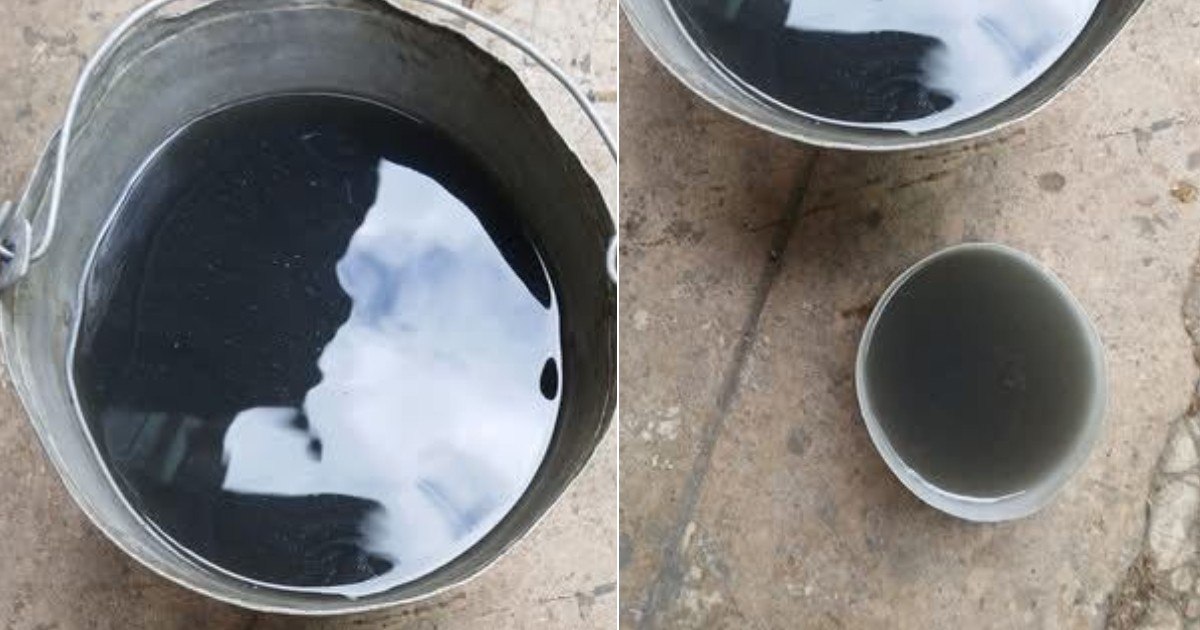
A post from the page of Facebook Las Cosas de Fernanda raised alarms about the water crisis in Cienfuegos by reporting that, on Dolores Avenue —between Odónes and the taxi stop—, the water supply arrives in unsanitary conditions, with mud and a foul smell, presumably due to a crossover between the drinking water pipes and the storm drainage system.
"The water does not arrive as relief, but as a threat," warns the text, which describes how "what should be a basic service has transformed into a rotten sludge that invades the streets and the supply." According to the publication, the problem is not isolated: "everything indicates that there is some intersection between the drinking water service and the stormwater systems," a situation that residents claim to have reported repeatedly without receiving a response.
The message also warns about potential health consequences. "Several residents are already suffering from diarrhea and ailments that put their health at risk," the post states, noting that these conditions could be linked to the consumption of contaminated water or constant exposure to unsanitary conditions.
This is compounded by reports of institutional inaction. “The neighbors have raised their voices, reaching out to the relevant authorities to report the situation, but no one shows up,” the publication states, highlighting the contrast between the severity of the problem and the lack of responses from the Water and Sewer Department in Cienfuegos.
The text emphasizes that this is not just a technical failure, but a problem with a direct impact on daily life: “Every day that passes without a solution is an unfair punishment for those who have no choice but to live with the danger.”
The reactions to the publication highlight an extended and sustained crisis, marked by the desperation of those who have gone days — or even weeks — without access to water. “It’s been more than eight days without water and I have a small child,” one user reported, while another claimed that in her building they have been without service for “over 15 days.” These complaints are accompanied by criticisms of the irregular distribution schedules, which effectively leave many without a real opportunity to stock up.
The health situation has also raised significant alarm among commentators, who describe a supply in deplorable conditions. From Rodas, an internet user warned that the water "comes straight from the Jabacoa River, dirty, it's mud," while in other areas, unpleasant odors have been reported: "sometimes it arrives smelling of urine," another resident alerted. These complaints reinforce the perception of a growing health risk, especially in vulnerable communities.
The harshest criticisms were directed at both the state management and the inequalities in access to water. "For 17 years, there has been no water in my neighborhood," stated a user, highlighting the structural nature of the problem. Along the same lines, another comment emphasized one of the most sensitive complaints: "the water in the hotels doesn't come out like that... the Government is slowly killing the people," referring to what they consider a privileged treatment of the tourism sector compared to the basic needs of the population.
There were also direct calls to the authorities, with users tagging the Provincial Government of Cienfuegos and demanding accountability: "they must be the ones who, from their positions, need to enforce the actions of these companies." However, alongside these institutional demands, a deep citizen frustration emerges due to the lack of responses, exacerbated by internal management issues such as leaking pipes that have not been repaired. "It's a crime to see that water running down the street," another user lamented, highlighting the contrast between the waste and the extreme scarcity in other areas.
Overall, the comments paint a picture of growing outrage, where the lack of water, its poor quality, and the perception of institutional neglect combine to shape one of the most pressing concerns for the population.
The precarious state of water services in the province has been accumulating complaints for years. Just in July 2025, it was reported that more than 100 families in the Lagunilla neighborhood had been without access to drinking water for seven years, a situation that local authorities had not resolved despite the repeated complaints from those affected.
The deteriorating infrastructure exacerbates the problem. In October 2025, it was reported that a broken valve at the intersection of Santa Elena and Cuartel had been wasting water for months without anyone fixing it, highlighting the lack of systematic maintenance of the networks.
On a national scale, the situation is not any better. Recent data reveals that only 135 out of 480 pumping stations are on protected electrical circuits, which means that frequent power outages leave hundreds of thousands of Cubans without water and exacerbate a crisis that was already structural. This crisis is not exclusive to Cienfuegos: nationally, the supply of drinking water has been plagued by decades of deterioration, insufficient investment, and poor management.
Filed under: